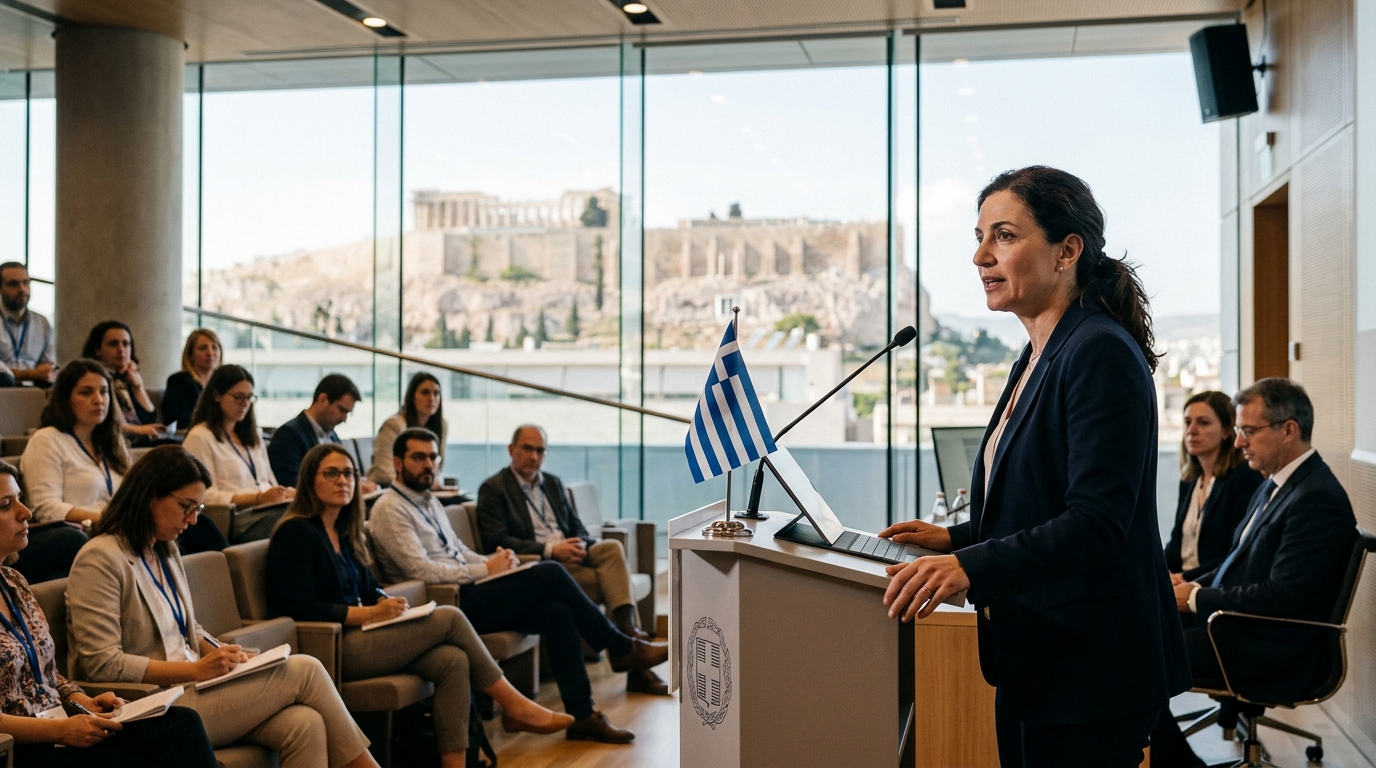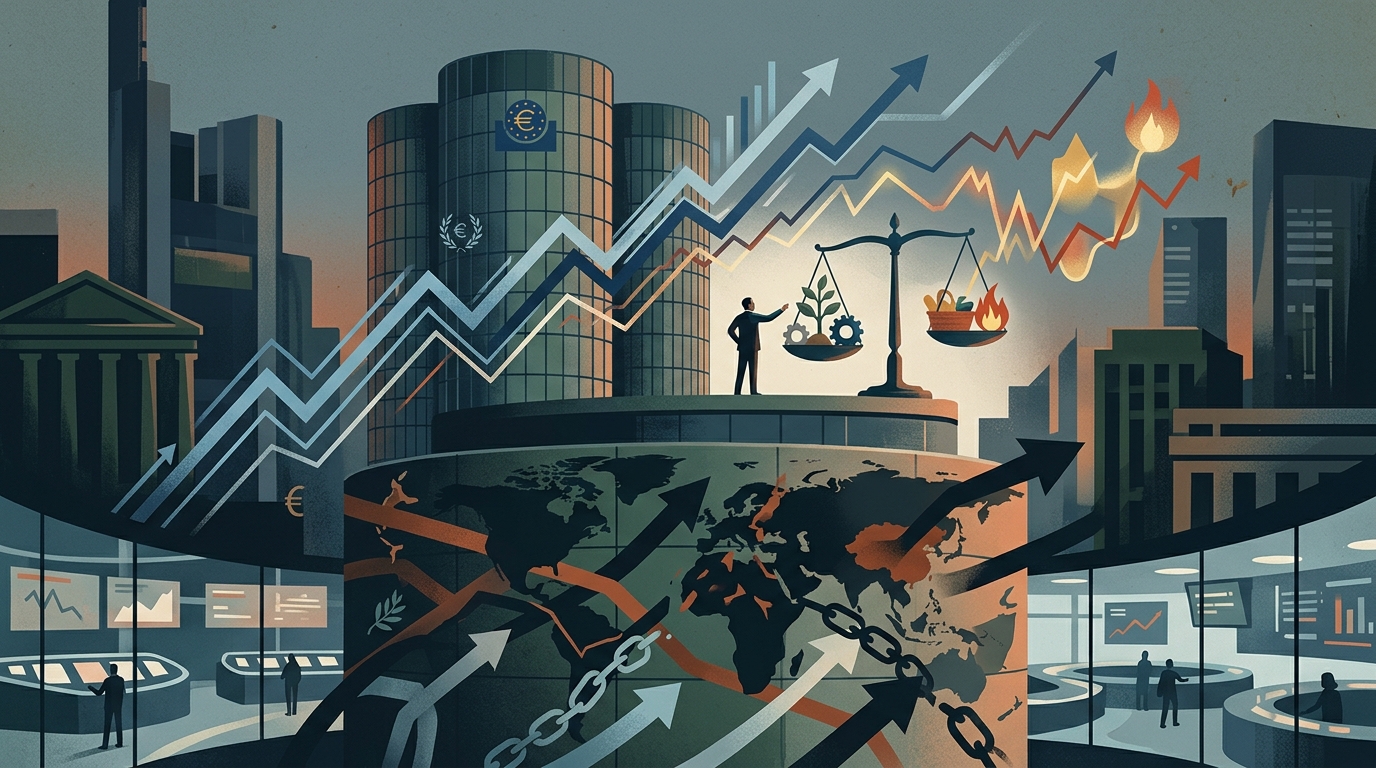
In a period where the global economy appears to be walking a tightrope, recent statements by the Governor of the Bank of Greece, Yannis Stournaras, underscore the complexity of the challenges facing the European Central Bank (ECB). Speaking on the current economic climate, Mr. Stournaras positioned the Eurozone at a crossroads, noting that we find ourselves "between the central and the adverse scenario" of economic projections. This admission is not merely a technocratic observation but a clear warning about the risks lurking in the international environment.
Geopolitical Risk and the Strait of Hormuz
The focal point of the central banker's analysis centered on geopolitical instability, with a particular emphasis on the Strait of Hormuz. This region serves as the world's most vital artery for oil transport, and any disruption there translates immediately into an increase in energy costs. Mr. Stournaras emphasized that an agreement regarding the smooth operation of the Strait could dramatically improve economic prospects, reducing inflationary pressures and allowing the ECB to proceed with a more decisive easing of monetary policy.
Europe's dependence on energy imports remains its "Achilles' heel." Despite efforts to decouple from fossil fuels and transition to green energy, short-term fluctuations in oil and gas prices continue to dictate the pace of inflation. For the ECB, this means that decision-making is no longer based solely on domestic economic data but on a continuous assessment of risks arising from conflicts in the Middle East and Ukraine.
The ECB's Strategy: Between Scylla and Charybdis
The debate over interest rates remains at the center of attention. Mr. Stournaras, traditionally one of the more moderate and realistic voices on the ECB Governing Council, recognizes that maintaining interest rates at high levels for too long risks strangling growth. On the other hand, a premature cut could reignite inflation, especially if energy prices spike due to geopolitical episodes.
- The Central Scenario: Predicts a gradual deceleration of inflation toward the 2% target and a mild economic recovery.
- The Adverse Scenario: Involves stagflation, where growth remains zero or negative while inflation stays high due to exogenous shocks.
Mr. Stournaras argued that the Eurozone has not yet slipped into the adverse scenario, but the distance separating us from it is worryingly small. Industrial production in Germany and other major EU economies is showing signs of fatigue, while consumption remains subdued due to the high cost of living.
The Greek Economy and Its Challenges
On the domestic front, the Governor of the Bank of Greece appeared cautiously optimistic but also firm regarding fiscal discipline. Greece has managed to achieve growth rates higher than the Eurozone average, yet it remains vulnerable to international turbulence. Mr. Stournaras pointed out that prudent management of public finances is essential to maintain market confidence, especially now that borrowing costs remain elevated.
"Economic policy cannot be conducted in a vacuum. We must take into account that price stability is a prerequisite for sustainable growth, but also that growth cannot be sacrificed indefinitely at the altar of fighting inflation," he stated.
Conclusions and Outlook
Yannis Stournaras's analysis highlights a new reality for central banks: monetary policy is now inextricably linked to geopolitical strategy. Europe is called upon to find the golden mean between protecting citizens from high prices and supporting the investments that will secure its future. The situation in the Strait of Hormuz may seem distant, but its impact reaches the supermarket shelf and the electricity bill of every European citizen. The coming period will be critical, and the ECB's decisions will need to be more flexible than ever, as the line between success and crisis remains extremely thin.