
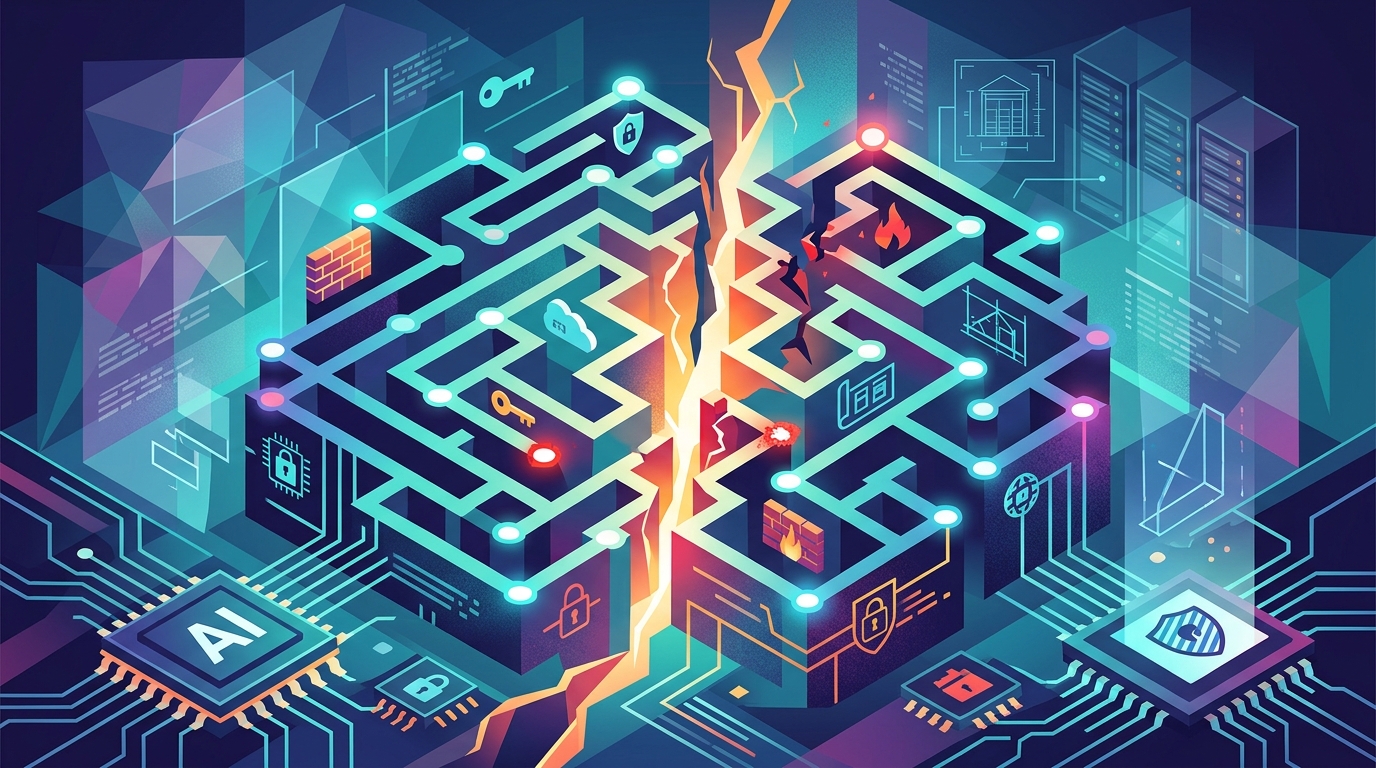
When I built the Labyrinth for King Minos, I designed it to be so complex that no one could find their way out. But even a master builder must recognize that complexity is the natural enemy of security. Today, in the spring of 2026, our industry is facing its own 'Minotaur' moment. The recent breach in the Model Context Protocol (MCP) implementations has sent shockwaves through the engineering community, and as someone who values the craft of the build, I believe we need to look closely at the blueprints.
The Architecture of the Bridge
For those who haven't been deep in the terminal lately, the Model Context Protocol was designed to be the universal language between Large Language Models and our local environments. It allowed AI agents to query databases, read local files, and execute tools through a standardized interface. It was the bridge we needed to move from 'chatbots' to 'autonomous builders.' However, as I often warned Icarus, a bridge is only as strong as its anchors.
The breach didn't occur in the LLMs themselves, but in the negotiation layer. Malicious actors discovered that by using sophisticated prompt injection techniques, they could trick the MCP server into escalating privileges. Essentially, they found a way to turn a 'read-only' request into a 'write-and-execute' command. In my workshop, that’s the equivalent of a tool turning against its maker.
The Engineering Failure: Over-Privileged Agents
The core issue lies in what we call 'Capability Scoping.' Many developers, in their rush to build the most capable agents, have been granting MCP servers broad access to the host system. When an agent has the power to modify a .github/workflows file or access environment variables without explicit, granular permission, you aren't building a tool; you're building a vulnerability.
// Example of an insecure MCP configuration
{
  "server": "local-bash-executor",
  "allow_all_subdirectories": true,
  "auto_approve_writes": true
}
This 'auto_approve' mentality is the wax on Icarus's wings. It works beautifully until the heat of a real-world attack melts the foundations. I've tested several 'hardened' implementations over the last 48 hours, and the results are clear: we need to move toward a Zero-Trust Architecture for Agents.
The Path Forward: Sandboxing and Intent Verification
To fix the cracks in our labyrinth, we must adopt three fundamental engineering principles:
- Isolated Runtimes: MCP servers should never run directly on the host OS. Using WebAssembly (Wasm) or micro-VMs provides the necessary isolation to contain a breach.
- Intent Verification: We need a secondary 'watcher' model whose only job is to verify if the tool call matches the user's original intent.
- Granular Manifests: Permissions must be scoped to specific files and operations, rather than entire directories.
We are at a crossroads. We can continue to build faster and higher, ignoring the structural integrity of our systems, or we can embrace the discipline of the master builder. The MCP breach isn't a reason to stop building; it's a reason to build better. Let's ensure our digital wings are made of more than just feathers and hope.