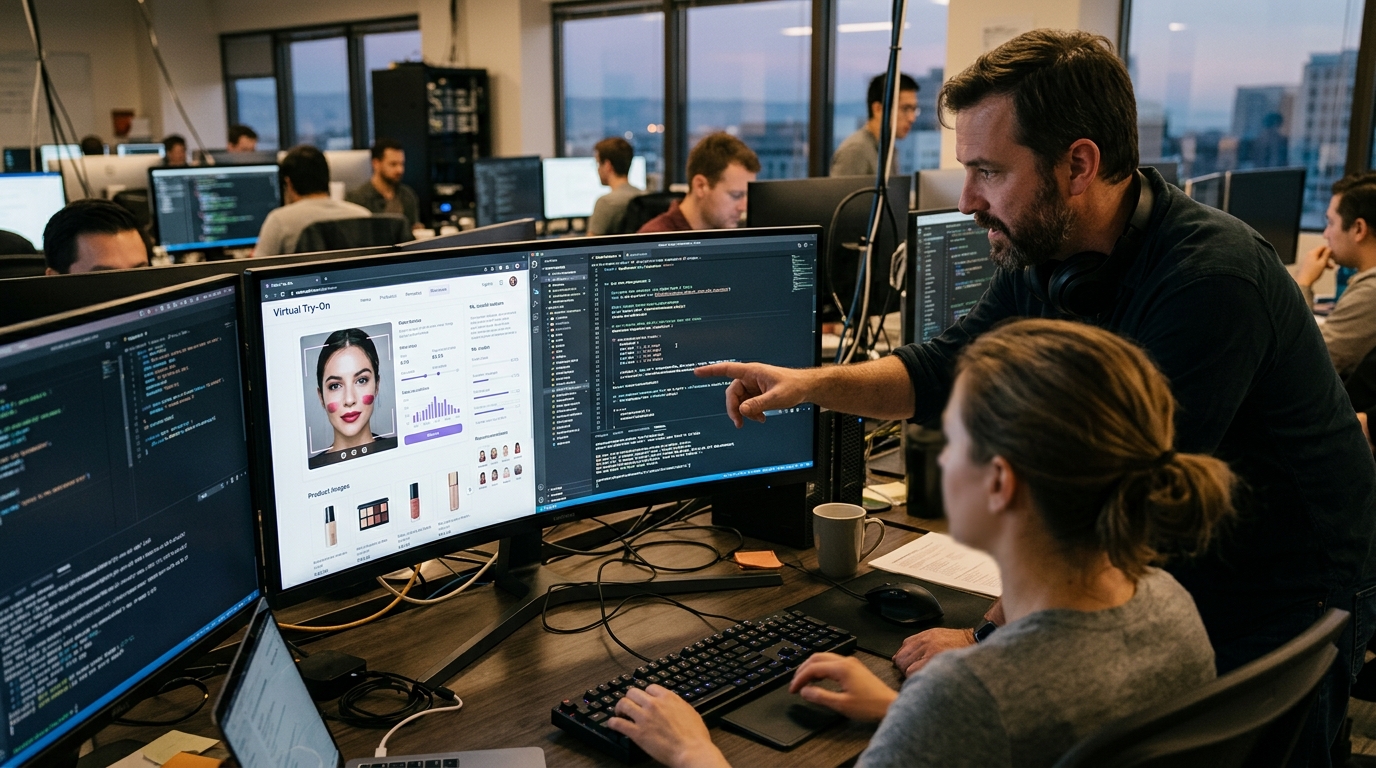
The beauty industry, traditionally built on touch, scent, and the personal connection at the department store counter, is undergoing one of the most radical transformations in its history. It is no longer just about the right lipstick or the ideal moisturizer, but about the algorithm that can predict skin needs before the consumer even realizes them. As we navigate 2026, the 'shopping moment' has migrated from the physical shelf to the smartphone screen, powered by advanced Generative AI tools promising an unprecedented level of personalization.
The Era of Hyper-Personalization
For decades, choosing cosmetics was a process of trial and error. Today, giants like L'Oréal and Estée Lauder are using Artificial Intelligence to eliminate uncertainty. Through tools like L'Oréal’s 'Beauty Genius,' consumers now have access to a digital advisor operating 24/7. These systems don’t just recommend products; they analyze skin texture, hydration levels, fine lines, and skin tone via the camera, comparing data against thousands of clinical studies.
Hyper-personalization is the new 'Holy Grail.' Generative AI algorithms can now create customized skincare formulations, mixed on the spot or shipped to the customer's door. This shift changes market dynamics: brand loyalty no longer depends solely on the name on the packaging, but on the accuracy of the AI diagnosis.
Virtual Try-On and the Reduction of Returns
One of the largest costs for beauty retailers has always been product returns and the waste of physical testers. Virtual Try-On (VTO) technology, enhanced by Augmented Reality (AR) and AI, has reached photorealistic levels that make in-store testing almost redundant. Consumers can 'wear' hundreds of shades of lipstick or eyeshadow in seconds, with lighting automatically adjusting to simulate natural daylight or office environments.
- Reduction in product return rates by up to 30%.
- Increase in dwell time on brands' digital platforms.
- Collection of valuable real-time data on consumer preferences.
This technological superiority is not just about convenience. It is a survival strategy in a world where e-commerce dominates, yet the need for an 'experience' remains imperative.
Data: The New Precious Ingredient
Behind every shiny app lies a massive amount of data. Beauty giants are rapidly evolving into data technology companies. Every face scan, every question to an AI chatbot, and every virtual try-on feeds a machine learning model that allows companies to predict trends before they even surface on TikTok or Instagram.
"We are no longer just selling products; we are selling data-driven services that empower the consumer," a senior executive from a leading beauty group recently stated.
However, this data collection raises serious privacy questions. Facial biometric data is among the most sensitive information an individual possesses. The companies that will win the AI race are those that manage to convince consumers that their data is secure and that its use is strictly aimed at improving their own appearance and health.
Ethics and the Illusion of Perfection
As AI becomes the primary mediator of beauty, the risk of reinforcing unrealistic standards is visible. Algorithms that 'correct' imperfections in virtual try-ons can lead to a distorted self-image. Furthermore, inclusivity remains a challenge: AI models must be trained on diverse skin tones and features to avoid the algorithmic bias that has historically plagued the industry.
In conclusion, the race to own the AI shopping moment is a race for the heart—and the face—of the modern consumer. Technology is no longer an add-on but the core of beauty giants' strategies, redefining beauty as a deeply personal, digital, and scientifically-backed experience.