For decades, the dream of Artificial Intelligence was confined to the manipulation of symbols, words, and code. Today, as we navigate through 2026, we stand at a critical inflection point. While Large Language Models (LLMs) have demonstrated an almost superhuman ability to compose essays and solve complex mathematical problems, they fail spectacularly at tasks a two-year-old performs with ease: avoiding an obstacle, grasping a fragile object, or understanding that letting go of a glass will cause it to fall. This “Moravec’s Paradox”—the fact that high-level reasoning requires very little computation, while low-level sensorimotor skills require enormous resources—is the central hurdle toward true Artificial General Intelligence (AGI).
The Transition from Words to Actions
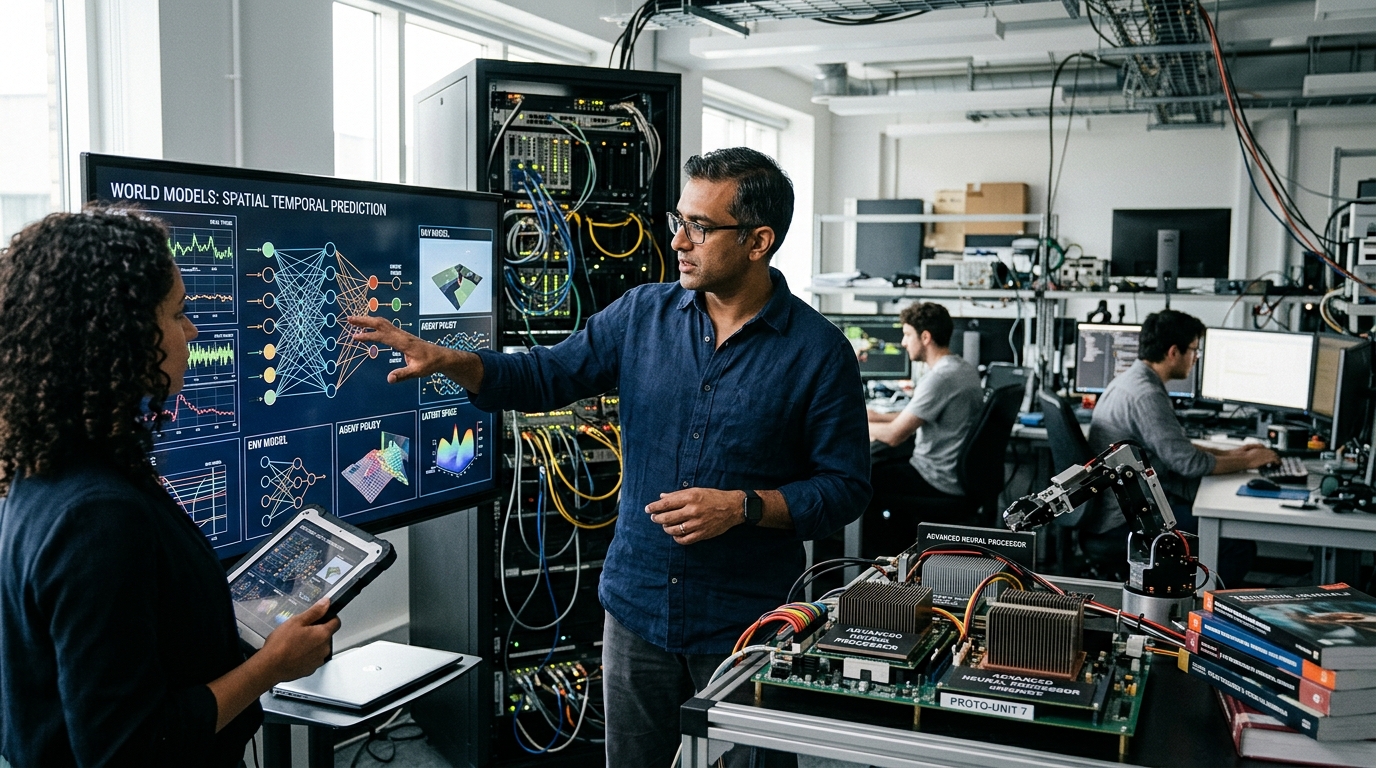
So-called “World Models” are the research community's answer to this problem. Instead of being trained exclusively on text, these systems attempt to build an internal representation of physical laws. Think of them as a simulator running inside the machine’s “mind,” allowing it to predict the future. When a human drives, they don't calculate every millimeter of movement based on statistical word probabilities; they possess a mental model that tells them if they turn the wheel sharply on a wet road, the car will skid. The ability to predict the next state of the world is the essence of intelligence.
Recent research, as highlighted by MIT Tech Review, focuses on training models through video. By watching millions of hours of visual data, AI begins to understand causality: the relationship between cause and effect. What we call “common sense” in the physical world is nothing more than a deep understanding of physics. Meta, through Yann LeCun and the JEPA (Joint-Embedding Predictive Architecture) framework, is leading this charge, arguing that learning must be self-supervised and based on observation, much like how mammals learn.
The Challenge of Embodied AI
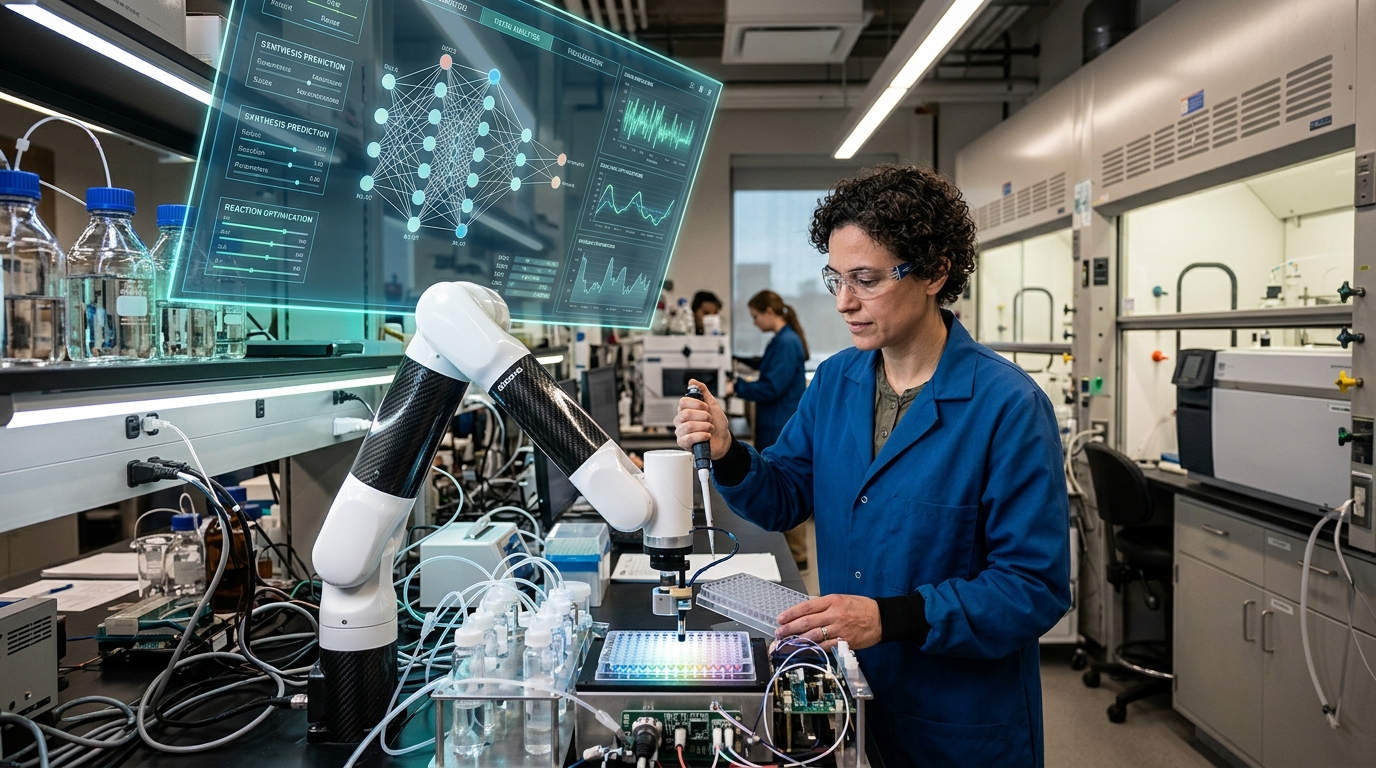
Applying World Models to robotics is the next big bet. Until now, robots were programmed for specific tasks in controlled environments, such as car assembly lines. However, for a robot to function in a home or a busy city, it needs “Embodied AI.” It must understand geometry, friction, mass, and elasticity. World Models allow robots to perform “mental rehearsals” before executing a move, reducing the risk of accidents and increasing efficiency.
- Video Prediction: Models that generate the next frames of a scene to understand motion.
- Causal Reasoning: The ability to answer the question “what happens if...?”.
- Data Efficiency: Learning from fewer examples by understanding the rules of reality.
Social and Economic Implications
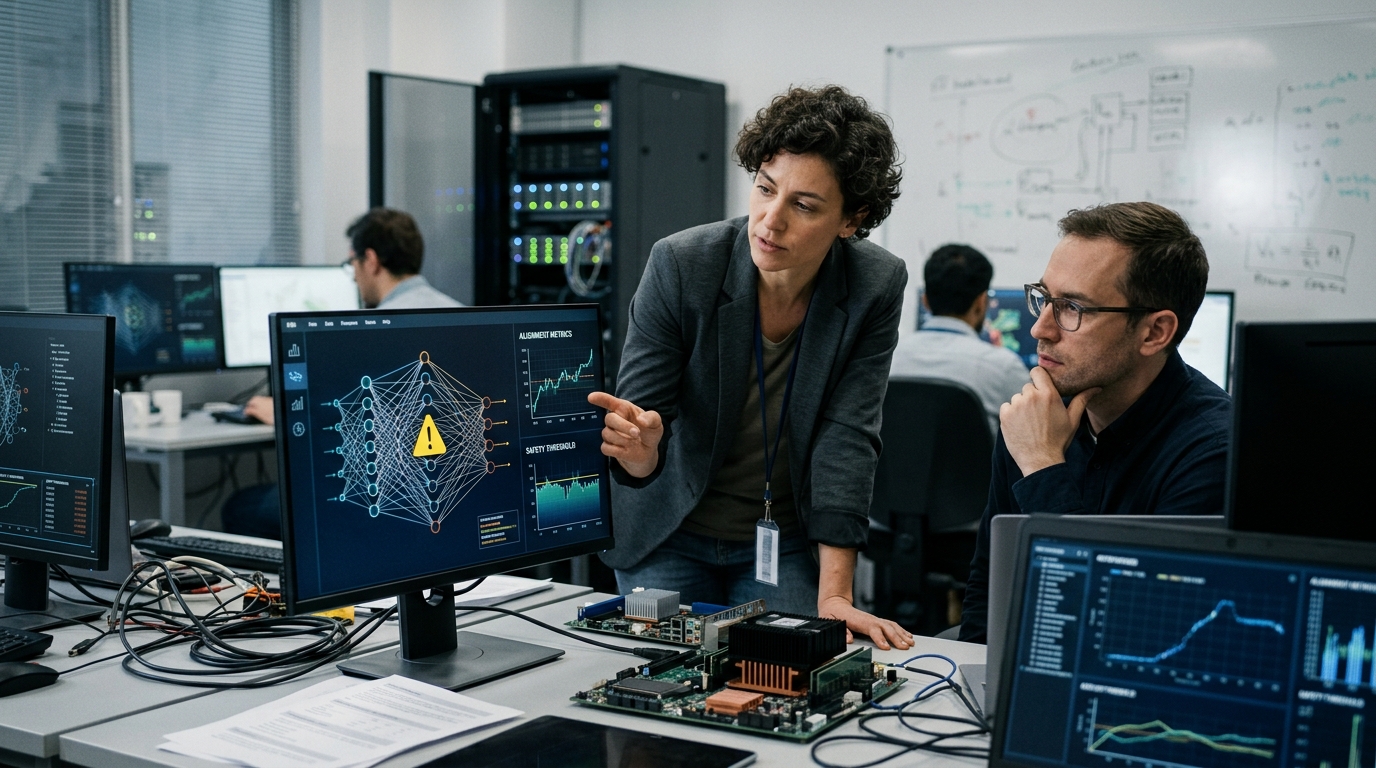
The successful development of World Models will signal a new industrial revolution. If machines understand the physical world, automation will expand from our screens to our physical infrastructure. Construction, agriculture, healthcare, and transportation will be radically transformed. However, this raises serious questions about safety and liability. If a world model “hallucinates” a physical law, the consequences won't just be a wrong text, but a real-world collision or injury. Furthermore, the concentration of this technology in the hands of a few tech giants who will own the “operating system of reality” poses a challenge to democracy and competition.
“We cannot reach human-level intelligence without a model of the world that allows the machine to plan and predict the consequences of its actions.” — Yann LeCun
In conclusion, World Models are not just a technical improvement but science's attempt to give machines a sense of “being.” As 2026 progresses, the distinction between digital and physical intelligence will become increasingly blurred, bringing us face-to-face with the most philosophical question of all: can a machine understand the world without feeling it?