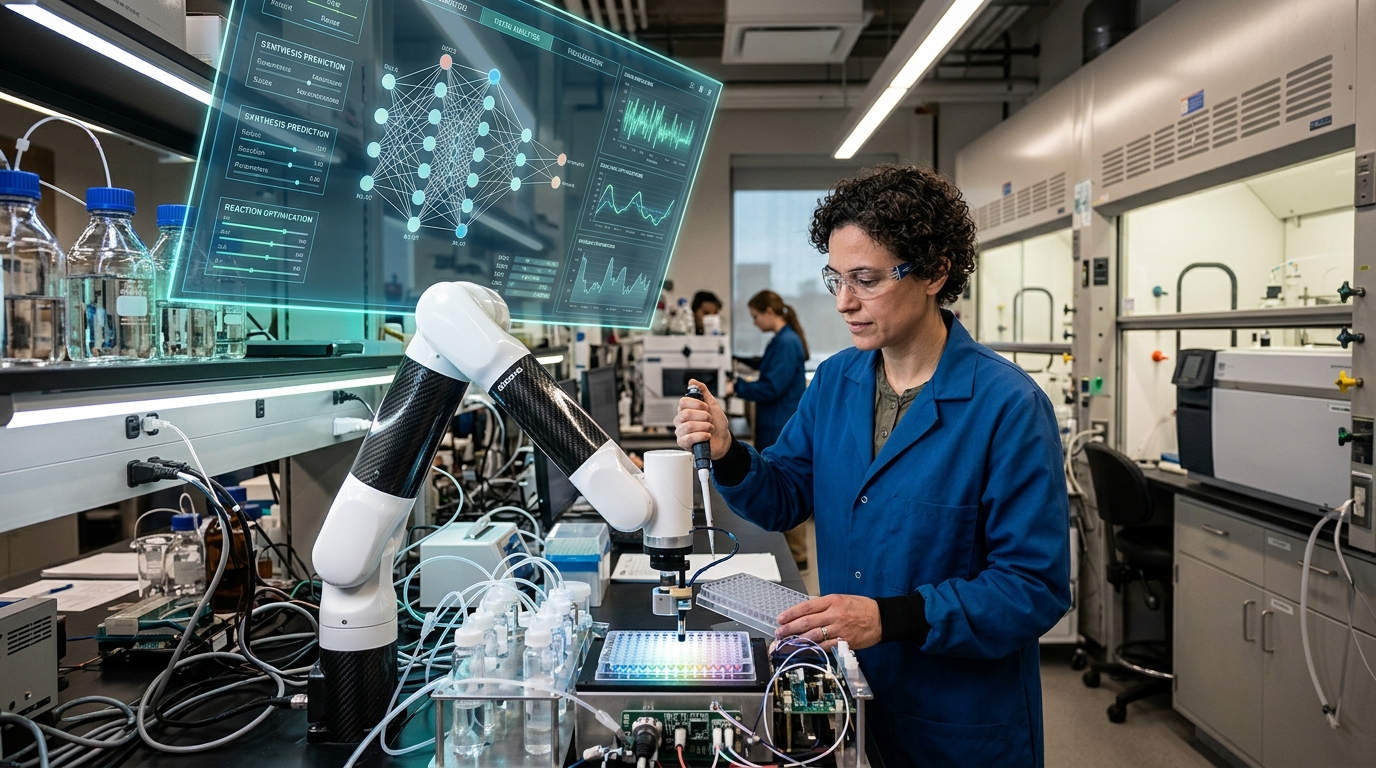
The announcement that the world’s first vaccine designed entirely by Artificial Intelligence (AI) is entering clinical trials is not merely a headline for tech enthusiasts; it marks the dawn of a new epoch for humanity. For decades, vaccine development relied on a grueling process of trial and error, where scientists attempted to "guess" which molecules might stimulate the human immune system. Today, computational biology is overturning this paradigm, allowing algorithms to "imagine" and construct biological structures that have never existed in nature.
The Revolution of Computational Vaccinology
The vaccine in question, developed using an algorithm named SAM (Search Algorithm for Ligands), represents the pinnacle of years of research at Flinders University in Australia. The AI did not stop at analyzing existing data. Instead, it was trained to understand what makes a vaccine effective and subsequently designed a new "adjuvant"—a component that boosts the body's response to the vaccine. This "de novo" design approach means that AI can create solutions that human intuition might never have discovered.
Traditional methods required screening thousands of chemical compounds in laboratory settings, a process that often took over a decade and cost billions. Using AI, the design phase has been shrunk to a matter of weeks. Algorithms can simulate billions of molecular interactions in a cloud environment, discarding ineffective options before they ever touch a test tube. This not only saves time and money but allows for unprecedented precision in tackling rapidly mutating pathogens, such as influenza or new variants of coronaviruses.
From Theory to Practice: The Clinical Trial Challenge
Despite the technological triumphalism, the transition from digital design to human biology remains the most critical stage. The AI-designed vaccine must now prove its safety and efficacy in human populations. Regulatory bodies like the FDA and EMA are facing a new challenge: how do you evaluate a drug when its "creator" is an algorithm whose decision-making process—the so-called "black box"—is not always fully transparent to humans?
- Precision: AI targets specific receptors with surgical accuracy.
- Speed: Reduction of research time by 70-80%.
- Adaptability: Ability to instantly reconfigure the vaccine in response to mutations.
Ethical questions also arise regarding intellectual property. If an AI designs a life-saving vaccine, who owns the patent? Is it the programmer, the university that provided the training data, or should such knowledge be considered a global public good? In the European context, the debate over sovereign AI capabilities is intensifying, as the success of this vaccine could trigger a race for computational biotechnology infrastructure.
The Future: Personalized Immunization
The vision for the future extends far beyond pandemic response. Scientists predict that AI will enable the creation of "personalized cancer vaccines." By analyzing the genetic profile of a specific patient's tumor, AI could design a vaccine within days that trains the patient's own immune system to attack cancer cells.
"We are not just looking at a new drug, but at a new method of knowledge production that dissolves the boundaries between biology and informatics,"leading researchers in the field suggest.
In conclusion, the first AI-designed vaccine is the "Sputnik moment" of biotechnology. If the trials prove successful, humanity will possess a shield that can be upgraded at the speed of software, turning future pandemics from existential threats into technical problems to be solved.