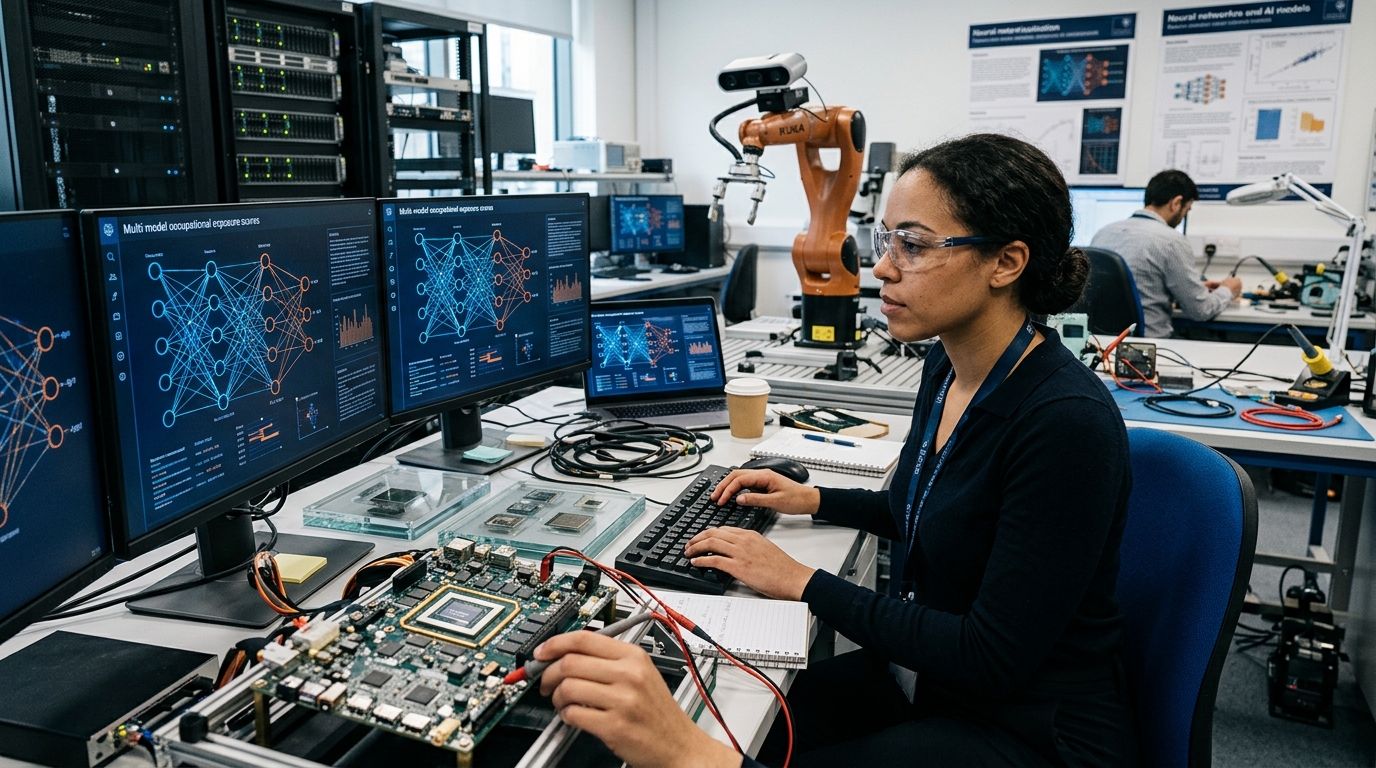
In contemporary economic analysis, the advent of Generative AI has not only changed how we work but also how we measure that change. A significant new study published by the Centre for Economic Policy Research (CEPR) highlights a profound methodological and ontological paradox: we are using AI tools to estimate which occupations are most at risk from AI itself. The metaphor of a "ruler made of the thing it measures" is not merely a clever turn of phrase; it is a stark warning about the validity of our economic forecasts.
The Paradox of Self-Reference
The traditional method for assessing an occupation's "exposure" to AI relied on human experts analyzing thousands of task descriptions from databases like O*NET. However, given the sheer volume of data, researchers quickly pivoted to Large Language Models (LLMs) such as GPT-4, Claude, and Gemini to automate this process. The CEPR study investigates whether this choice introduces systematic biases into the resulting scores.
The problem lies in reflexivity. When we ask GPT-4 to score how "exposed" a legal consultant or a software engineer is, the model does not answer based on objective reality. Instead, it answers based on its own internal parameters and the biases embedded in its training data. This creates a closed feedback loop: AI defines the value and vulnerability of human labor based on its own self-image and marketing materials.
Divergence Between Models and Human Judgment
The research utilized multiple models to score exposure across hundreds of occupations. The findings are revealing. While there is a general consensus on high-risk occupations (such as translators or data entry clerks), the discrepancies become chaotic in professions requiring high social intelligence or manual dexterity. Some models tend to overestimate their ability to replace complex human interactions, while others appear more "conservative."
What is particularly concerning is the discovery that exposure scores often mirror the marketing hype of tech giants rather than actual on-the-ground productivity. If a company promotes its model as "capable of writing professional-grade code," the model itself will score programmers as highly exposed, even if, in practice, the AI fails to manage the complex architecture of a legacy system or the nuances of client requirements.
Implications for Policy and the Economy
Why does it matter if the ruler is flawed? Governments and international organizations use these metrics to draft employment policies, revise educational curricula, and direct subsidies. If the measurements are skewed, we risk preparing society for a crisis that may not manifest in the expected form, while simultaneously ignoring other, more immediate risks.
- Investment Strategy: Capital markets rely on these forecasts to value labor-intensive companies.
- Educational Reform: Young people are choosing careers based on "automation safety," a metric defined by the AI itself.
- Social Welfare: Planning for Universal Basic Income (UBI) is often predicated on inflated exposure numbers generated by LLMs.
Toward a More Human-Centric Metric
The CEPR study concludes that we cannot entirely abandon AI in economic measurement, as its speed and scale are indispensable. However, it proposes a model of "validated exposure," where human judgment serves as the final filter. We must recognize that AI is not a neutral observer but an active participant within the economic system.
"Measuring technological progress via the technology itself is like asking a mirror to tell you the truth about the world behind you. You will only see what is reflected on its surface," the researchers note.
In the future, the reliability of our economic forecasts will depend on our ability to distinguish between technical capability and economic feasibility. Just because an AI model "believes" it can perform a job does not mean the market will permit it, or that the outcome will be socially acceptable. We need a ruler that stands outside the system it attempts to measure.