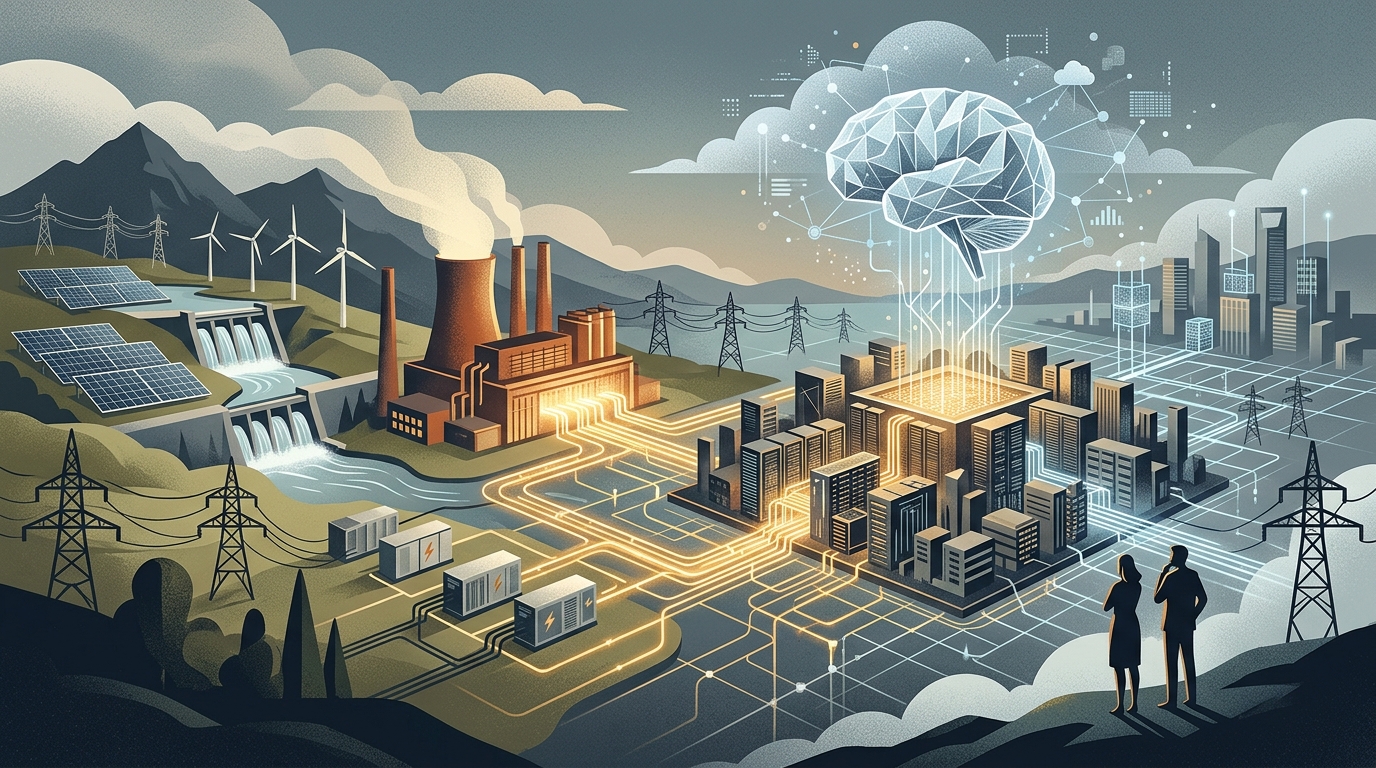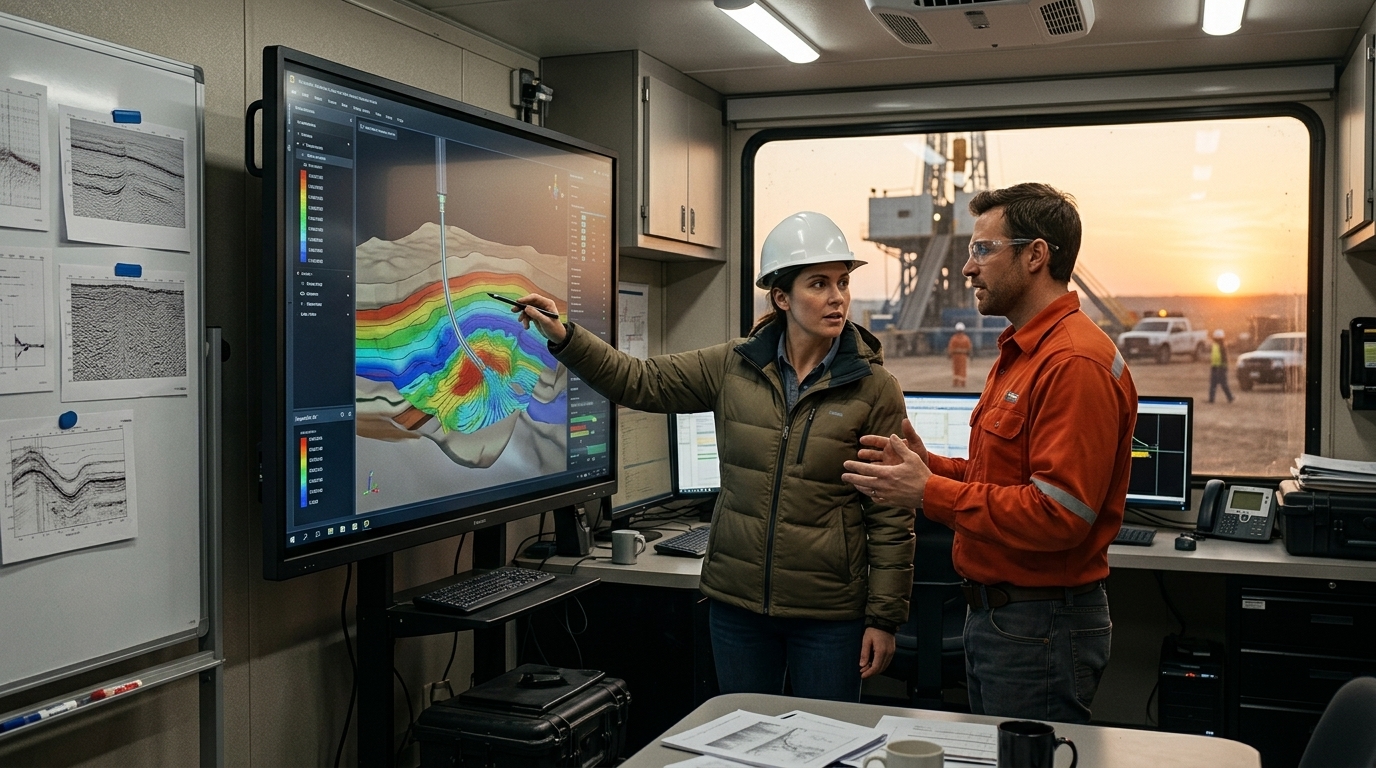
In the world of heavy industry, critical knowledge is often buried beneath tons of drilling mud and thousands of pages of technical logs. The recent publication on ArXiv (2605.00060) titled "TADI: Tool-Augmented Drilling Intelligence" marks a pivotal moment in the application of Artificial Intelligence within the energy sector. This is not merely another chatbot; it is an "agentic" system that orchestrates Large Language Models (LLMs) to solve complex problems in real-world drilling environments.
From Data to Agentic Intelligence
The primary challenge in oil and gas drilling is not a lack of data, but its extreme heterogeneity. Daily Drilling Reports (DDRs), real-time sensor streams, and geological records create a chaotic puzzle. TADI introduces the concept of "Tool-Augmented" intelligence. Instead of the LLM attempting to "guess" an answer based solely on its training weights, it acts as the brain of an operation, utilizing specialized digital tools to analyze data, execute calculations, and derive evidence-based conclusions.
The system was rigorously tested on the iconic Equinor Volve Field dataset. Volve, which ceased operations in 2016, represents one of the industry's most valuable "open laboratories" because the Norwegian energy giant made its entire data history public for research. TADI integrated 1,759 daily drilling reports, successfully connecting years of fragmented information into a coherent analytical framework.
The Architecture of Orchestration
Why is TADI considered a breakthrough? The answer lies in its capacity for "Agentic Orchestration." Unlike traditional AI models that provide a static response, TADI can:
- Discern the intent behind a complex engineering query.
- Decompose the problem into smaller, manageable sub-tasks.
- Select the appropriate tool (e.g., a Python data analyzer or a technical specification knowledge base).
- Self-correct if the tool outputs are inconsistent with historical data.
"The transition from simple text generation to tool-based task execution is the holy grail of industrial AI," the researchers state.
Safety and Efficiency: The Human Element
In the high-stakes environment of a drilling rig, a mistake is not just expensive; it can be catastrophic. TADI aims to reduce "Non-Productive Time" (NPT), which often results from delayed decision-making or the failure to recall historical lessons learned that were recorded in old reports but long forgotten. By providing "evidence-based intelligence," the system allows engineers to immediately see if a specific geological anomaly has occurred before and how it was successfully mitigated.
Furthermore, the use of heterogeneous data means TADI can "read between the lines" of technician notes and correlate them with pressure and flow measurements. This holistic approach is impossible for a human tasked with processing thousands of pages in minutes under intense operational pressure.
The Future of Industrial AI
The significance of TADI extends far beyond the hydrocarbon sector. The model of agentic orchestration over heterogeneous data can be applied to aerospace, maritime logistics, and heavy construction. Its success on the Volve Field proves that data transparency is the ultimate catalyst for innovation. As we move toward 2027, systems like TADI will cease to be experimental and will become the "digital co-pilot" for every piece of critical infrastructure.
However, questions regarding trust remain. Can a veteran engineer rely on an AI for a multi-million dollar decision? The TADI researchers argue that process transparency—the fact that the AI shows exactly which tools it used and which reports it referenced—is the key to gaining acceptance in traditionally conservative industries.