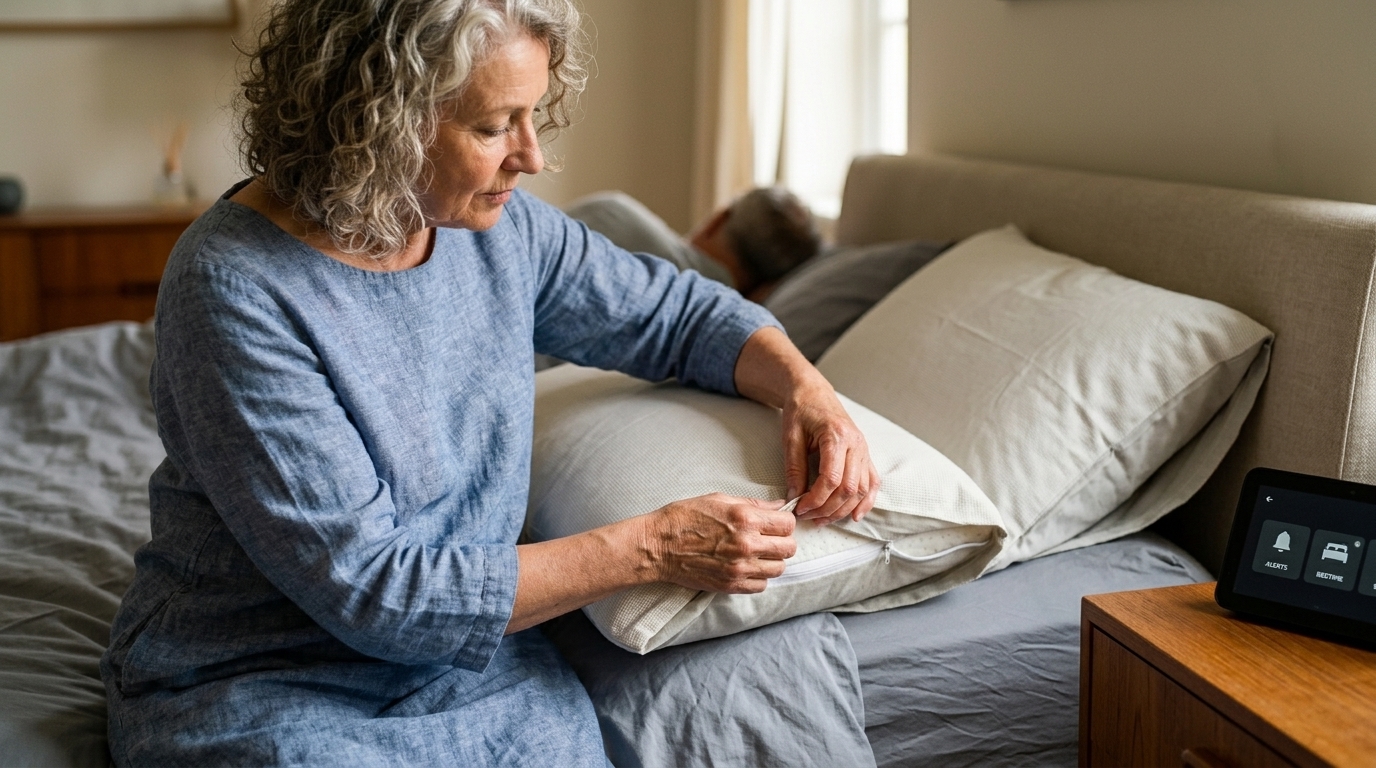
The silence of the night, which for most people is a source of tranquility, can harbor significant risks for individuals with hearing impairments. The inability to perceive a smoke alarm, the sound of breaking glass, or even an emergency call from a loved one creates a profound sense of vulnerability. A new research initiative, recently highlighted by Fortune Greece, promises to bridge this safety gap through a "smart" pillowcase that communicates with the user via vibrations.
The Technology Behind the Innovation
This system is not merely a gadget but a sophisticated example of "smart textiles" or e-textiles. Researchers have embedded miniature vibration motors and sensors directly into the fabric fibers, ensuring the pillowcase remains soft and comfortable for sleep while functioning as a powerful signal receiver. The core principle is haptic feedback, which is the most direct method of awakening someone who cannot rely on auditory cues.
The system connects wirelessly to the user's smart home or smartphone. Utilizing artificial intelligence algorithms, the device can recognize and differentiate environmental sounds. For instance, distinct vibration patterns correspond to different stimuli: a continuous, strong pulse might indicate a fire, while a series of short vibrations could signify someone ringing the doorbell or an incoming phone call.
Safety and Autonomy in Daily Life
The significance of this invention goes beyond a simple technological demonstration; it touches the core of human dignity and independent living. Until now, deaf individuals have relied on visual signals (flashing lights) or specialized wristbands. However, lights are not always effective during deep sleep, and wristbands can be uncomfortable or easily forgotten.
- Fire Safety: Reaction time during a fire is critical. Direct vibration at the user's head guarantees the fastest possible awakening.
- Burglary Protection: Detecting the sound of breaking glass triggers the system immediately, providing precious seconds for action.
- Social Connection: Being alerted to calls or messages ensures the user is not "cut off" from the world during the night.
"Technology must be inclusive. When we design solutions for the most vulnerable groups, we end up improving safety for everyone," the researchers noted in their study.
Challenges and Future Outlook
Despite the encouraging prospects, there are still hurdles to overcome before the smart pillowcase hits the market. The first concerns maintenance: how do you wash a fabric filled with electronics? Researchers are working on waterproof coatings and removable control units to allow for standard cleaning. Furthermore, power consumption and battery life are critical factors, as a safety device cannot afford to run out of power when it is needed most.
In the future, such systems could be fully integrated into the Internet of Things (IoT) ecosystem, working alongside medical sensors that monitor heart rate or breathing. This would offer a holistic approach to health and safety during sleep. The transition from the "smart home" to the "smart bed" appears to be the next major frontier in assistive technology.