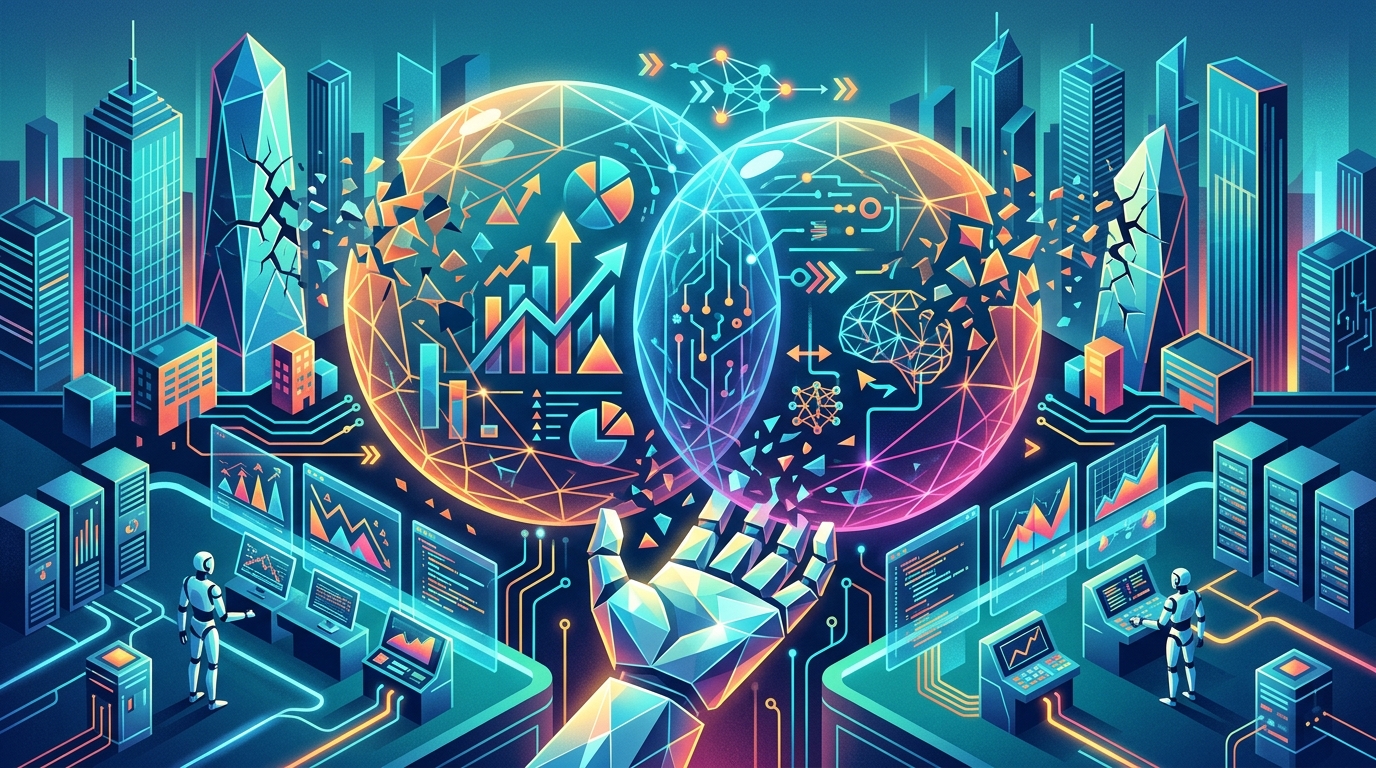
For decades, the primary barrier to entry in the world of technological innovation was not a lack of ideas, but the difficulty of execution. The ability to transform a concept into functional code or a blueprint into a finished product required years of specialized training and significant capital. Today, we stand on the cusp of a historic paradigm shift. Artificial Intelligence (AI) is not just changing how we work; it is redefining the very nature of building, shifting the center of gravity from the technical 'how' to the strategic 'what'.
The Collapse of the Syntax Barrier
Traditional software development was rooted in mastering complex programming languages, where a single misplaced semicolon could crash entire systems. This created a class of 'gatekeepers'—developers and engineers who held the keys to digital construction. With the advent of Large Language Models (LLMs) and tools like Cursor, Replit Agent, and Devin, syntax is becoming secondary. Natural language is the new programming language.
This democratization means that a business founder, a designer, or even a student can describe a functionality and watch the AI implement it in seconds. The cost of experimentation has plummeted. When the 'how'—technical execution—becomes a commodity, value migrates to an individual's ability to identify problems worth solving. Expertise is no longer about whether something can be built, but why it should be built and what need it will serve.
The New Economy of the Curator
In this new landscape, the role of the creator is evolving into that of a curator. Instead of writing every line of code, the human acts as an architect and a judge. They must have the vision to guide the AI, evaluate the quality of the generated output, and synthesize it into a coherent user experience. This shift favors those with a deep understanding of the market and empathy for the end user.
Companies will no longer compete based on the size of their engineering teams, but on the speed at which they can iterate and adapt. The 'one-person unicorn' is no longer a science fiction scenario. With AI handling the heavy lifting of coding, testing, and infrastructure deployment, a single individual with exceptional vision can scale solutions that previously required hundreds of employees. This upends traditional Venture Capital models, as the capital requirements for starting a startup are falling drastically.
Challenges and Ethical Dilemmas
However, this abundance of creative power brings new challenges. The ease with which something can be created leads to a market saturated with mediocre products. Distinguishing between noise and genuine value becomes harder. Furthermore, there is the question of education: if AI does the entry-level work of a junior developer, how will young professionals gain the experience needed to become the 'architects' of the future?
The economic impact is also profound. While productivity skyrockets, the value of labor based on repetitive technical skills is declining. The job market will require a massive shift toward critical thinking, creativity, and interdisciplinary knowledge. Power no longer resides with those who know how to use the tools, but with those who know what to ask of them.
Conclusion: The Return to the Human
The democratization of building through AI does not remove the human from the equation; rather, it places them at the center in a more meaningful way. Freed from the anxiety of technical minutiae, creators can focus on solving humanity's great problems—from climate change to healthcare and education. In the age of AI, the most valuable skill is imagination. 'What' we build is now the only question that matters, as the 'how' has already been answered by the algorithms.