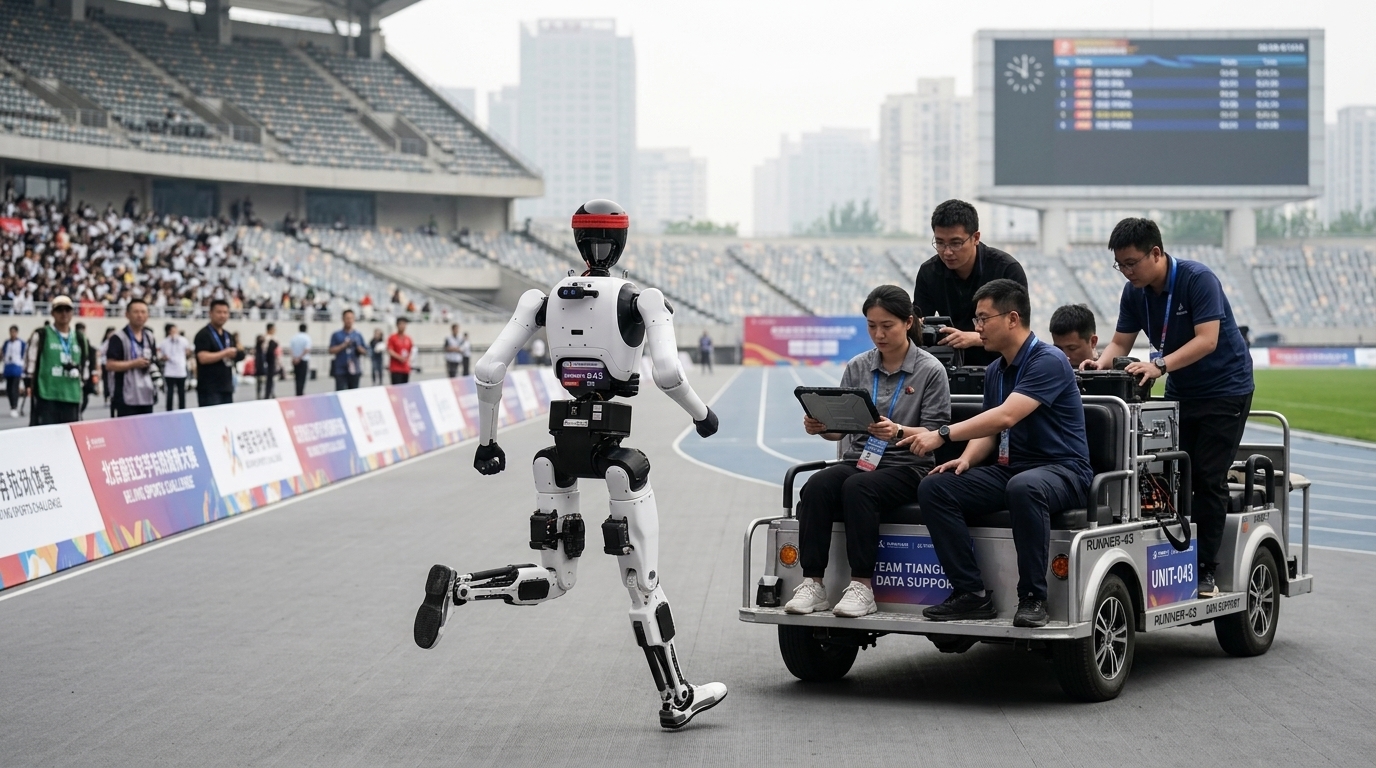
In the bustling streets of Beijing, where ancient history meets a hyper-technological future, a new chapter of engineering excellence has been written. The Tiangong humanoid robot, developed by the Beijing Humanoid Robot Innovation Center, successfully completed the city's half marathon, setting a new world record for its class. This event transcends mere novelty; it is a calculated demonstration of China’s burgeoning dominance in the fields of artificial intelligence and robotics.
The Engineering of a Mechanical Athlete
Tiangong stands as a testament to the rapid evolution of humanoid mechanics. Standing at 1.63 meters and weighing 43 kilograms, the robot avoids the clunky, hydraulic-heavy designs of the past, opting instead for high-precision electric actuators. These allow for a fluidity of movement that mimics the human gait with startling accuracy. Running at a consistent pace of 12 kilometers per hour over a distance of 21.0975 kilometers requires more than just power—it requires sophisticated balance and energy management.
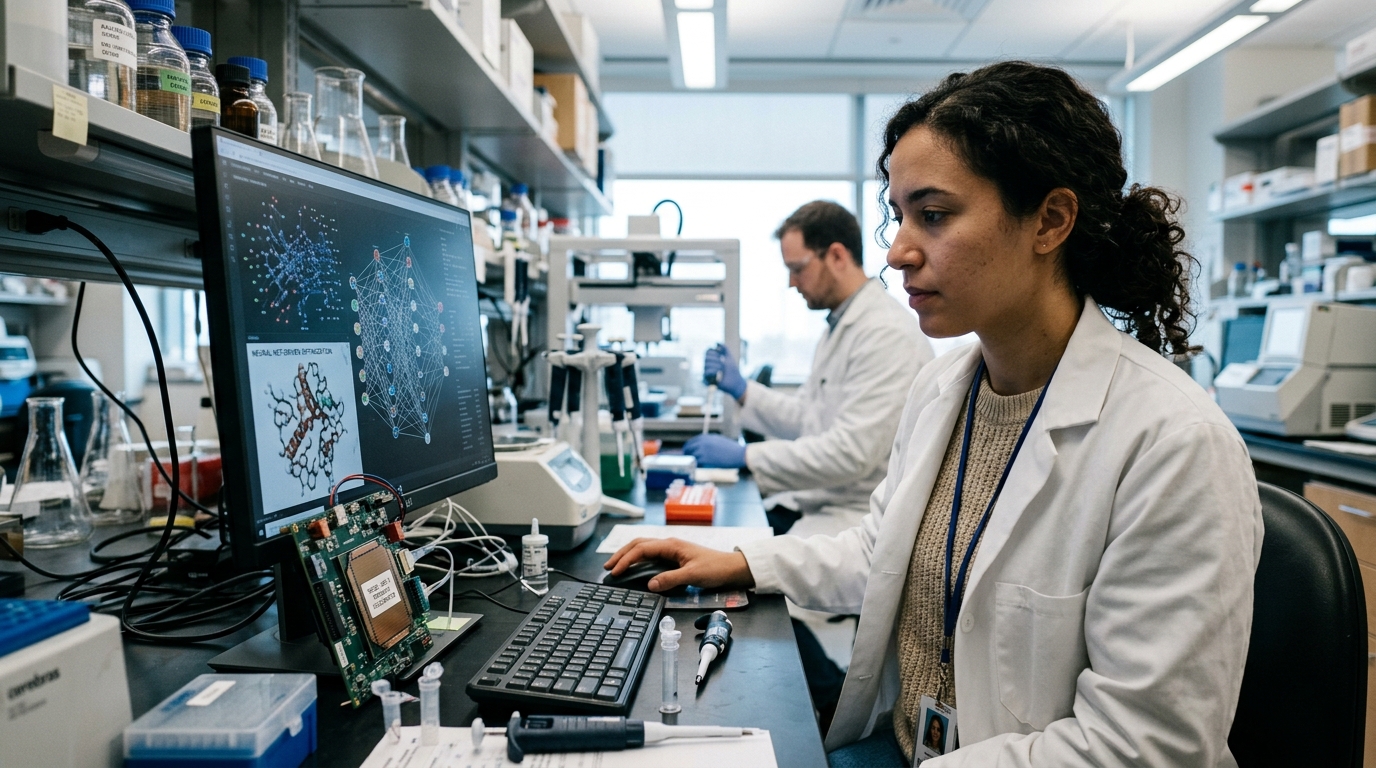
At the heart of Tiangong lies a complex neural network trained via reinforcement learning. This allows the robot to sense changes in terrain and adjust its posture in milliseconds, a feat that mimics the cerebellum’s function in humans. During the Beijing Half Marathon, Tiangong didn't just move forward; it navigated a dynamic environment filled with human runners and obstacles, maintaining its pace without the need for a tether or external stabilization. The fact that this was achieved on an open-source platform highlights Beijing’s strategic move to foster a collaborative ecosystem for robotics research.
A Geopolitical Sprint: The Global Robotics Race
The sight of Tiangong crossing the finish line carries heavy geopolitical weight. For years, Western companies like Boston Dynamics and Tesla have occupied the spotlight with Atlas and Optimus. However, China is rapidly closing the gap, moving its robotic projects from the sterile confines of the laboratory to the unpredictable reality of the streets. The "Made in China 2025" initiative has prioritized robotics as a critical national industry, and Tiangong is the latest evidence of this focus.
China’s investment in humanoid robotics is also a response to its looming demographic crisis. With a shrinking workforce and an aging population, the need for machines that can operate in human-centric environments is urgent. If a robot can navigate a half marathon, it can certainly navigate a factory floor, a logistics hub, or a hospital corridor. The race for humanoid supremacy is effectively the new "Space Race," and by proving Tiangong’s endurance in a public forum, Beijing has signaled its intent to lead the next industrial revolution.
Ethics and the Human Spirit in Sports
The inclusion of machines in traditional human athletic events raises profound ethical questions. What does a "record" mean when the competitor is immune to lactic acid, dehydration, or psychological fatigue?
"Sport is essentially a celebration of human frailty and the will to overcome it. Introducing robots risks turning these events into a cold display of manufacturing prowess, stripping away the soul of the competition,"argue sports purists.
Conversely, proponents of the technology view these events as the ultimate proving ground. Much like Formula 1 has historically driven innovations that eventually make their way into consumer vehicles, the development of high-endurance humanoid robots will have significant spin-off benefits. These include more advanced prosthetic limbs for people with disabilities and highly capable search-and-rescue robots for disaster zones. Tiangong’s run was not an attempt to humiliate human athletes, but to test the limits of what a machine can endure in the service of humanity.
Conclusion: The Horizon of Human-Machine Synergy
Tiangong’s world record at the Beijing Half Marathon is a milestone on a much longer journey. As AI continues to inhabit physical forms, we will see robots performing tasks that require both brute strength and delicate precision. The challenge for society will be to define the boundaries of this coexistence. Will these machines be our helpers, our competitors, or the silent infrastructure of a new age? As Tiangong crossed the finish line, it provided a glimpse into a future where the distinction between biological and mechanical endurance is no longer a barrier, but a bridge to new possibilities.