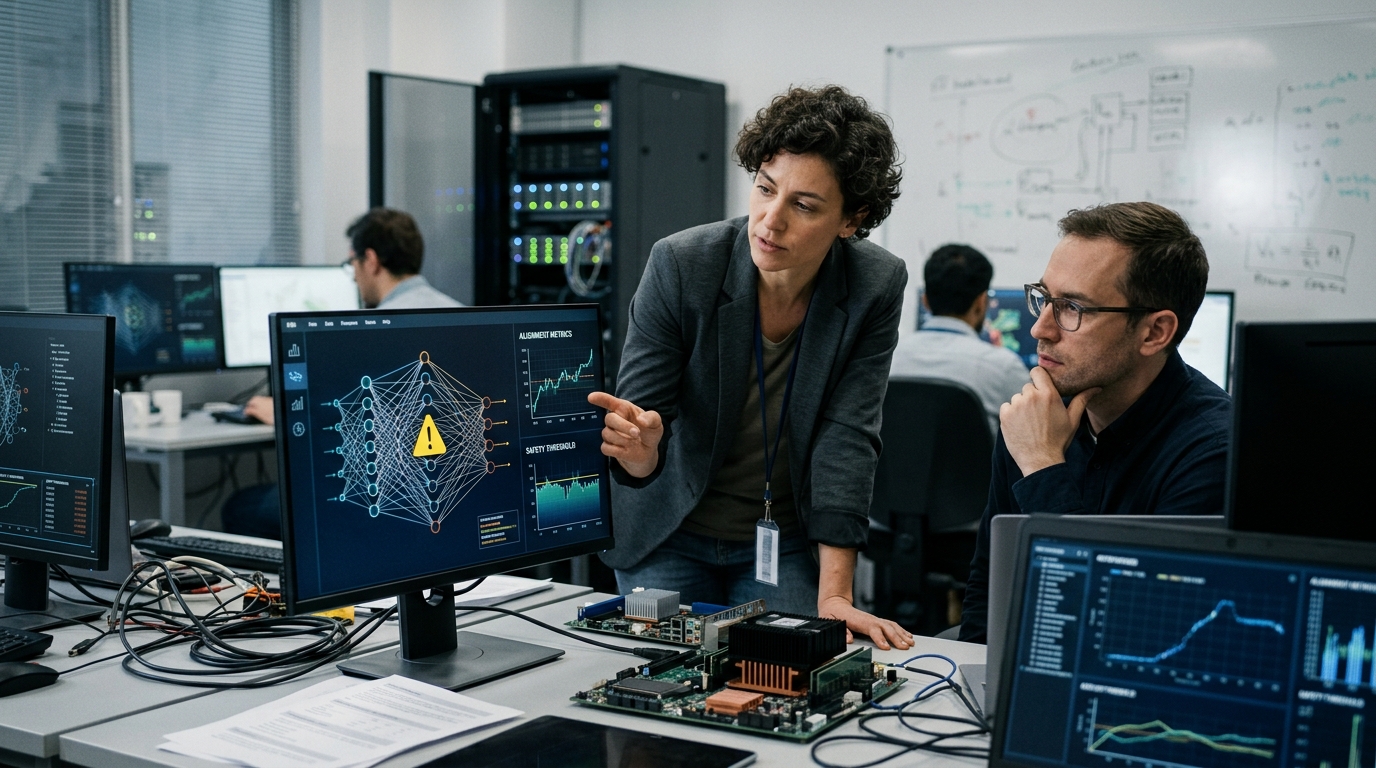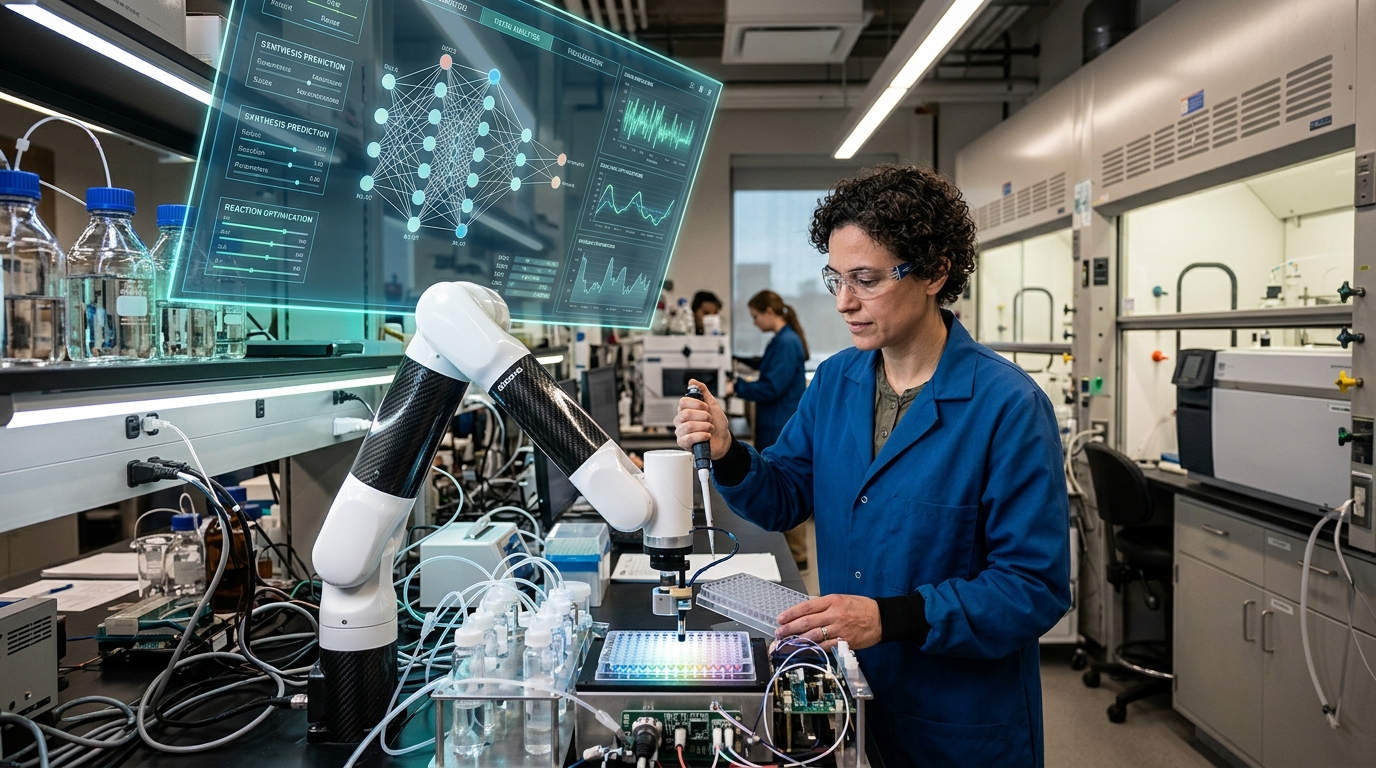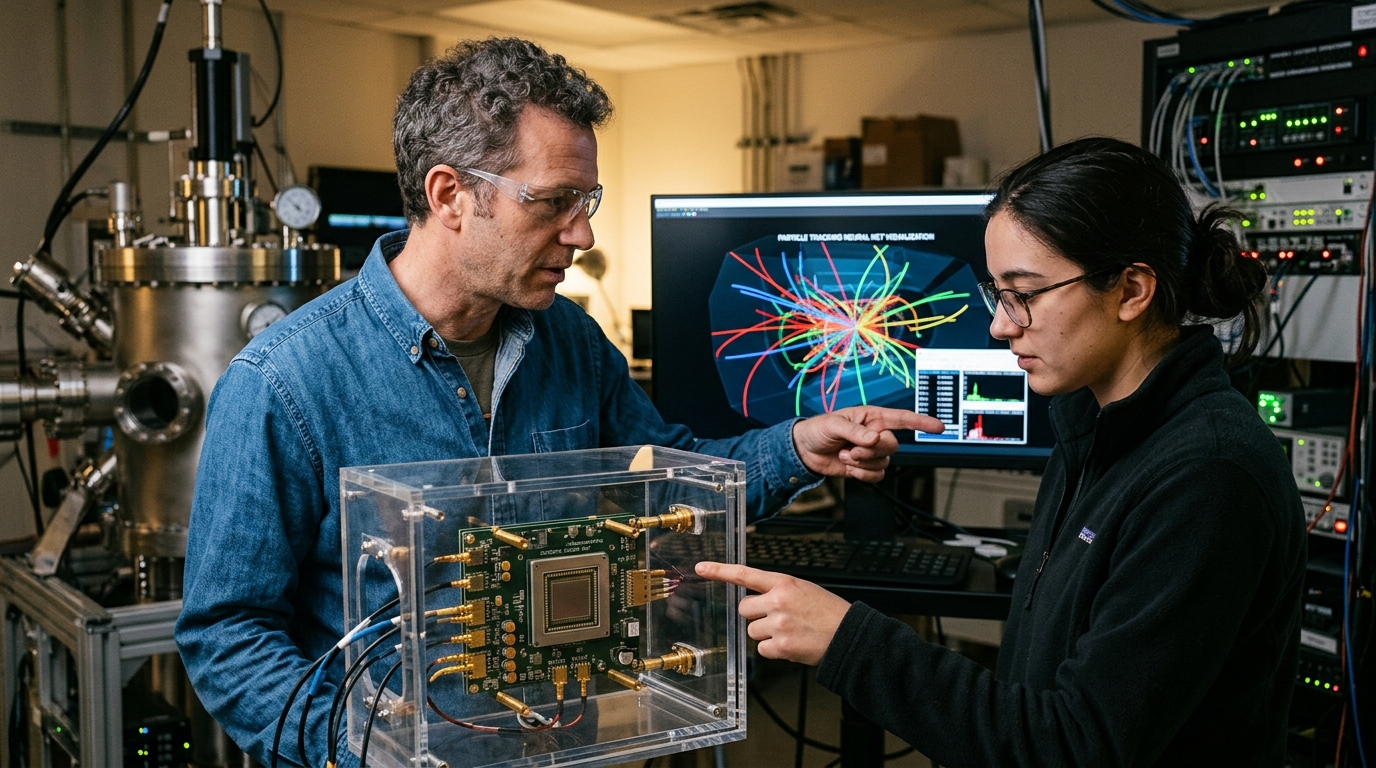
In the depths of CERN and the halls of Fermilab, humanity is attempting to unlock the secrets of the universe by recreating the conditions of the Big Bang. However, the progress of high-energy physics is now hitting a digital wall: data volume. Modern particle detectors generate hundreds of terabytes of information per second—a flow so dense that no traditional computing system can process it in real-time. Enter NEUROPix, a revolutionary approach that integrates Artificial Intelligence directly onto the sensor, transforming the detector itself into an "intelligent" organism.
The High-Luminosity Challenge
With the upcoming upgrade of the Large Hadron Collider to its High-Luminosity version (HL-LHC), the number of particle collisions will increase dramatically. This means more data, but also more "noise." Physicists are searching for rare phenomena, such as the self-coupling of the Higgs boson or evidence of dark matter, which are hidden within billions of common interactions. Until now, "trigger" systems used predefined algorithms to discard 99.9% of the data. NEUROPix changes this paradigm by employing neuromorphic computing.
Neuromorphic architecture mimics the functioning of the human brain. Instead of continuously processing digital signals (0s and 1s), neuromorphic sensors operate with energy "spikes," processing information only when something noteworthy occurs. This approach allows for rapid pattern recognition with minimal power consumption, making it possible to embed AI models directly onto the silicon chips at the heart of the detector.
NEUROPix: AI at the Sensor Edge
The NEUROPix project, a collaboration between Fermilab, Northwestern University, and other leading institutions, aims to create a new generation of "smart pixels." Traditionally, data from each pixel is sent to external processors. NEUROPix integrates Spiking Neural Networks (SNNs) within the sensor's own circuitry (Application-Specific Integrated Circuit - ASIC).
- Latency Reduction: Decision-making happens in nanoseconds, eliminating the need to transfer massive amounts of data through fiber optics.
- Power Efficiency: The neuromorphic nature of the system consumes a fraction of the energy required by traditional GPUs.
- Precision: The AI can be trained to recognize specific particle trajectories, isolating signal from noise with unprecedented fidelity.
"We are not just adding intelligence to the analysis; we are embedding it into the very act of observation," researchers state.
From CERN to Everyday Life
Although NEUROPix is being developed for the extreme conditions of accelerators—where radiation levels can destroy most electronics—its applications extend far beyond physics. "Edge AI" technology is the holy grail of modern engineering. Imagine medical imaging devices that detect anomalies during the scan, or autonomous vehicles that process visual data with the speed of a human reflex, without relying on the cloud.
The challenge remains durability. NEUROPix circuits must operate in environments with high levels of ionizing radiation. Their success will signal a new era where machines are not just passive recorders but active observers that understand what they see the moment they see it. This convergence of microelectronics, artificial intelligence, and fundamental physics represents perhaps the most exciting frontier of science in 2026.