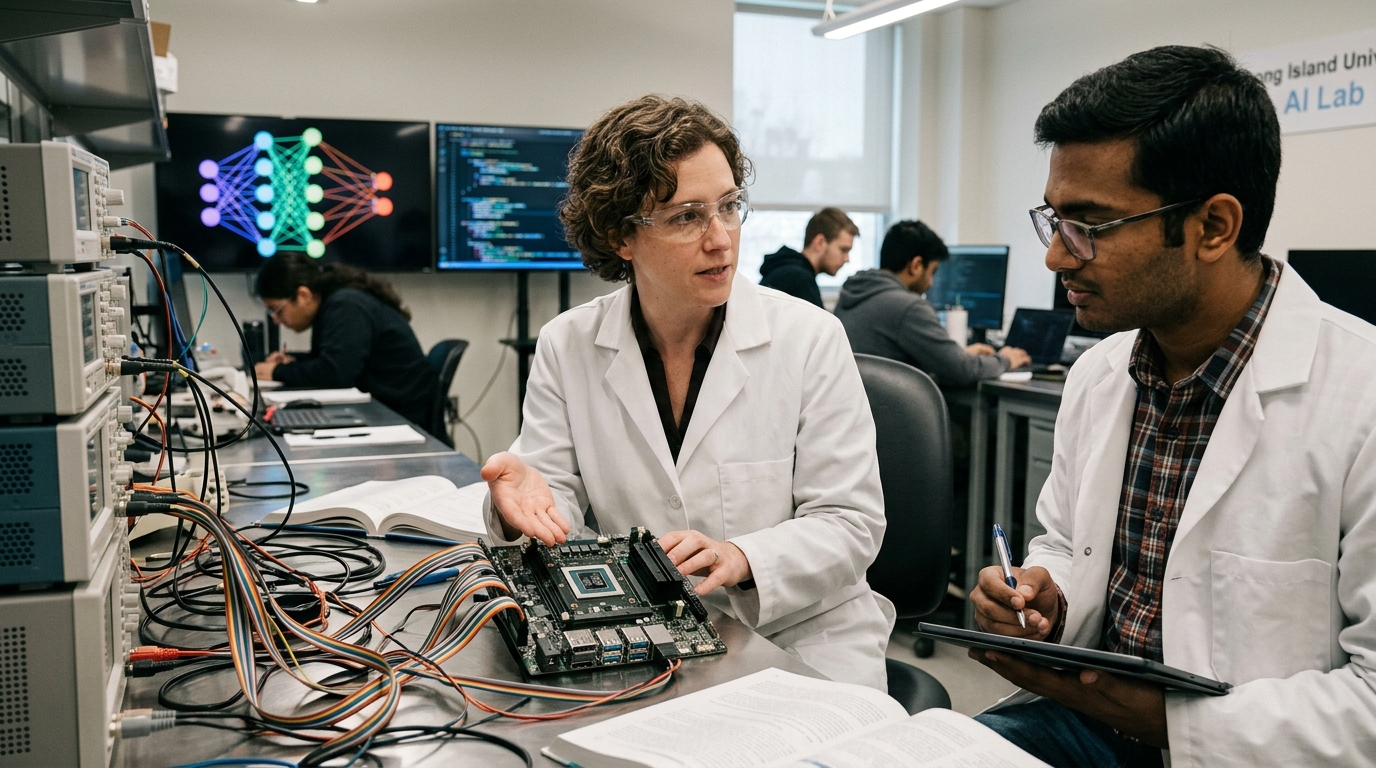
In an era where the digital revolution is redefining every facet of human activity, Long Island University (LIU) is taking a decisive step into the future. The recent announcement of the establishment of the Center for AI and Innovation is not merely an addition to the institution's physical facilities, but a strategic statement regarding the role of higher education in the 21st century. As we navigate through 2026, the integration of AI into the educational process is no longer an option, but an imperative necessity.
A Multidisciplinary Approach to Research
LIU's new center is not confined within the narrow boundaries of computer science. Instead, it adopts a holistic approach, seeking to infuse artificial intelligence into fields such as healthcare, business administration, cybersecurity, and the digital humanities. According to the university administration, the goal is to create an ecosystem where students and faculty from diverse backgrounds collaborate to solve complex problems.
"Artificial intelligence is the tool, but human creativity remains the driver," the institution's leadership remarked during the inauguration ceremony.
In the healthcare sector, for instance, the center will focus on developing algorithms that assist in diagnosing rare diseases by analyzing large-scale medical data. In business, the emphasis will be on predictive analytics and supply chain optimization, preparing graduates for a labor market that now demands a high level of digital literacy.
Bridging the Skills Gap with the Labor Market
One of the most significant challenges facing modern higher education is the distance between classroom instruction and industry needs. LIU's Innovation Center aspires to be the connecting link. Through partnerships with leading technology companies and local agencies, the center will offer students the opportunity for internships on real-world projects, using cutting-edge tools that are often inaccessible in a typical academic environment.
- Skill development in Generative AI and Large Language Models (LLMs).
- Seminars on ethics and deontology for the responsible use of algorithms.
- Robotics and automation laboratories.
- Incubator programs for student-led startups.
This investment comes at a time when New York State is intensifying its efforts to become a global technology hub, competing directly with Silicon Valley. LIU, with this move, positions itself at the forefront of this effort, attracting talent from around the globe.
Ethics and Social Responsibility
Despite the enthusiasm, the university administration recognizes the challenges. AI brings with it risks related to algorithmic bias, data privacy protection, and potential job displacement. The new center includes a dedicated "Technology Ethics" department, which will examine the social implications of these new tools. This approach is critical, as society now demands transparency and accountability from the systems that make decisions affecting our lives.
In conclusion, Long Island University’s Center for AI and Innovation is not just an investment in computational power; it is an investment in human capital. In a world changing at a geometric rate, the ability to learn, adapt, and collaborate with technology will be the most valuable asset for new generations. LIU seems to have fully grasped this, laying the foundations for a new era in education.