The evolution of Artificial Intelligence in recent years is not just about the scale of models or the volume of data, but primarily about how these systems are "aligned" with human desires and values. Until recently, the dominant method for this was Reinforcement Learning from Human Feedback (RLHF), a process that is complex, computationally expensive, and often unstable. However, the emergence of Direct Preference Optimization (DPO) in 2023 by Stanford researchers has shifted the landscape, offering a more elegant and efficient path. Today, DPO is no longer limited to refining chatbots; it is expanding into fields such as image generation, biology, and software engineering.
The Transition from RLHF to DPO
To understand the significance of DPO, one must look at the problem it was designed to solve. Traditional RLHF requires two stages: first, training a separate "reward model" that learns to score AI responses, and second, using this model to optimize the main model via a reinforcement learning algorithm (typically PPO). This process is notorious for its instability, as PPO parameters are notoriously difficult to fine-tune.
DPO completely bypasses the reward model. It treats alignment as a simple classification problem. By providing the model with pairs of data—a "preferred" response and a "rejected" one—DPO allows the model to learn directly which direction to take. This simplicity has led to its rapid adoption, with models like Zephyr-7B proving that smaller, open-source models can outperform even giants like Llama-2-70B through the correct application of DPO.
Expansion into Image Generation (Diffusion-DPO)
One of the most exciting applications of DPO beyond text is in diffusion models for image generation. Traditionally, models like Stable Diffusion are trained to reconstruct images from noise. However, the "quality" of an image is subjective. What makes an image "beautiful" or "photorealistic"?
With Diffusion-DPO, researchers can now use human preferences to enhance the aesthetics of generated images. Instead of relying solely on mathematical loss functions, models are trained on user choices that prefer one image over another. This has led to dramatic improvements in the rendering of details, such as human hands or material textures, which have been long-standing challenges for AI.
"DPO is not just an algorithm; it is a paradigm shift that converts subjective human judgment into a direct mathematical training signal."
Scientific Research and Structured Data
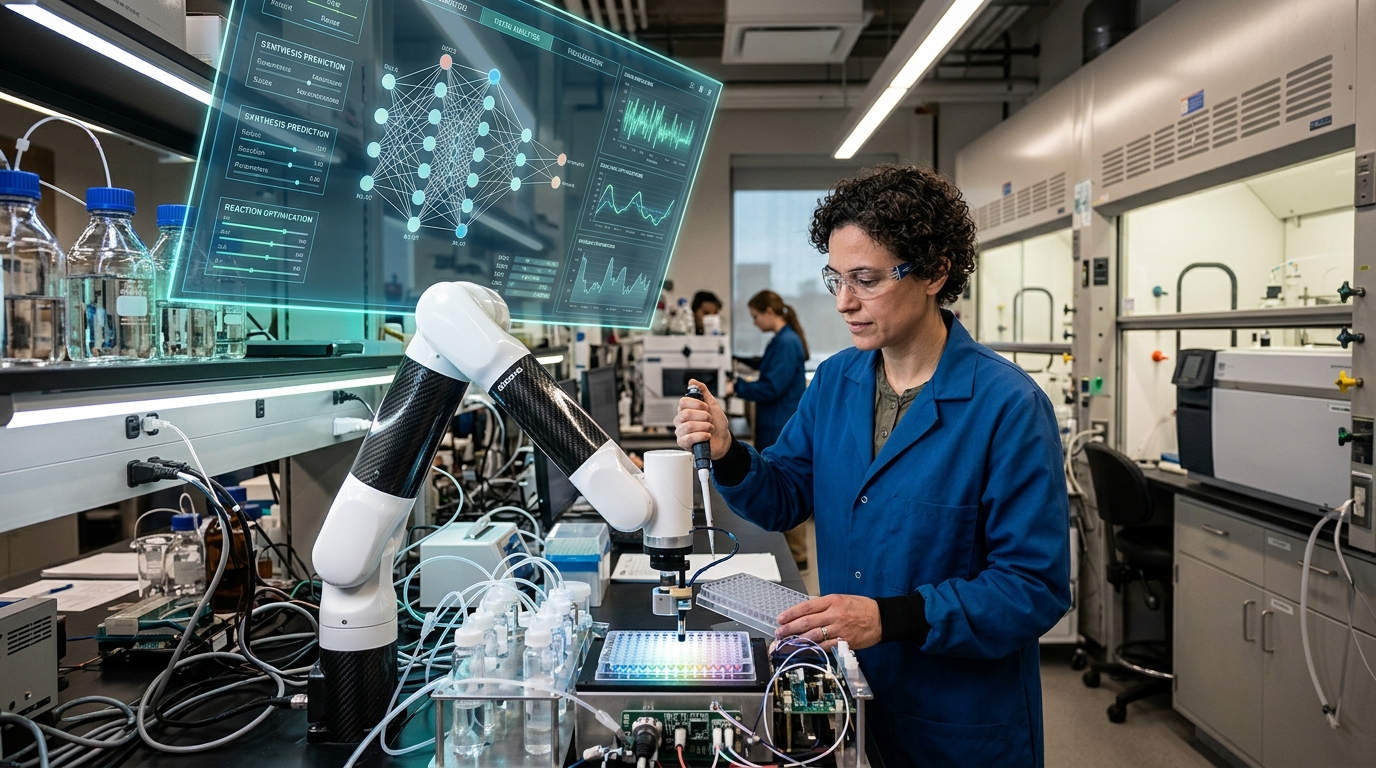
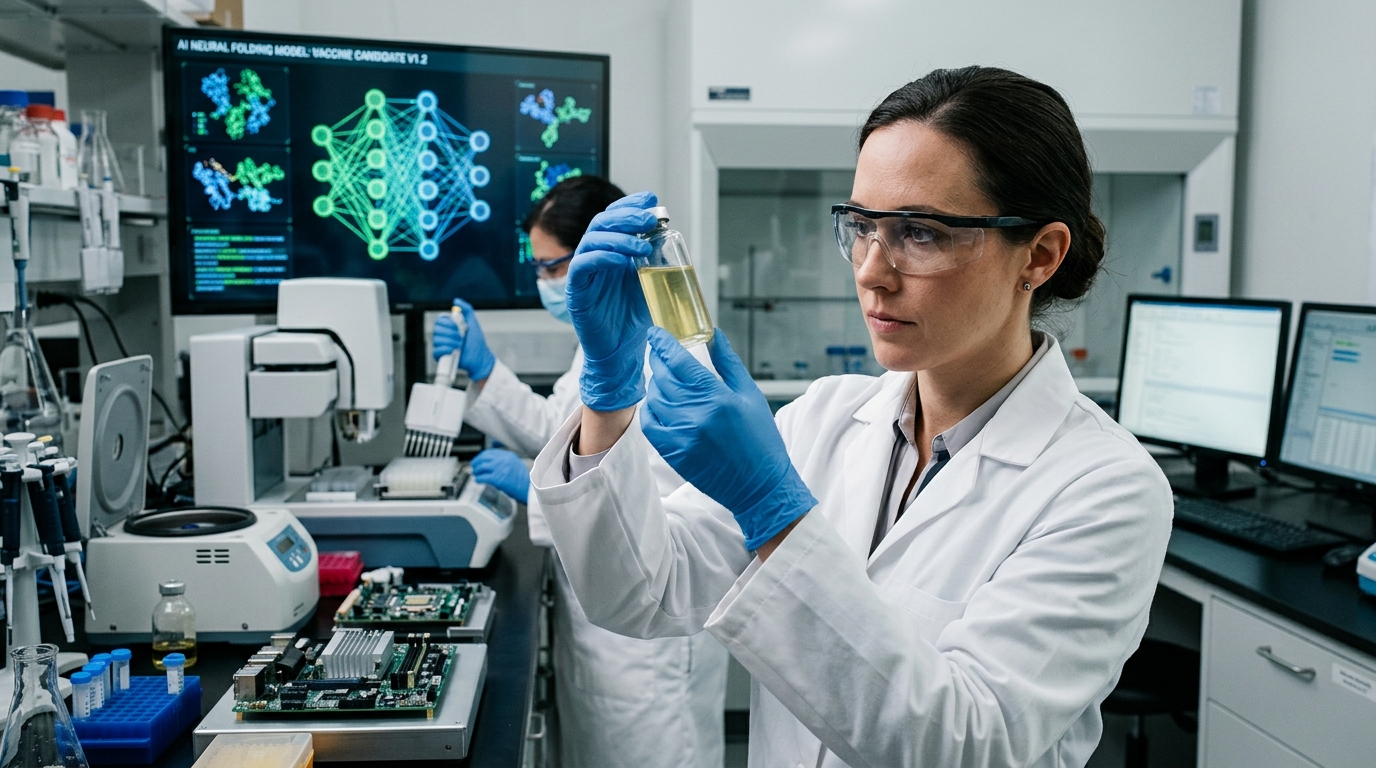
The application of DPO is now extending into "harder" scientific domains. In bioinformatics, for example, it is used to align models that design proteins. Here, the "preference" is not aesthetic but functional: a protein that folds correctly is preferable to one that fails in the lab. DPO allows models to learn from successful and failed experiments in a way that traditional supervision could not achieve.
Similarly, in programming, DPO is used to teach models not just to write code that "runs," but code that is secure, readable, and efficient. The ability of the model to distinguish between a "brute force" solution and an algorithmically optimal one, based on expert preferences, elevates the standard of automated software development.
Challenges and the Future of Self-Improvement
Despite its success, DPO is not a panacea. The quality of preference data is critical. If the data contains biases or errors, DPO will amplify them. Furthermore, there is the risk of "reward hacking," where the model learns to satisfy the preference criteria in superficial ways without substantive improvement.
The next frontier is so-called "Self-Play DPO" or "Iterative DPO," where the model generates its own responses, evaluates them (perhaps with the help of a stronger model), and continuously improves in a closed loop. This prospect brings us closer to systems that can learn autonomously, reducing the need for constant human supervision and paving the way for a new generation of AI that will not just be an assistant, but a capable partner in every field of human endeavor.