In an era where Artificial Intelligence is often accused of being preoccupied with digital hallucinations and text generation, British startup CuspAI serves as a potent reminder that the technology's true power lies at the intersection of bits and atoms. According to exclusive reports from Bloomberg, the Cambridge-based firm is in advanced discussions to raise at least $200 million in fresh capital. Should the deal close, CuspAI will catapult into the "unicorn" stable, with its valuation soaring past the $1 billion milestone.
The Digital Alchemy of the 21st Century
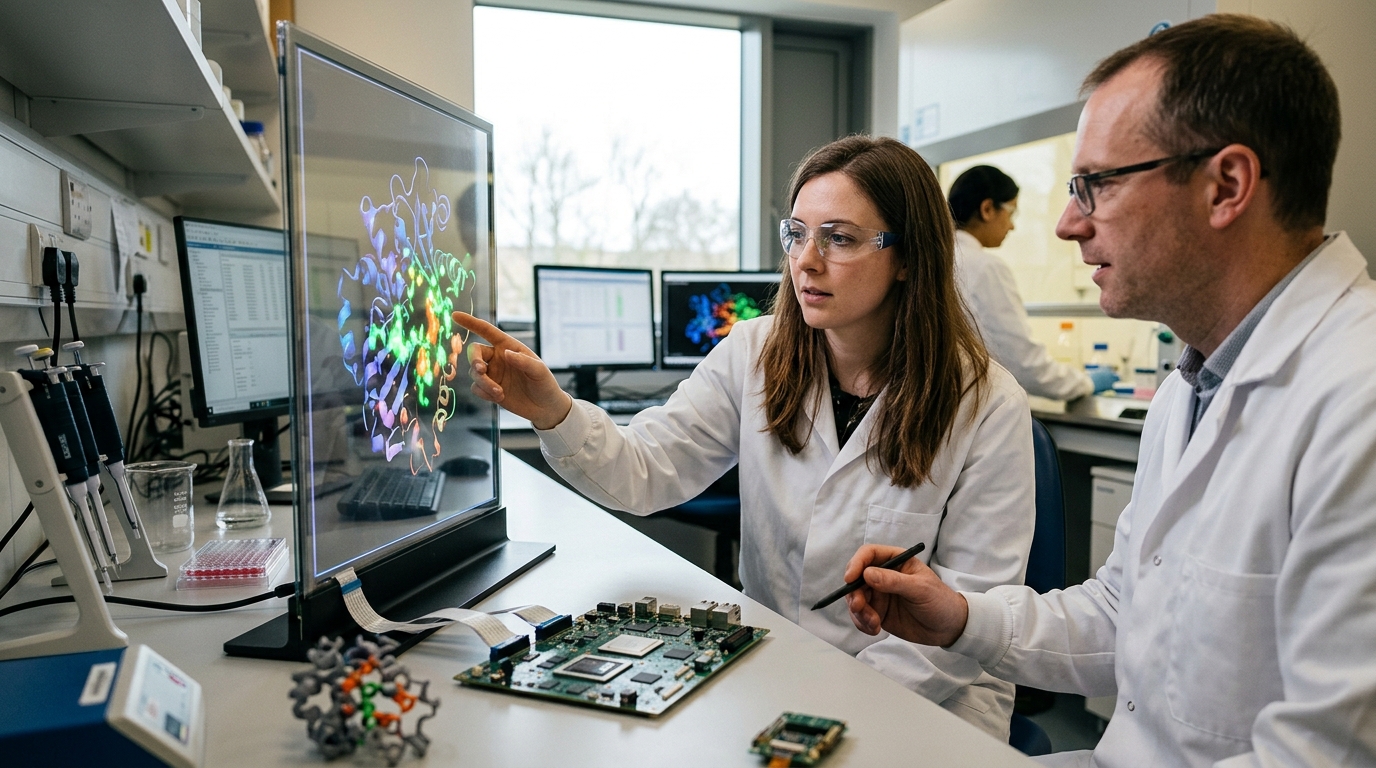
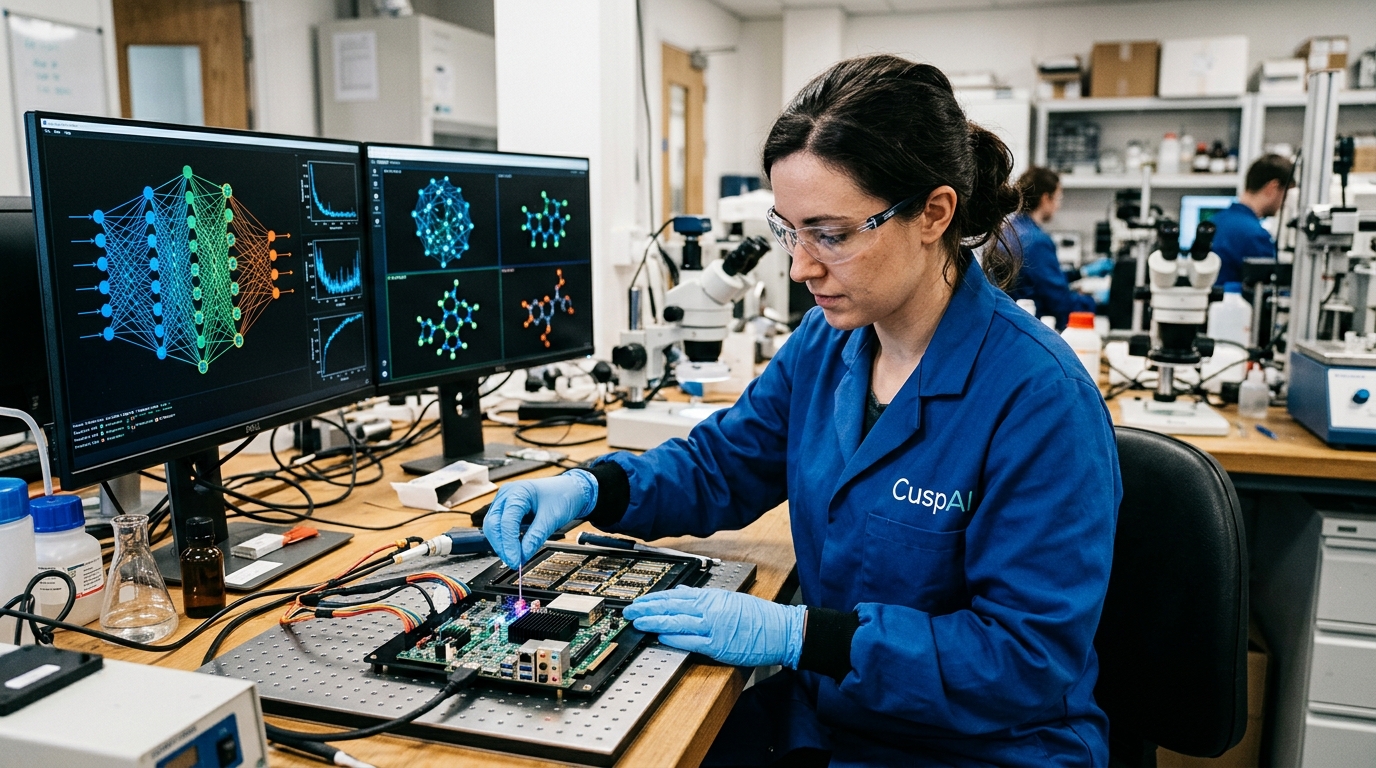
CuspAI is not your typical software company. It was founded by Max Welling, a former distinguished scientist at Microsoft Research and Qualcomm, and Chad Edwards, a seasoned entrepreneur with a tenure at Google DeepMind. Their mission is breathtakingly ambitious: to use generative AI to design new materials from scratch. Rather than the traditional laboratory method of trial and error, which can span decades, CuspAI’s platform functions as a "search engine" for chemistry. It allows scientists to specify desired properties—for instance, a material capable of capturing carbon dioxide with extraordinary efficiency—and the AI suggests the molecular structure to achieve it.
The significance of this approach is difficult to overstate. We are at a critical juncture for humanity, where the climate crisis demands immediate solutions in energy storage, carbon sequestration, and the manufacture of more efficient semiconductors. CuspAI promises to compress a century of scientific research into a few weeks of computational processing. By leveraging neural networks to predict molecular behavior, they are essentially automating the process of discovery.
The Strategic Alliance with Temasek and the Geopolitical Context
The involvement of Temasek, Singapore’s sovereign wealth fund, in these funding talks underscores the geopolitical dimension of material science technology. Singapore, like many other advanced economies, recognizes that mastery over the next generation of materials is a matter of national security and economic survival. Investing in a British firm like CuspAI also highlights the continued allure of the Cambridge ecosystem, which remains a global magnet for "deep tech."
However, CuspAI’s ascent is not happening in a vacuum. It competes with giants like Microsoft and Google DeepMind, both of which have dedicated divisions for AI-driven material discovery. What sets CuspAI apart is its laser focus and its ability to move faster than the bureaucratic behemoths of Silicon Valley. The market seems to be betting that a nimble, specialized team can provide more targeted solutions for industrial applications, particularly in the green energy sector.
Challenges and Ethical Dilemmas
Despite the euphoria, the road to a billion-dollar valuation is fraught with obstacles. Moving from the digital design of a material to its actual production at an industrial scale remains the primary bottleneck. CuspAI must prove that its theoretical breakthroughs can withstand the harsh conditions of the real world. Furthermore, there is the issue of the AI’s own energy consumption. It is a modern irony that training these massive models requires vast amounts of power, creating an environmental paradox that the company must navigate carefully.
In conclusion, CuspAI is more than just another startup chasing a high valuation. It is a beacon for how Artificial Intelligence can transcend the boundaries of the internet and offer solutions to the most pressing problems of our physical world. If successful, its value will be measured not just in billions of dollars, but in our collective ability to build a more sustainable future. The transition from "generative text" to "generative matter" may well be the defining technological shift of the late 2020s.