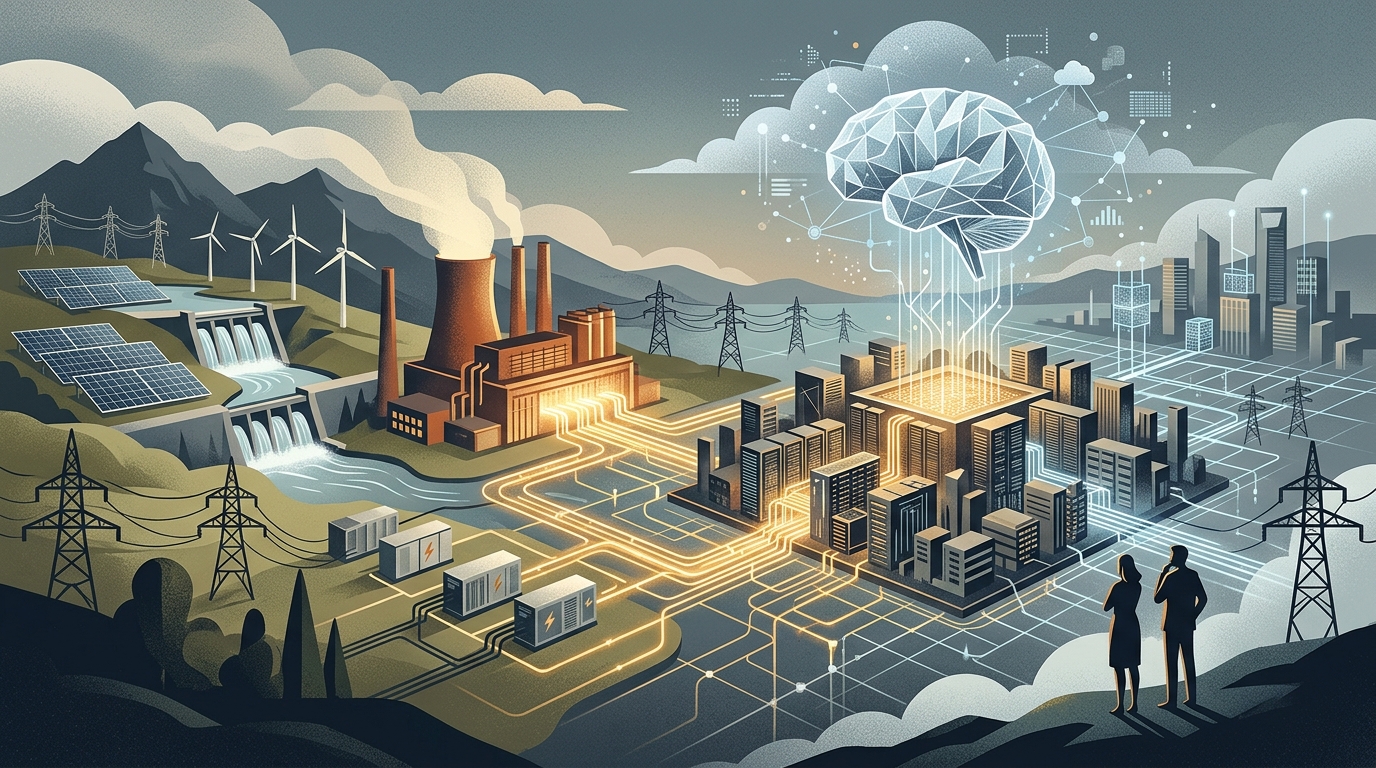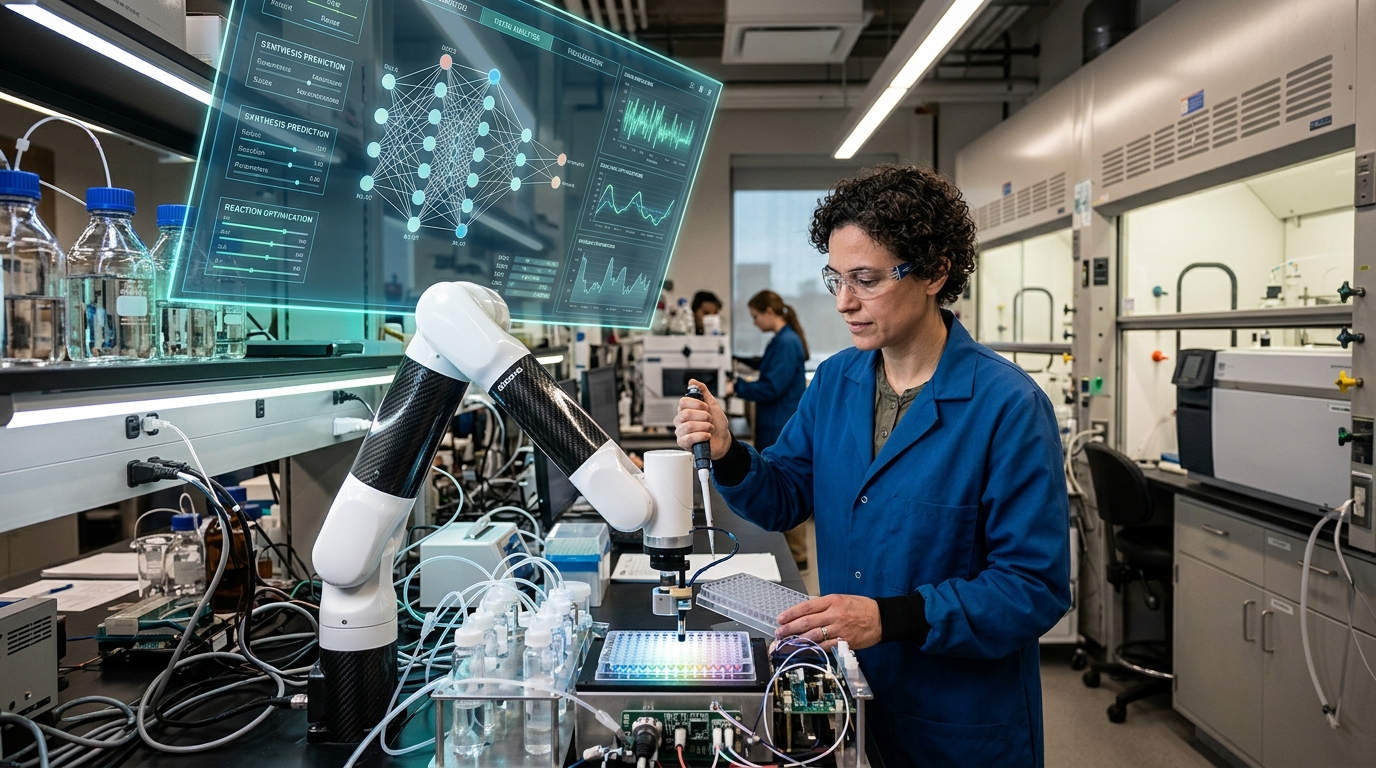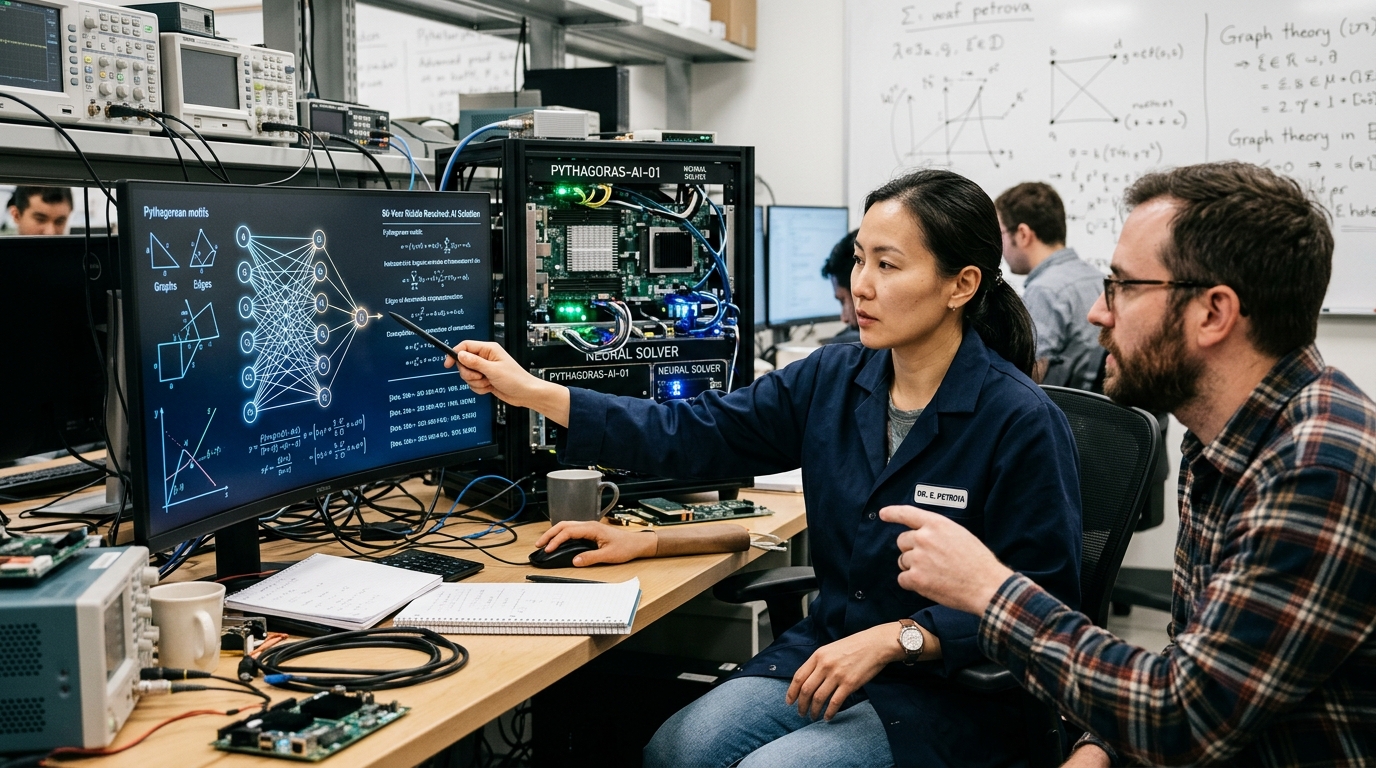
For decades, the world of higher mathematics remained one of the final bastions of human intellect—a realm where intuition, creativity, and pure logic were deemed impossible for machines to replicate. However, the recent news that an Artificial Intelligence system has solved a mathematical riddle that remained unsolved for 80 years is not merely a technical achievement; it is a fundamental paradigm shift in the scientific method. The problem, which concerned extremal combinatorics, had resisted the efforts of the brightest minds since the 1940s, proving that AI has now matured beyond simple linguistic mimicry.
The Nature of the Problem and the Significance of the Solution
The specific problem, known among mathematicians as part of Ramsey theory or related combinatorial challenges, requires identifying bounds within complex systems. Imagine trying to find the maximum number of points you can place on a grid without them forming specific patterns. While for small dimensions the solution is feasible, as dimensions increase, the number of possible combinations explodes exponentially, surpassing the number of atoms in the observable universe. This "wall" of complexity is what stalled human researchers for nearly a century.
The solution did not come from a traditional Large Language Model (LLM) simply "guessing" the next word. Instead, a hybrid approach was used, combining the generative power of models with rigorous verification algorithms. The system, which many analysts link to advancements like DeepMind’s FunSearch, operated as a "digital evolutionary mechanism." It generated code in languages like Python to describe potential solutions, which were then automatically evaluated. Only the best solutions "survived" to be refined in the next round, ultimately leading to a mathematical proof that humans can now verify and understand.
From "Black Box" to Pure Knowledge
One of the primary complaints from scientists regarding AI has been its "black box" nature: the machine provides an answer but fails to explain the "why." The resolution of this 80-year-old riddle overturns this narrative. Because the AI produced code rather than just raw results, mathematicians were able to read the logic behind the solution. This offers a new form of collaboration, where AI takes on the "grunt work" of exploring billions of possibilities, while humans maintain the role of supervisor and interpreter of the new mathematical concepts that emerge.
- Validation: The solution was scrutinized by independent peer reviewers, and its correctness was confirmed.
- Innovation: The method used can be applied to computer science problems and network optimization.
- Speed: What took humans 80 years was achieved in a few weeks of computational power.
Implications for the Future of Science
This success paves the way for solving other "elusive" problems, such as the Riemann Hypothesis or P vs NP, although these remain significantly more complex. However, AI's ability to discover new mathematical structures means we will soon see leaps in cryptography, coding theory, and quantum physics. If AI can understand the language of the universe—mathematics—then its ability to design new materials or drugs will increase exponentially.
"We are not just looking at a new tool, but at a new type of collaborator that never tires and is not limited by the biases of human intuition," notes a leading researcher from MIT.
In conclusion, the resolution of this puzzle is a reminder that Artificial Intelligence, when correctly directed, can expand the boundaries of human knowledge rather than replace it. The challenge for the scientific community now is to integrate these tools in a way that promotes true understanding rather than just result generation. 2026 will go down in history as the year silicon proved it could think with the abstraction of a Pythagoras.