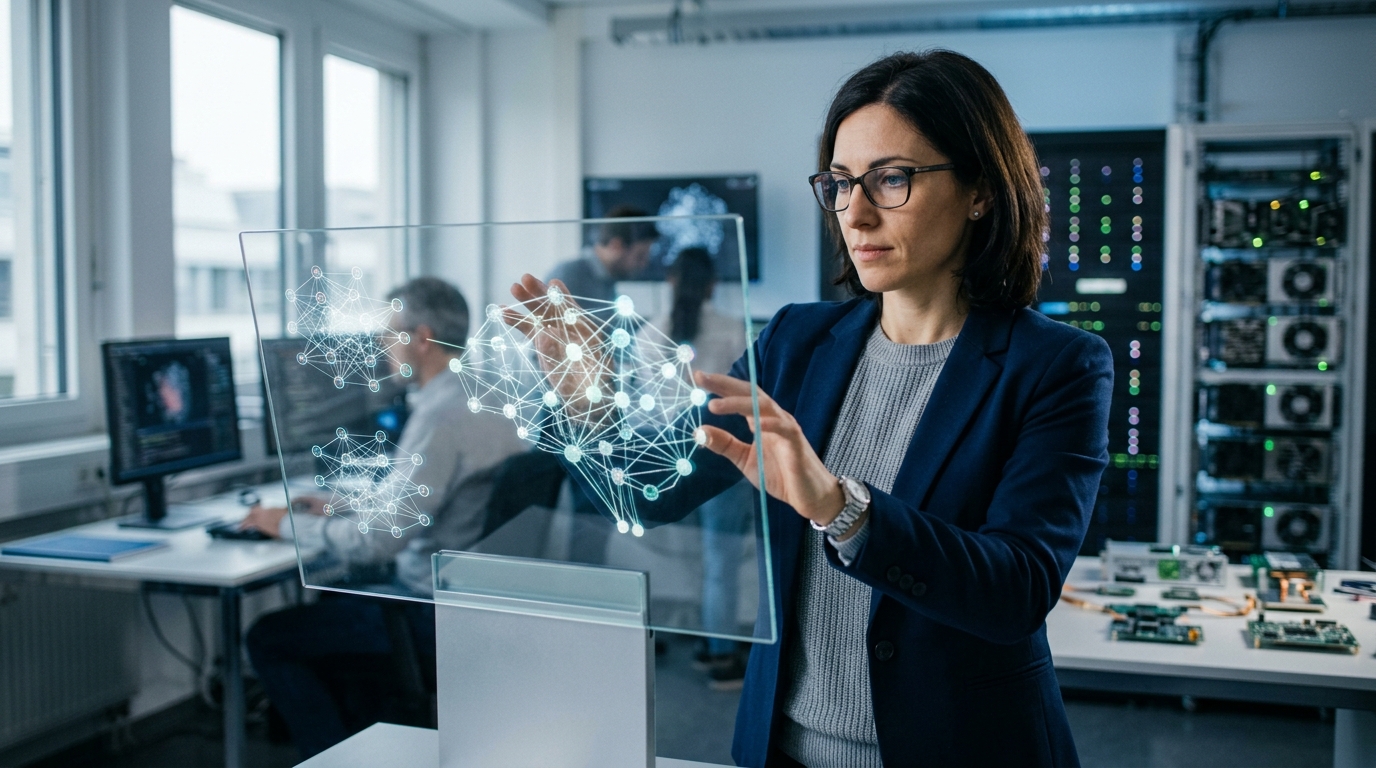
At the dawn of 2026, the conversation surrounding Artificial Intelligence (AI) has shifted from the mere automation of clerical tasks to the very heart of the human experience: creativity. What was once considered the final bastion of human uniqueness—the ability to synthesize original ideas, images, and melodies—is now in a state of profound flux. Generative AI is no longer an experimental tool in the hands of a few technocrats, but an omnipresent collaborator redefining the nature of artistic creation.
The Democratization of Creation and the New 'Brushstroke'
The most immediate consequence of AI’s incursion into the arts is the radical democratization of the means of production. In the past, creating a high-quality cinematic shot or a complex orchestral composition required years of training and access to expensive equipment. Today, through models like Sora or Suno, a teenager in a remote village can produce content that rivals Hollywood productions. This collapse of entry barriers is transforming creativity from a skill based on manual dexterity into one based on vision and curation.
However, this ease of use carries inherent risks. As the cost of producing 'content' approaches zero, the market is being flooded with a sea of digital works. The challenge for the artist of the future will not be 'how' to create, but 'why.' The ability to imbue meaning and context into an image generated by an algorithm is becoming the new form of mastery. The 'prompt' is not just a command; it is a new type of brushstroke, requiring a deep understanding of art history, semiotics, and language.
The Intellectual Property Crisis and the Ethics of Mimicry
One of the most thorny aspects of this revolution is the legal and ethical dimension of AI training. Large language models and image generators have been trained on billions of works by human artists, often without their consent or compensation. This has led to a global legal battle over whether machine 'learning' constitutes fair use or a sophisticated form of plagiarism. In Europe, the AI Act attempts to enforce transparency by requiring companies to declare the materials used for training, but technology is moving faster than legislation.
Furthermore, the question of authenticity arises. If an AI can perfectly mimic Van Gogh’s style or Frank Sinatra’s voice, what value does the original hold? Our society is called upon to decide whether the value of art lies in the final aesthetic result or in the process and human labor behind it. Many argue that AI will lead to a resurgence of 'handcrafted' works, where human imperfection will be seen as a premium feature in a world of algorithmic perfection.
A Symbiotic Relationship: AI as a Partner, Not a Replacement
Despite fears of artist displacement, history shows that technology often expands the horizons of art rather than closing them. The invention of photography did not kill painting; instead, it liberated it from the obligation of realistic depiction, leading to Impressionism and Abstract art. In the same way, AI can take over the repetitive and technical aspects of creation, allowing humans to focus on high-level strategy and emotional connection.
- Augmenting Inspiration: AI can act as an infinite mood board, suggesting color combinations or musical themes that a human might never have conceived.
- Rapid Prototyping: Architects and designers can visualize dozens of ideas in seconds, accelerating the cycle of innovation.
- Personalized Art: In the future, art may be dynamic, adapting to the viewer's emotions and preferences in real-time through algorithms.
In conclusion, artificial intelligence is not only redefining creativity but also the definition of what it means to be human. In a world where machines can 'create,' our uniqueness will be sought in our ability to feel, empathize, and assign moral weight to our actions. Creativity is not being lost; it is being transformed into a higher form of curating the human experience.