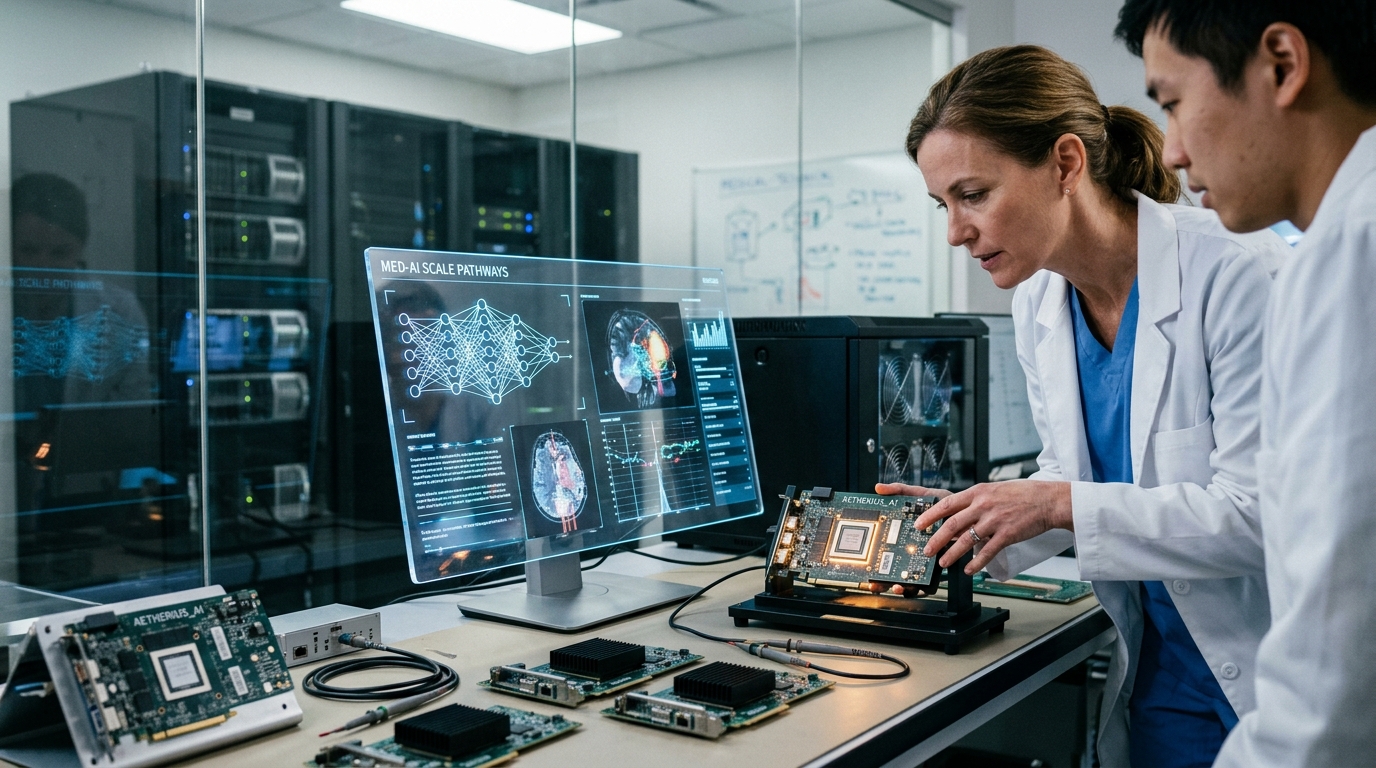
In an era where global healthcare systems are straining under the weight of staff shortages and burgeoning demand, Artificial Intelligence (AI) is emerging not as a digital replacement for clinicians, but as an indispensable "power multiplier." The concept of "physician extension"—using technology to broaden a doctor's capabilities—is undergoing a radical transformation, moving from simple automation to profound cognitive support through Generative AI.
The primary ailment afflicting modern medicine is clinical burnout. Today's physicians often spend more time tethered to Electronic Health Records (EHR) than engaging in face-to-face patient care. This is where AI steps in, offering solutions that allow clinicians to reclaim their human-centric role while simultaneously managing a volume of data that would be impossible for the human brain to process in real-time.
The Rise of Ambient Clinical Intelligence
One of the most transformative applications is Ambient Clinical Intelligence (ACI). Imagine a clinical encounter where the doctor and patient converse naturally, while an AI system listens in the background, understands the medical context, and automatically generates a comprehensive clinical note. This is no longer the realm of science fiction. Such systems are already reducing documentation time by up to 50%, enabling physicians to see more patients without compromising the quality of the interaction.
This extension isn't limited to administrative tasks. AI acts as an ever-vigilant assistant, capable of detecting subtle shifts in a patient's vital signs or identifying patterns in lab results that suggest the onset of sepsis or heart failure hours before clinical symptoms manifest. In this way, the physician's reach extends far beyond their physical presence in the ward or the clinic.
Managing Chronic Disease and Predictive Care
The challenge of an aging population necessitates a shift from reactive medicine—treating symptoms as they arise—to proactive, continuous monitoring. AI enables the scaling of care through remote monitoring systems that analyze data from wearables and home devices. A physician doesn't need to manually review thousands of glucose or blood pressure readings; AI filters the "noise" and alerts the medical team only when a true clinical intervention is required.
- Precision Therapeutics: AI analyzes genomic data and patient history to suggest optimal drug dosages, minimizing adverse effects.
- Accessibility: LLM-based chatbots can provide immediate answers to basic patient queries, triaging concerns and freeing up time for complex cases.
- Simulated Training: AI-driven virtual patients allow medical students to practice rare or high-stakes scenarios in a risk-free environment.
"AI will not replace physicians, but physicians who use AI will replace those who do not."
Ethical Guardrails and the Human Touch
Despite the technological promise, scaling physician reach through AI raises significant ethical concerns. The "black box" nature of certain algorithms makes it difficult to ascertain how an AI arrived at a specific diagnosis. Furthermore, the risk of "algorithmic bias" remains high, where systems may underperform for certain ethnic or socioeconomic groups due to skewed training data.
The central question remains: can empathy be scaled? Medicine is a deeply human art. While AI can analyze a radiograph with higher precision than a human radiologist, it cannot hold the hand of a patient who has just received a life-altering diagnosis. The success of AI integration depends on whether it is used to give doctors the time to be human again, or if it will be leveraged by hospital administrators simply to squeeze more "productivity" out of an already exhausted workforce.
The Road Ahead: A Symbiotic Future
AI as a tool for physician extension is a necessity, not a luxury. As we move forward, the focus must remain on building systems that are transparent, equitable, and, above all, complementary to human judgment. The transition requires not just technological adoption but a cultural shift within the medical community. By offloading the cognitive and administrative burdens to AI, we have the potential to return to the golden age of medicine, where the relationship between the healer and the patient is the primary focus of care.