Humanity is facing an invisible crisis. Microplastics—particles less than five millimeters in diameter—have permeated every corner of our planet: from the deepest ocean trenches to Antarctic snow, and from our drinking water to the human bloodstream. Until recently, detecting and classifying these particles was a grueling, manual process requiring hundreds of hours of laboratory labor. However, the advent of Artificial Intelligence (AI) is radically transforming the landscape, providing scientists with the tools to understand and confront this environmental threat with speed and precision once thought impossible.
The Challenge of Manual Detection
For decades, environmental scientists relied on traditional methods such as optical microscopy and spectroscopy (FTIR and Raman) to identify microplastics. This process is exceptionally time-consuming. A researcher must examine thousands of particles under a microscope, attempting to distinguish a piece of plastic from a grain of sand or organic debris. Human error is inevitable, as fatigue and subjectivity affect the results. Furthermore, microplastics that have weathered in the environment often change color and shape, making their identification even more difficult.
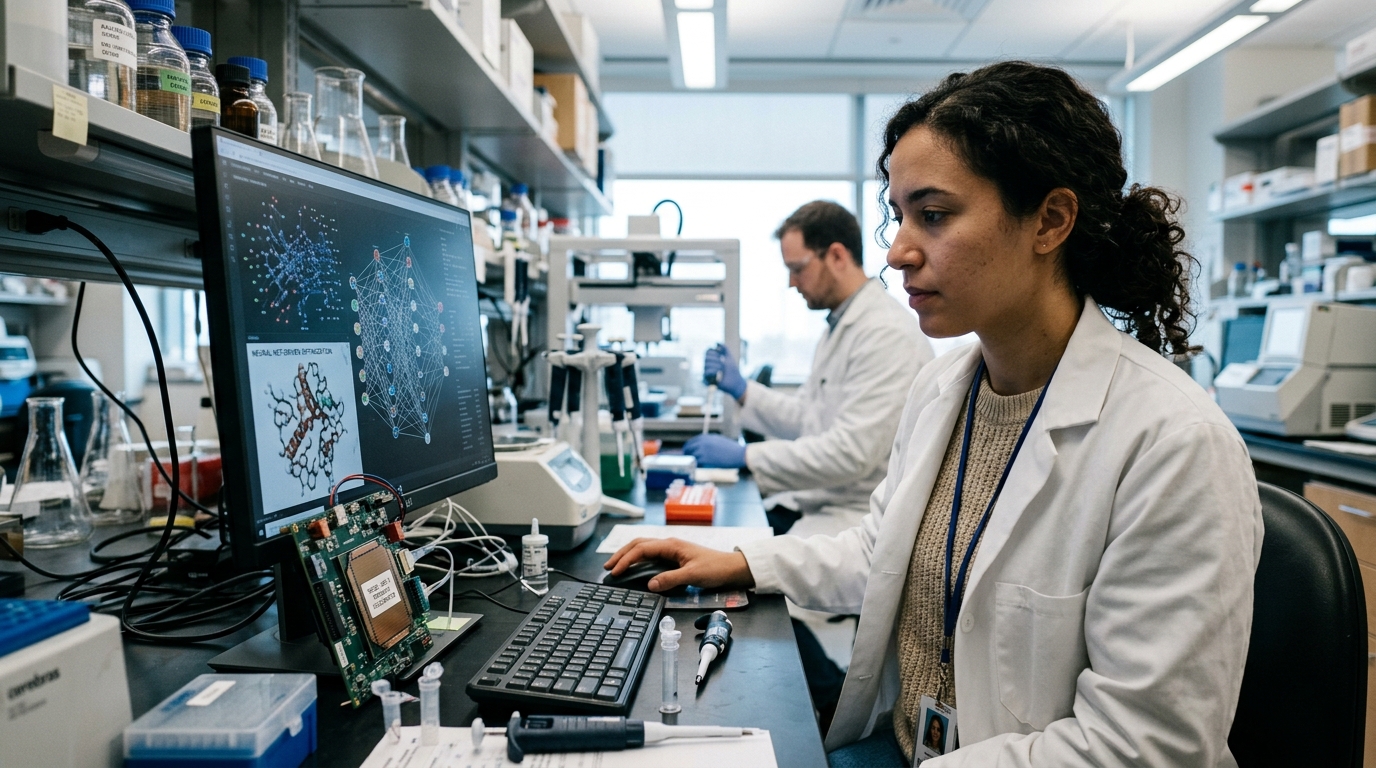
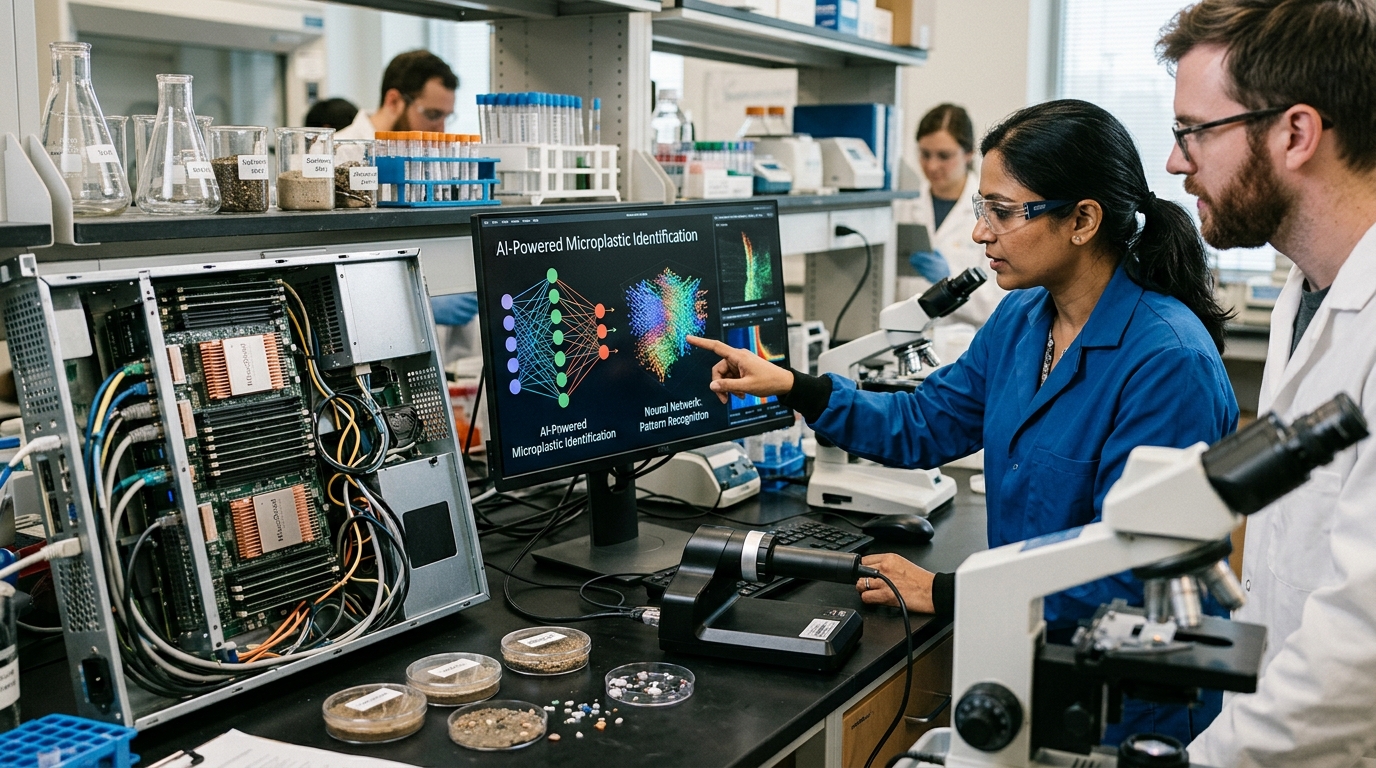
The need for a more efficient solution led to the development of Machine Learning (ML) algorithms. Instead of relying solely on the human eye, scientists are now training neural networks to recognize the "digital signatures" of plastics. These systems can analyze thousands of images in seconds, categorizing particles based on size, shape, and polymer type with an accuracy exceeding 95%.
Automated Spectroscopy: The Key to Success
The real revolution is occurring in the field of spectroscopy. Raman and FTIR spectroscopy provide a "chemical fingerprint" for every material. However, interpreting this data requires specialized expertise. AI can instantaneously compare the acquired spectra with vast databases of known polymers. According to recent studies highlighted by EurekAlert!, the use of AI reduces analysis time from weeks to just a few hours.
- Speed: Real-time data processing capabilities.
- Accuracy: Minimization of false-positive results.
- Scale: Ability to analyze samples from entire river basins.
Moreover, AI enables the detection of even smaller particles, nanoplastics, which are practically invisible using traditional methods. Nanoplastics are considered even more hazardous to health, as they can penetrate cellular membranes. AI's ability to discern signals within the "noise" of complex data opens new pathways for toxicological research.
From Data to Policy Action
The significance of this technological advancement extends far beyond laboratory walls. Accurate mapping of pollution is essential for informed policy-making. With the help of AI, governments can identify the primary sources of plastic leakage—whether industrial facilities or urban sewage systems—and implement targeted measures. As the UN negotiates a global plastic treaty, data generated by AI systems serves as the strongest argument for stricter regulations.
"Artificial Intelligence is not just an analytical tool; it is the magnifying glass that allows us to see the magnitude of the destruction we have caused, so that we can finally begin to clean it up," notes one of the study's lead researchers.
In conclusion, the integration of AI into environmental science marks a new era. While technology alone cannot clean the oceans, it provides us with the knowledge required to stop the flow of plastic at its source. The challenge now shifts from detection to action, with the hope that digital intelligence will assist in restoring the biological balance of our planet.