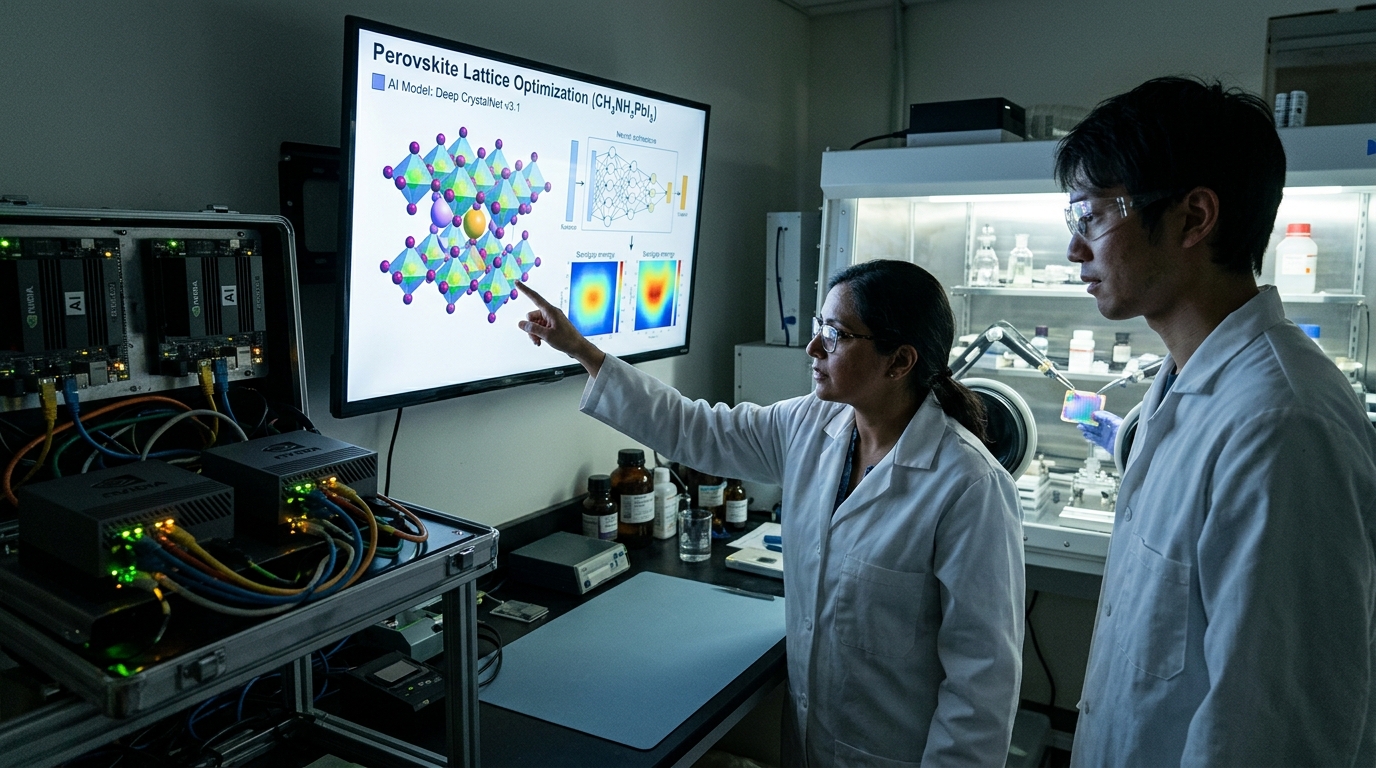
As the global community pushes for full decarbonization by 2050, the search for the next generation of photovoltaic technologies has shifted from mere efficiency to holistic sustainability. At the heart of this shift lies Artificial Intelligence (AI), which is now assuming the role of the architect in the development of Perovskite Solar Cells (PSCs). A recent study published in the journal Nature highlights how AI is not only optimizing energy production but redefining the entire material life cycle, ensuring that "green" energy does not come with a hidden environmental cost.
Perovskites and the Toxicity Dilemma
Perovskites have been hailed as the "miracle material" of materials science. With the potential to surpass the efficiency of traditional silicon at a significantly lower production cost, PSCs promise to democratize solar energy. However, traditional manufacturing methods often rely on toxic solvents and involve the use of lead, raising serious questions about their large-scale sustainability. This is where Artificial Intelligence steps in, acting as an accelerator for "green chemistry."
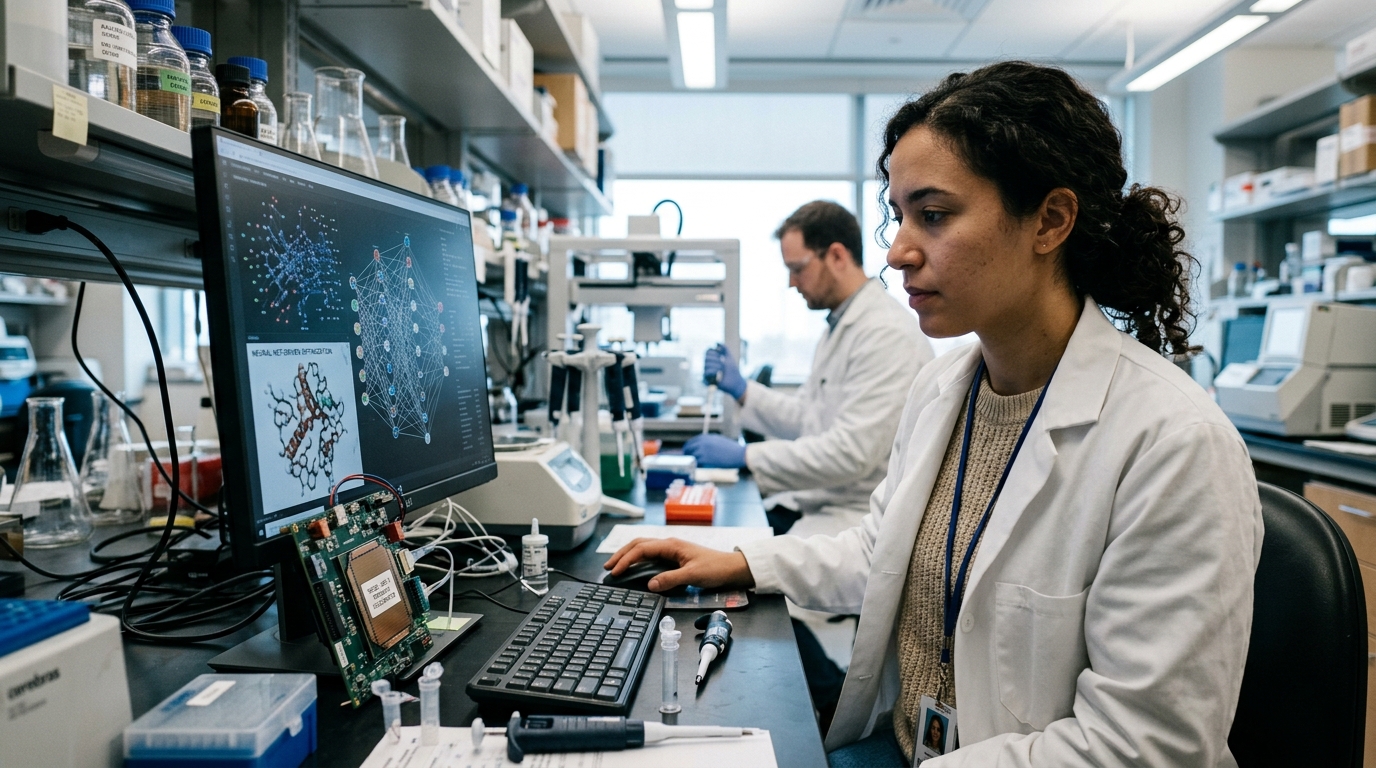
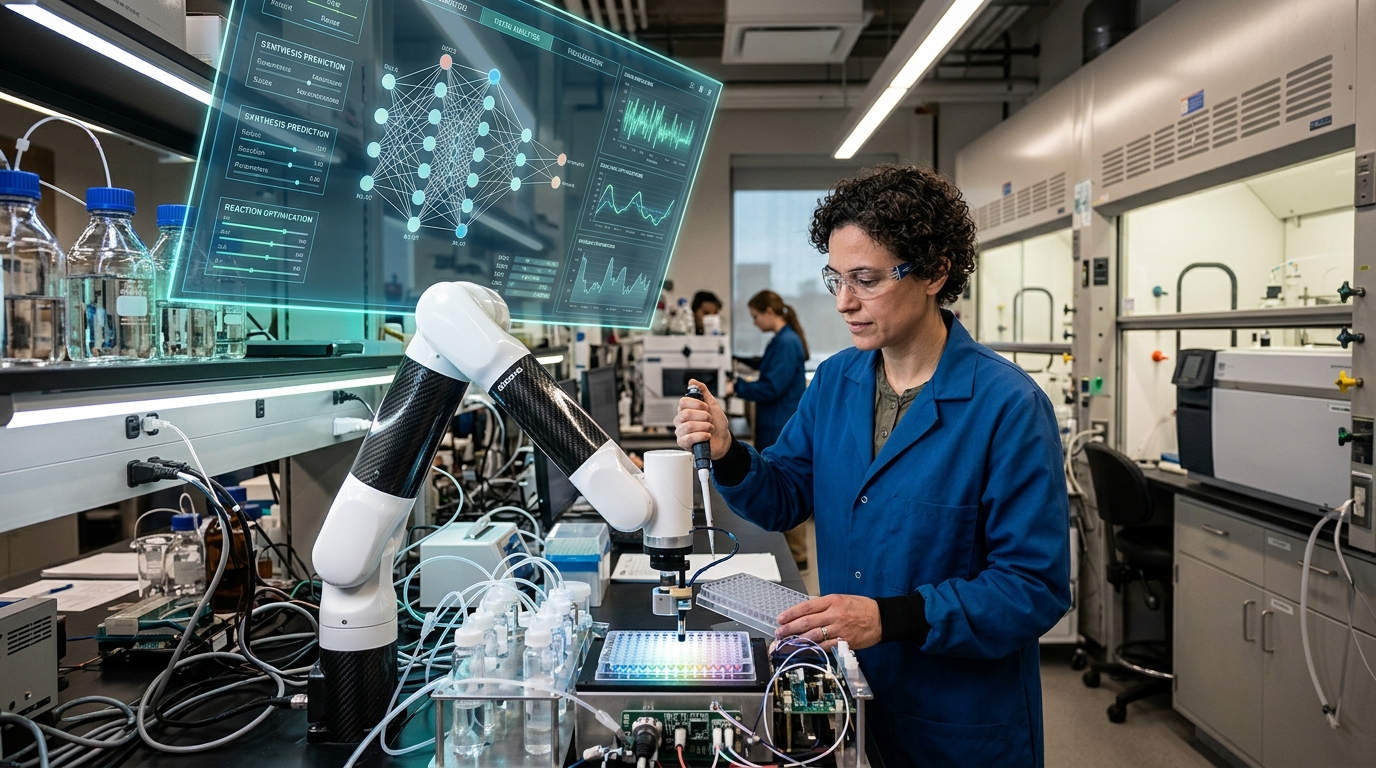
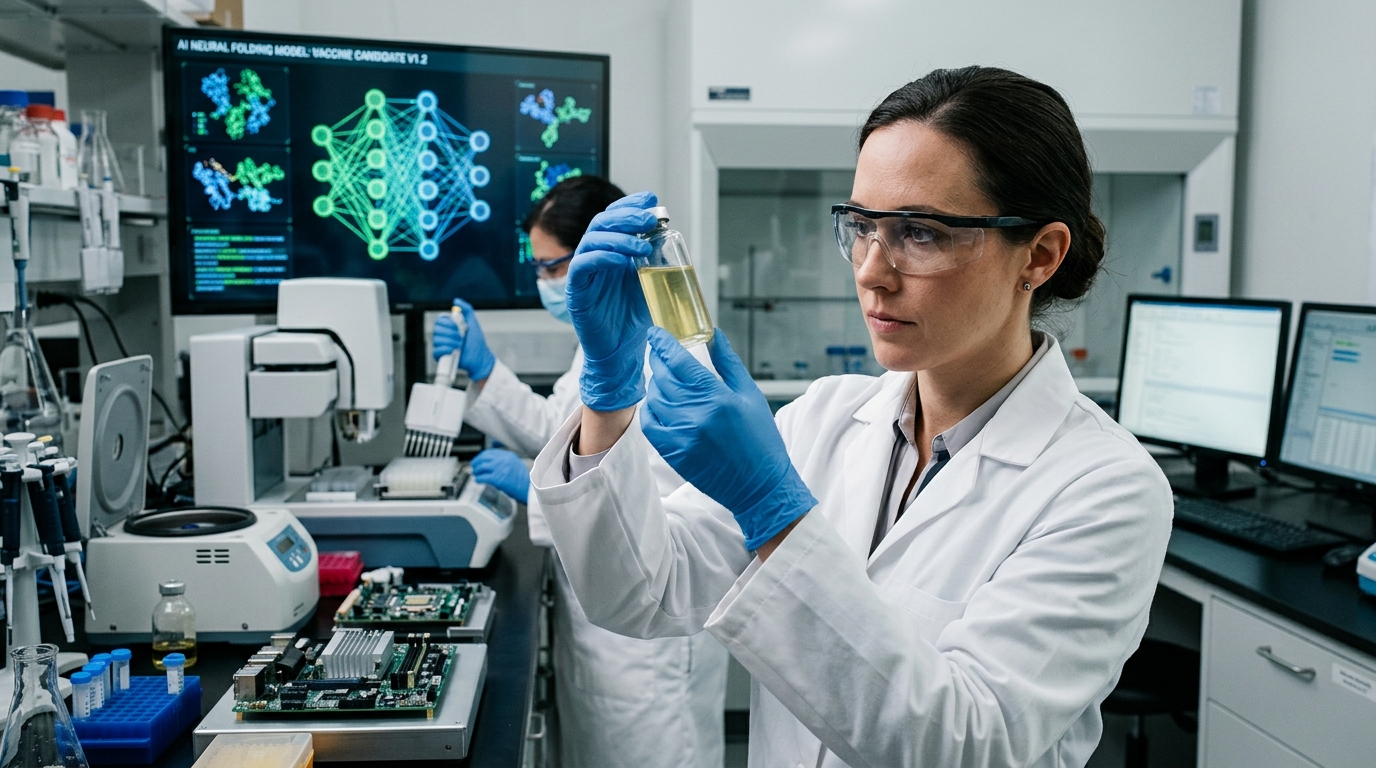
Using machine learning algorithms, researchers can now simulate thousands of combinations of solvents and chemical processes in a fraction of the time. AI analyzes vast datasets to identify alternatives that are less harmful to the environment while maintaining the high crystalline quality required for efficient light-to-electricity conversion. This "green processing" is no longer a trial-and-error experiment but a precise mathematical prediction.
AI-Driven Life Cycle Assessment (LCA)
One of the most significant contributions of the AI research published in Nature is the automated Life Cycle Assessment (LCA). LCA is the process of evaluating the environmental impacts of a product from raw material extraction to final disposal or recycling. In the past, this process was laborious, static, and often based on outdated data.
The AI models developed can now perform dynamic LCA in real-time during the design phase. This means scientists can know the carbon footprint of a solar cell before it is even fabricated in the lab. AI's ability to link manufacturing parameters with long-term environmental impacts allows for the creation of cells that are truly circular. For example, AI can suggest modifications to the perovskite structure that facilitate lead recovery at the end of the panel's life, preventing soil contamination.
From Laboratory to Industrial Scale
The major hurdle for perovskites has always been stability and scalability. While impressive results are achieved in the lab, transferring them to production lines kilometers long is a massive challenge. AI solves this problem through "digital twins"—virtual representations of the manufacturing process that allow for the optimization of conditions (temperature, humidity, coating speed) without wasting materials.
- Reduction of toxic solvent use by 70% through predictive modeling.
- Increased cell lifespan by identifying microscopic failures before they occur.
- Minimization of the energy footprint of the manufacturing process itself.
The integration of AI into the photovoltaic industry is not just a technical upgrade; it is a necessity for the industry's survival. As regulations from the European Union and other international bodies become stricter regarding the environmental footprint of technology products, the ability to prove sustainability through AI-driven data will become the market "passport."
"Artificial Intelligence is not just a calculation tool, but the catalyst that transforms green chemistry from theory into industrial reality," the study notes.
In conclusion, the research highlighted by Nature marks a shift toward "smart sustainability." The era where technology was developed at the expense of the planet is ending. Guided by AI, perovskite solar cells can become the cornerstone of an energy system that is not only efficient but also ethically and environmentally responsible.