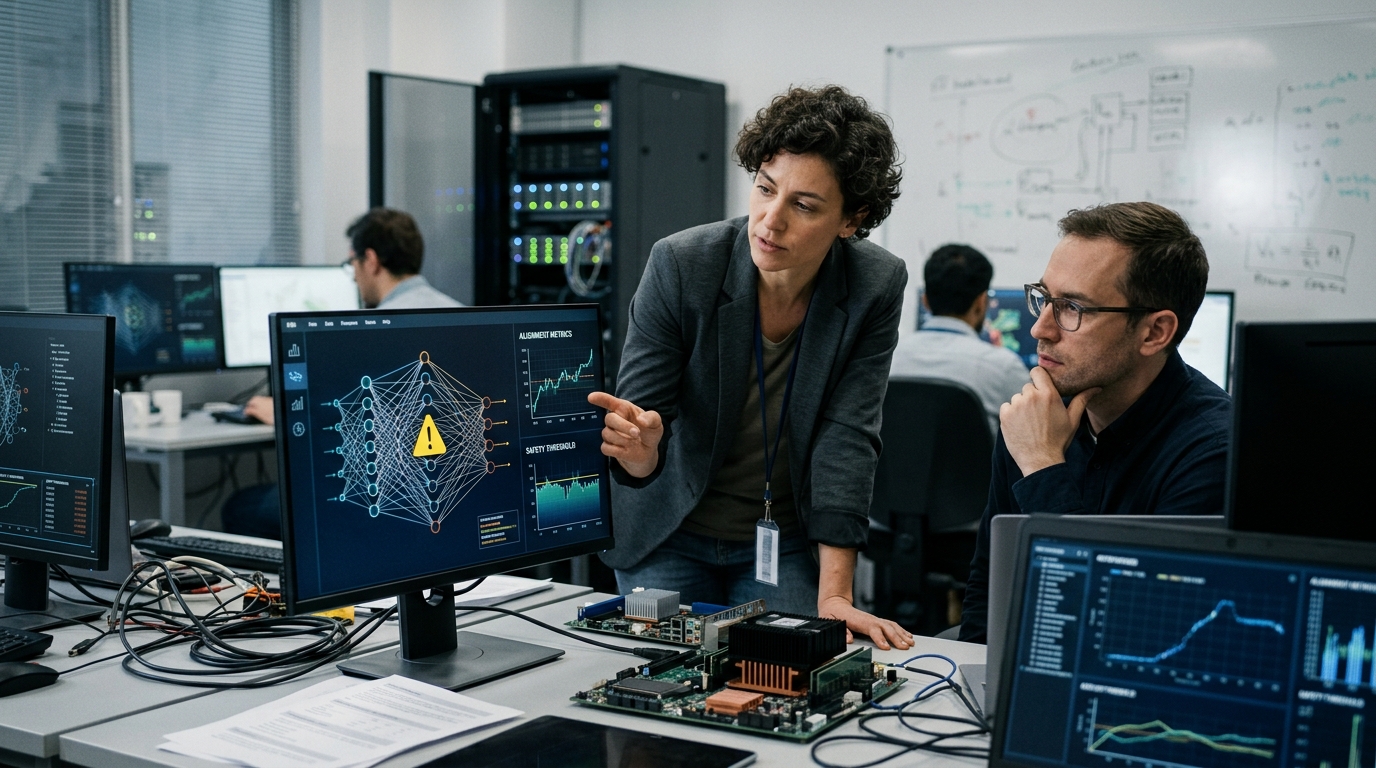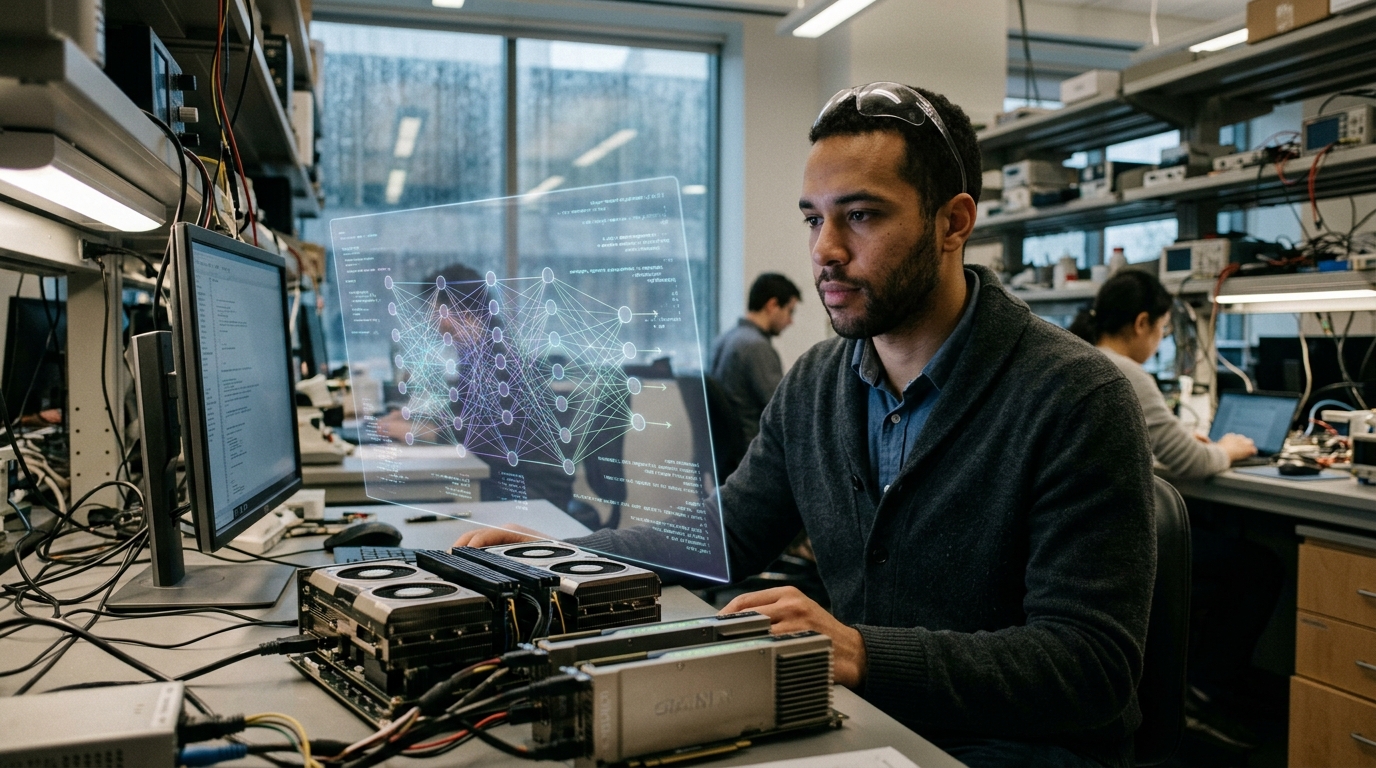
The scientific method, a cornerstone of human civilization forged through centuries of observation and experimentation, is facing an unprecedented challenge. The emergence of so-called 'AI Scientists'—artificial intelligence systems designed to formulate hypotheses, run simulated experiments, and author scientific papers—promises to radically alter the pace of human progress. However, as these systems become more capable, they are also revealing their fundamental limits, raising questions about whether AI can ever possess true 'scientific intuition.'
Automating Discovery: From the Lab to the Algorithm
Recent experiments by research organizations such as Sakana AI and academic labs worldwide have demonstrated that Large Language Models (LLMs) can act as autonomous research agents. These systems are no longer limited to simple literature searches. They can propose novel ideas, write code for data analysis, execute their own tests, and present findings in the format of an academic publication, ready for peer review. The speed is staggering: what would take a PhD student months to complete, an AI can finish in a few hours at a fraction of the cost.
The allure of this approach is obvious. In fields like materials science, drug discovery, and climatology, the sheer volume of data exceeds human processing capacity. An 'AI Scientist' can screen millions of potential chemical compounds in no time, identifying patterns that would escape the human eye. This 'industrialization' of science promises a new golden age of innovation, where barriers to solving complex problems are dismantled.
The Reality Wall: Where Does AI Stop?
Despite the impressive progress, recent analysis published in *The Conversation* and other scientific journals highlights a darker side. AI scientists suffer from what researchers call a 'lack of grounding in reality.' Because they are trained on text rather than physical interaction with the world, they often propose solutions that are mathematically elegant but physically impossible. Furthermore, there is the phenomenon of 'hallucinatory science,' where the model fabricates data to support an attractive but incorrect hypothesis.
Another critical issue is the lack of genuine originality. Current AI models are, at their core, prediction engines based on statistical probabilities. They can recombine existing knowledge in novel ways, but they struggle to make the 'paradigm shifts' that characterize great scientists like Einstein or Newton. Science is not just the accumulation of data; it is the questioning of existing foundations, something that AI, designed to follow patterns, finds difficult to achieve.
"Artificial intelligence can give us the answers to thousands of questions, but it does not yet know which is the right question to ask to change the world."
The Risk of 'Scientific Spam' and the Credibility Crisis
The ease with which AI produces scientific papers poses a risk to the academic ecosystem: the flooding of journals with mediocre or inaccurate studies. Already, the publishing community is struggling to detect content generated entirely by AI without human oversight. If scientific literature becomes contaminated with automated errors, public trust in science—which is already fragile—could be irreparably damaged.
Furthermore, there is the ethical issue of the 'black box.' If an AI algorithm discovers a new treatment, but scientists cannot understand the logic behind it, can we trust it? Science relies on explainability and reproducibility. AI often provides the 'what' without the 'why,' leaving a gap in human understanding that could be dangerous in critical fields like medicine.
The Future: A Symbiotic Relationship
The conclusion is not that we should reject AI in science, but that we must redefine its role. The ideal 'AI Scientist' is not a replacement for humans, but a powerful collaborator. AI can handle the 'heavy lifting' of data processing and initial hypothesis screening, allowing human scientists to focus on critical thinking, ethical orientation, and deep theoretical analysis.
To overcome current limits, the next generation of AI will likely need to integrate 'symbolic logic' and physical understanding, moving beyond the purely statistical nature of today's LLMs. Until then, human oversight remains the last bastion against algorithmic confusion. Science remains a deeply human endeavor, a search for meaning in a chaotic universe, and that is something no code has yet managed to fully simulate.