In the intricate tapestry of American politics, the concept of "states' rights" has long been the bedrock of conservative ideology. Yet, the rapid ascent of Artificial Intelligence (AI) is creating a paradoxical rift within the Republican Party. On one side stands Donald Trump and his Washington allies, pushing for a centralized, deregulatory approach that would preempt states from enacting their own rules. On the other is Todd Weiler, a Republican state senator from Utah, who refuses to fall in line, arguing that citizen protection cannot wait for federal lethargy.
The Clash of Jurisdictions
The central conflict hinges on a fundamental question: who has the authority to harness a technology that knows no borders? Donald Trump has made it clear that he intends to repeal President Biden’s executive order on AI, which he views as a "hindrance to innovation." Trump’s vision involves a unified federal framework that prioritizes American dominance over China while minimizing bureaucratic hurdles. For the tech industry, this approach is ideal, as it avoids the dreaded "patchwork of regulations" that would make compliance a logistical nightmare for multinational corporations.
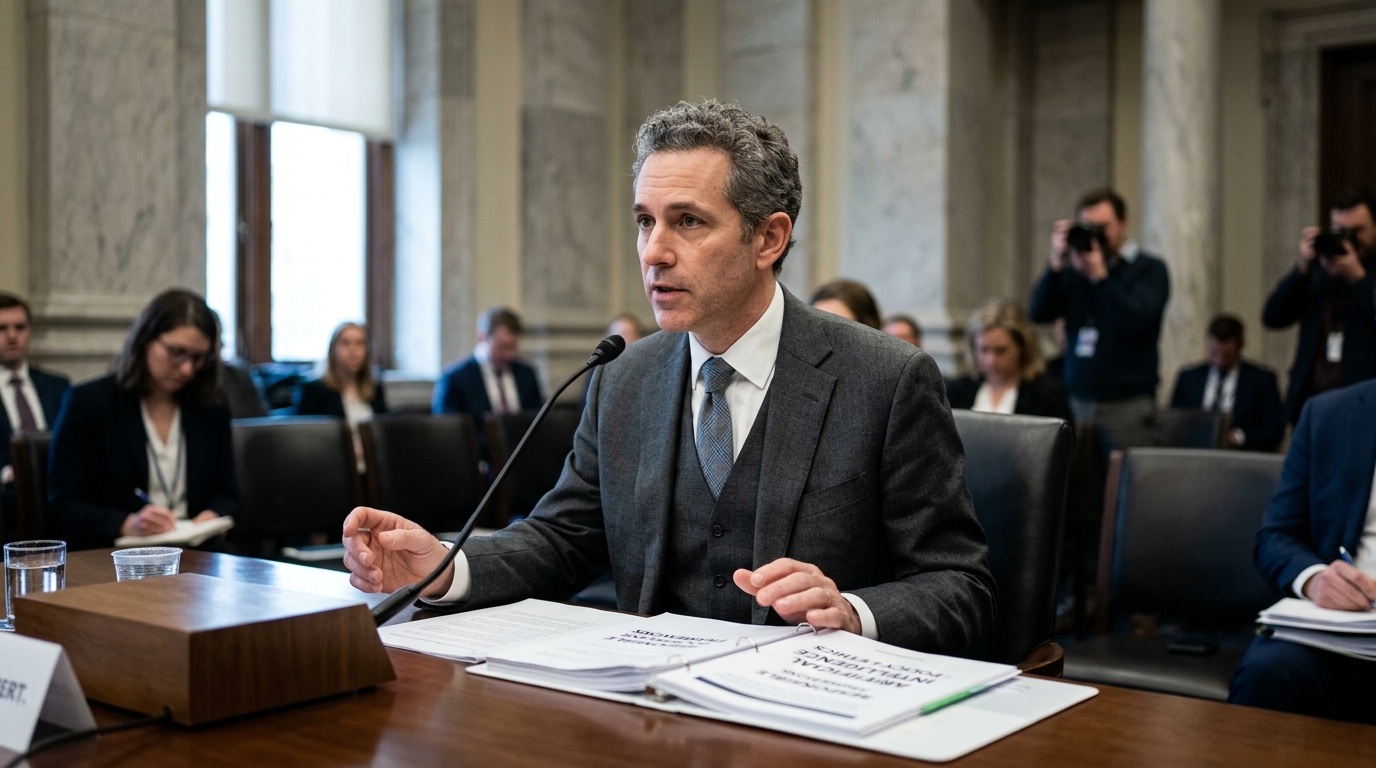
However, in Utah, the perspective is markedly different. The recently passed "Artificial Intelligence Policy Act" represents one of the first comprehensive efforts in the U.S. to regulate AI at the consumer level. Weiler and his supporters believe that waiting for a federal solution is a dangerous gamble. "We can't wait for Washington to solve every problem, especially when it comes to protecting our consumers from fraud and deception," the senator stated, highlighting a deep-seated distrust of the central government, even when controlled by his own party.
The Utah Model: Transparency Over Prohibition
Utah's law does not seek to stifle innovation but rather to mandate transparency. It is built on a simple principle: consumers have a right to know whether they are interacting with a human or an algorithm. Specifically, in licensed professions—such as medicine or law—the use of AI must be explicitly disclosed. Furthermore, the law establishes a "learning lab" where companies can test new AI technologies under regulatory supervision, offering a form of safe harbor from certain penalties in exchange for data sharing and cooperation.
This "middle way" adopted by Utah stands in stark contrast to the more stringent approaches seen in California, and the total deregulation advocated by the Trump camp. Weiler’s argument is that his state functions as a "laboratory of democracy." If the Utah model succeeds, it could serve as a blueprint for other conservative states, effectively undermining Trump’s push for absolute federal preemption.
The 'Patchwork' Argument and Lobbying Pressures
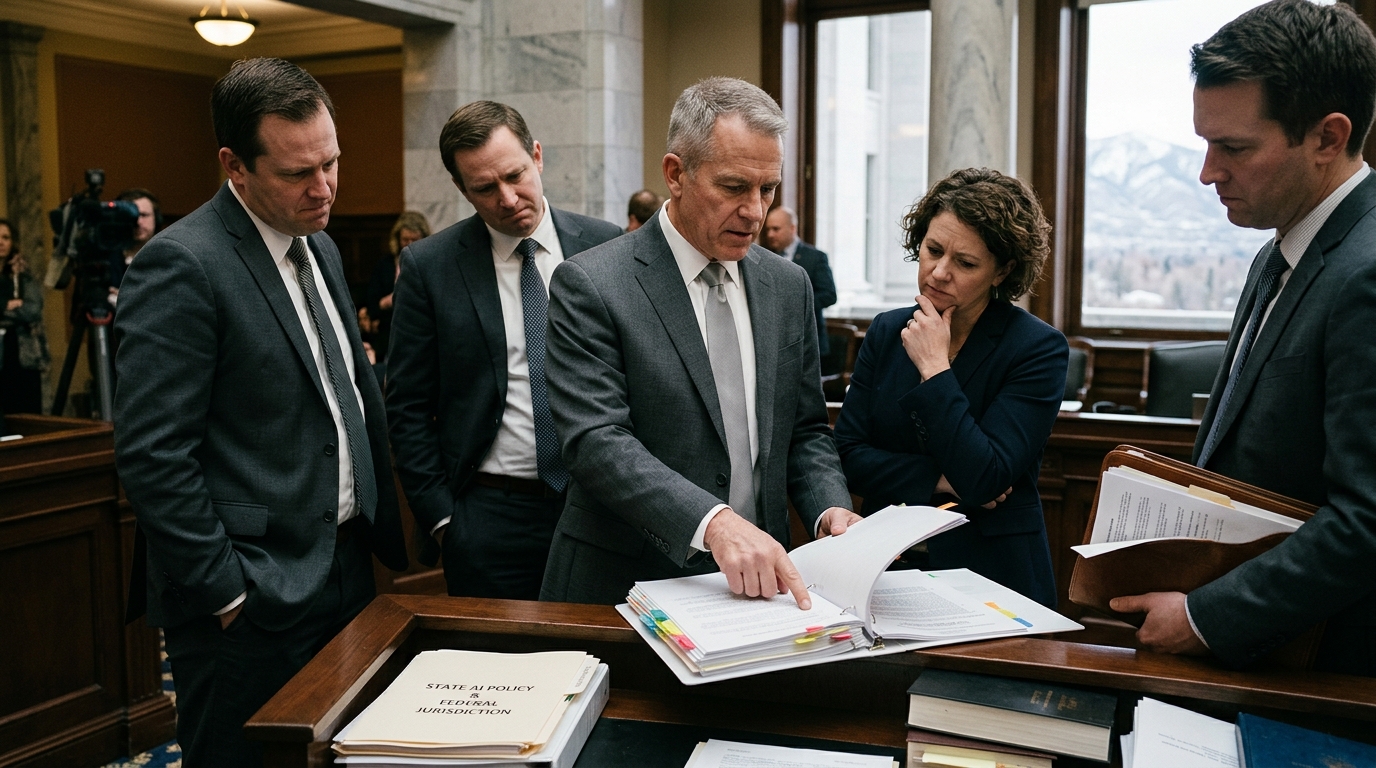
Tech giants, through their lobbying arms in D.C., warn that if each of the 50 states enacts its own set of AI rules, the cost of doing business will skyrocket, disproportionately affecting startups and mid-sized firms. The Trump administration appears to have fully adopted this rhetoric. Their strategy relies on "federal preemption," a legal doctrine that allows federal law to override state laws when they conflict.
Herein lies the irony: Republicans, who have historically campaigned against federal overreach, are now invoking federal power to protect corporations from the legislative actions of their own state-level colleagues. Weiler remains undeterred. He argues that AI is not merely an economic issue but a matter of safety and ethics that touches the daily lives of local communities.
"If Washington wants to stop us, they’ll have to pass a law that is better than ours. Until then, Utah will protect its citizens,"he remarked, signaling a defiant stance against federal intervention.
A Political Rift with Global Implications
The dispute in Utah is not just an internal American squabble. As the European Union implements its landmark AI Act and China tightens its grip on algorithmic governance, a lack of unity in the U.S. could weaken the nation’s standing on the global stage. If Trump succeeds in imposing blanket deregulation, the U.S. might become the "Wild West" of AI—attracting investment but potentially sacrificing public trust. Conversely, if the state-led model prevails, America will have a more resilient, albeit more complex, regulatory landscape.
Senator Weiler’s stance proves that AI is rearranging political alliances. This is no longer a simple Left-vs-Right battle; it is a collision between central authority and local autonomy, between corporate interests and consumer safeguards. Utah may be a small state, but its resistance to Trump’s AI vision sends a powerful message: the future of technology is too consequential to be left solely in the hands of a few in Washington.