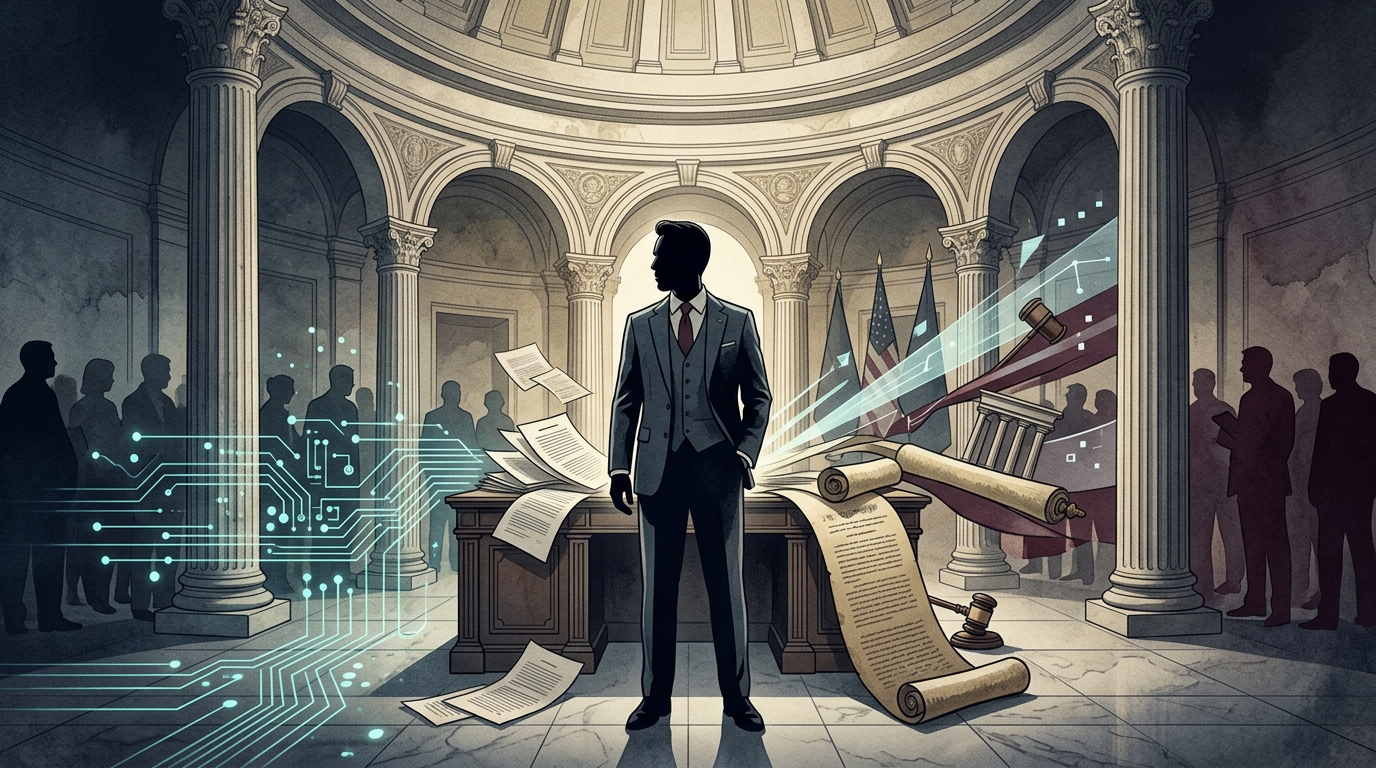
In a move that fundamentally redraws the boundaries between private enterprise and national sovereignty, Elon Musk’s SpaceX has been tapped as a lead partner in the consortium developing the operating system for President Donald Trump’s “Golden Dome” initiative. The news, confirmed by sources close to the Pentagon and the administration, marks a historic pivot: the company that once aimed solely for Mars has now become the digital custodian of the American skies.
The “Golden Dome” program—a sophisticated, 21st-century evolution of U.S. missile defense—aims to create an impenetrable shield against hypersonic missiles and swarms of autonomous drones. Crucially, SpaceX’s role is not focused on the hardware of interceptors, but on the “brain” of the entire operation. They are tasked with building the software layer that synchronizes thousands of sensors, satellites, and weapon systems in real-time—a challenge requiring the computational agility that, currently, only Silicon Valley seems able to provide.
From Rockets to the Digital Backbone
For years, SpaceX was viewed primarily as a logistics firm—a reliable courier for the stars. However, the success of the Starlink satellite constellation and its military-grade sibling, Starshield, has demonstrated that Musk’s true power lies in large-scale data management. The Golden Dome’s operating system requires processing staggering amounts of telemetry from Low Earth Orbit (LEO) with millisecond latency.
Defense industry analysts suggest the selection of SpaceX is a “vote of confidence” in the company’s ability to apply agile development to problems that have historically taken legacy contractors decades to solve. “The traditional procurement model is too sluggish for the era of hypersonic threats,” a Department of Defense official noted. “We need the speed of SpaceX to meet the challenges of 2026 and beyond.”
The Displacement of Legacy Defense Giants
SpaceX’s central role in this sensitive project has sent shockwaves through the traditional “Big Five” defense contractors, including Lockheed Martin, Boeing, and Raytheon. For decades, these firms held a monopoly on major defense contracts, relying on cost-plus structures and development cycles that many now consider obsolete.
- Agility vs. Bureaucracy: SpaceX iterates code and conducts tests in weeks, whereas traditional contractors often operate on multi-year cycles.
- Vertical Integration: SpaceX’s ability to control both the orbital hardware and the software stack offers an integration advantage that competitors cannot match.
- Cost Efficiency: By leveraging commercial-off-the-shelf technologies and reusable systems, SpaceX significantly lowers the burden on the taxpayer, aligning with the current administration's fiscal rhetoric.
However, the concentration of such critical infrastructure within a single private entity raises profound ethical and security questions. What happens if Elon Musk’s geopolitical priorities diverge from those of the White House? Previous incidents regarding the use of Starlink in Ukraine have shown that Musk is not afraid to dictate the terms of how his technology is deployed in conflict zones.
Geopolitical Implications and the Trump-Musk Alliance
The Golden Dome initiative is a cornerstone of Donald Trump’s “Fortress America” foreign policy. The President’s close relationship with Musk is no secret, and critics view this partnership as a dangerous fusion of political and corporate power. Opposition members in Congress are already calling for increased oversight, fearing that national security is being outsourced to a man who also controls a major social media platform (X) and a global automotive giant (Tesla).
“We aren’t just building a shield; we are building a digital ecosystem where the lines between the state and the corporation become dangerously blurred,” a political analyst told the Washington Post.
Conversely, proponents argue that China and Russia have already integrated their tech giants into their military apparatus. For the U.S., refusing to leverage SpaceX’s capabilities would be a form of “technological disarmament.” The Golden Dome is not merely a defense project; it is a power play intended to ensure U.S. dominance in cyberspace and orbit for the next half-century.
The Future of Algorithmic Warfare
As SpaceX begins the arduous task of developing the system's software, the focus shifts to the architecture itself. The system is expected to rely heavily on artificial intelligence for autonomous threat detection and nanosecond decision-making. The stakes are immense: a single bug in the code could leave a continent vulnerable or, conversely, trigger an unintended escalation.
SpaceX’s involvement in the Golden Dome is the definitive confirmation that the 21st century belongs to those who control the software. The era when defense meant only steel and gunpowder is over. Today, the front line is written in code, and Elon Musk is holding the pen.