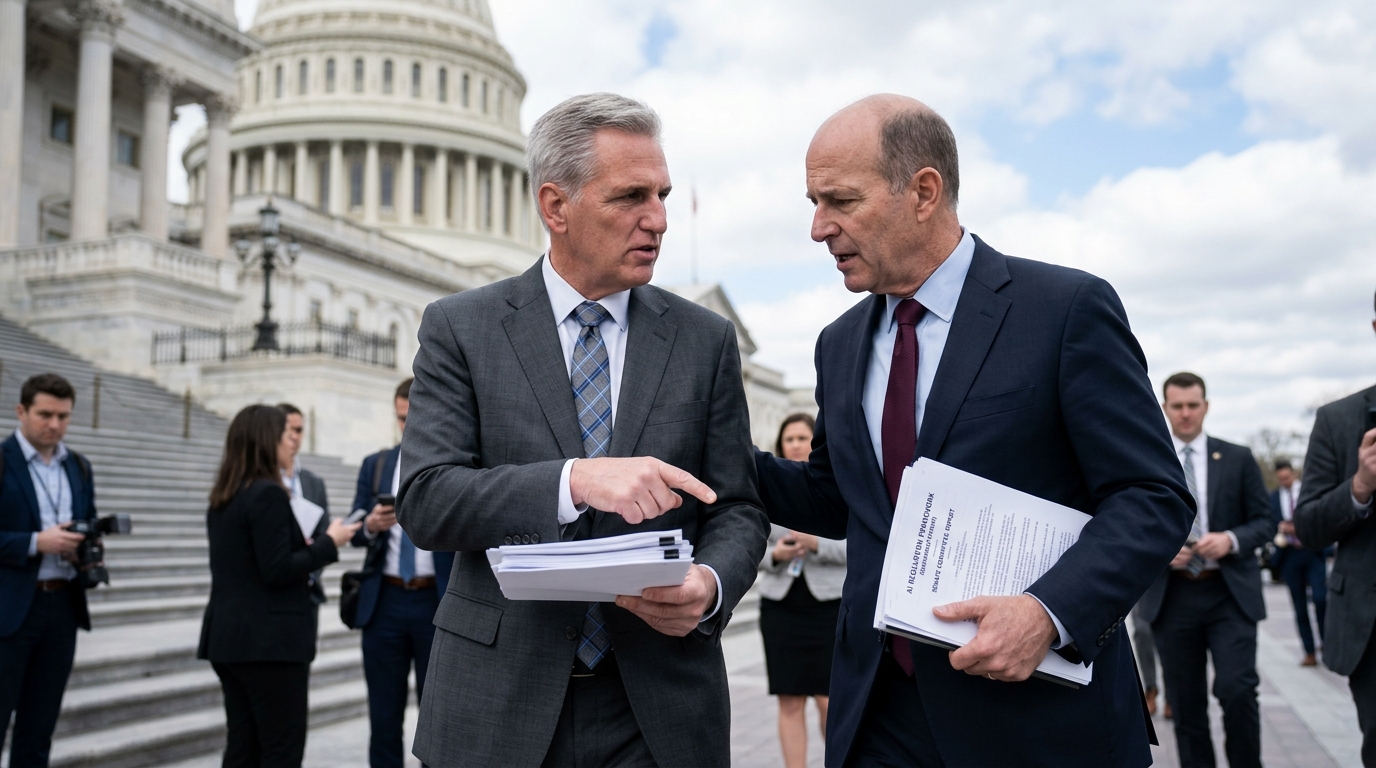
The debate unfolding within the halls of the Missouri Senate, as reported by the Columbia Missourian, is far more than a localized political skirmish; it is a microcosm of a global existential struggle. Lawmakers are grappling with whether the state must intervene to regulate Artificial Intelligence (AI) or if such a move would stifle technological progress before it has a chance to mature. The stakes are immense: ranging from election integrity to the protection of individual privacy against the rising tide of deepfakes.
The Deepfake Dilemma and Democratic Integrity
At the heart of the bill currently under discussion is the use of AI to create deceptive content, commonly known as deepfakes. Senators are expressing profound concerns regarding how this technology could be weaponized to manipulate the electorate through fabricated videos or audio clips of political figures. The proposed legislation seeks to mandate clear labels on any AI-generated content, ensuring that citizens can distinguish between reality and algorithmic fabrication.
However, implementing such mandates is fraught with complexity. Critics argue that forced labeling might infringe upon First Amendment rights regarding freedom of speech. Furthermore, there is a logistical hurdle: how can a single state effectively police content distributed across global platforms? The Missouri debate underscores the urgent need for a coordinated federal framework, as the digital landscape remains indifferent to state boundaries. Without a unified approach, the US risks a fragmented legal environment that complicates compliance for developers and users alike.
Innovation vs. Regulation: The Perpetual Tug-of-War
Central to the legislative friction is the clash of two distinct philosophies. On one side, proponents of regulation argue that AI is evolving at a pace that society cannot adequately track. They cite examples of algorithmic bias in hiring, judicial sentencing, and healthcare as evidence for why government oversight is non-negotiable. "We cannot allow technology to self-regulate when the fundamental rights of citizens are at risk," noted one of the bill's sponsors during the hearing.
Conversely, the tech industry warns of the perils of "over-regulation." They contend that if the US imposes overly restrictive rules, investment and talent will migrate to competing nations, such as China, which are pursuing more aggressive development strategies. Free-market senators fear that Missouri—and by extension, the United States—could lose its lead in the fourth industrial revolution if companies are buried under bureaucracy and legal liabilities for every unforeseen algorithmic error. The challenge lies in creating a 'sandbox' where innovation can flourish while guardrails remain firmly in place.
Platform Liability and the Future of Governance
Another pivotal aspect of the dialogue concerns the liability of Big Tech. The bill explores the possibility of holding platforms legally responsible for AI-generated content they host, should that content prove harmful. This represents a radical shift from the current legal status quo under Section 230, which generally shields platforms from liability for user-generated content. If AI is deemed a 'product' of the platform rather than a 'tool' used by the user, the legal landscape changes entirely.
The outcome of this legislative push will serve as a bellwether for other states. If Missouri succeeds in enacting a balanced law that protects citizens without hampering innovation, it could become the blueprint for a national strategy. However, the path is riddled with obstacles, as interests are vast and the technology evolves faster than a legislator's pen can write. The demand for "algorithmic transparency" remains the clarion call of our time, but its realization requires both political courage and deep technical expertise—two elements that rarely converge in the political arena. As we move toward 2026, the question remains: can we govern the machine before the machine reshapes the government?