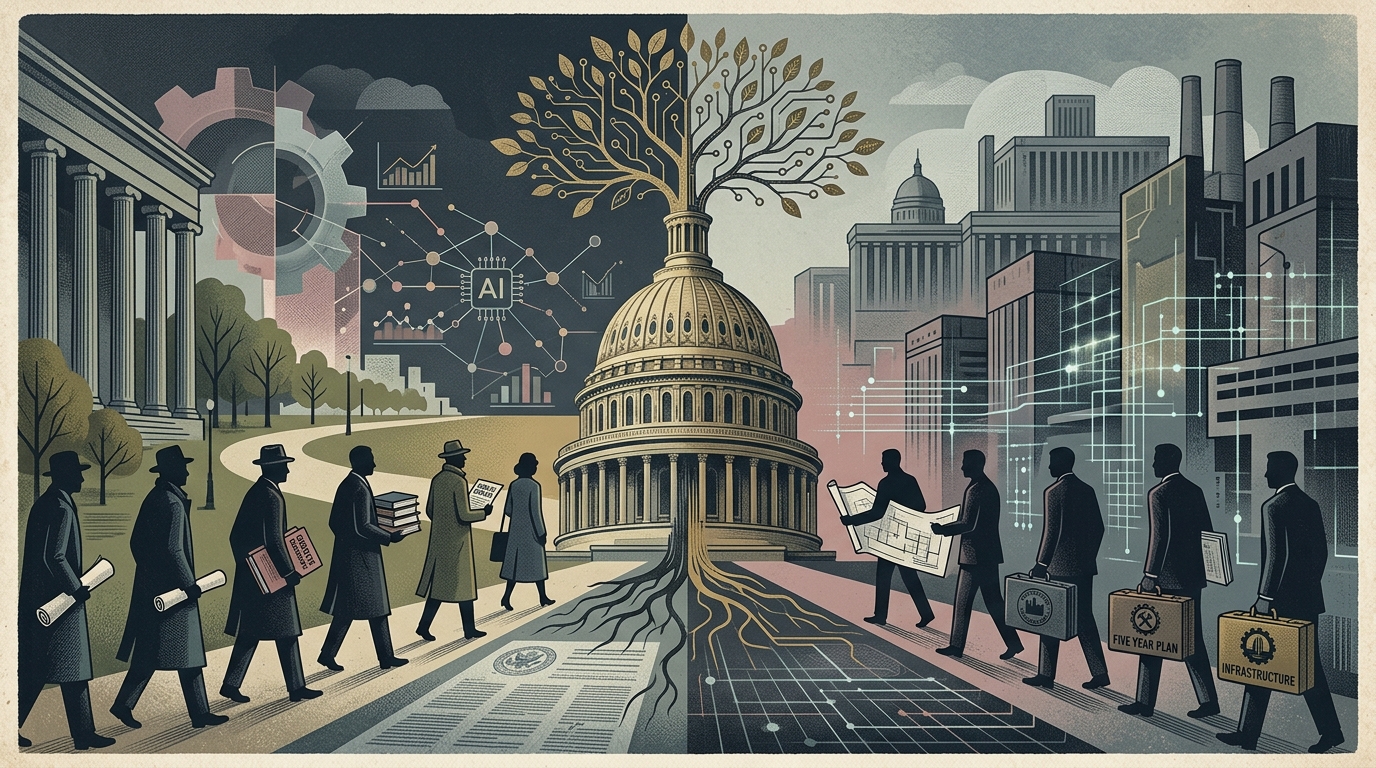
The European Union finds itself at a critical crossroads once again, attempting to strike a balance between ethical leadership and economic survival. While Brussels celebrates the enactment of the AI Act—the world's first comprehensive regulatory framework for Artificial Intelligence—the real economy is beginning to push back. Siemens, a cornerstone of European industry, recently voiced serious reservations, warning that the 'regulatory corset' being imposed could trigger a massive flight of investment toward the United States and China.
The Siemens Warning and Roland Busch's Concerns
Siemens CEO Roland Busch did not mince words. In recent statements, he emphasized that Europe risks falling behind in a race where speed is everything. According to Busch, excessive bureaucracy and vague definitions for 'high-risk' AI applications create an environment of uncertainty that discourages investors. 'We don't need more rules; we need more innovation,' is the central message emanating from Munich.
The concern isn't just about compliance costs—estimated to reach billions of euros across the European market—but primarily about time-to-market. In the field of AI, where advancements are measured in weeks, the months or years required for EU approvals feel like centuries. Siemens warns that if European companies cannot experiment freely, they will be forced to relocate their research centers to regions with more flexible frameworks.
The AI Act: Protection or Hindrance?
The EU's AI Act is built on a risk-based approach. This means that the more dangerous an application is deemed to be for fundamental rights, the stricter the rules. However, industry leaders argue that the definitions are so broad that even simple industrial tools could be classified as 'high-risk.' This creates a legal 'gray zone' that major corporations avoid at all costs.
- Compliance Costs: Small and medium-sized enterprises (SMEs) are disproportionately affected, as they lack the armies of legal advisors required to navigate the text.
- Talent Drain: Top scientists prefer environments where their creativity isn't stifled by precautionary checks and red tape.
- Investment Gap: Over 80% of venture capital in the Generative AI sector is already flowing outside of Europe.
The EU argues that regulation will create a 'trust mark' that attracts consumers. Yet, as analysts point out, consumers follow the technology that works best and is most accessible, not necessarily the one that is most regulated.
Geopolitical Stakes and the Risk of 'Digital Colonialism'
If Europe fails to develop its own AI technology due to over-regulation, it will end up as a mere consumer of American and Chinese services. What some call 'digital colonialism' is a palpable threat. Siemens and other giants like SAP and Airbus stress that the continent's strategic autonomy depends on technological excellence, not just legislative prowess.
"Europe risks becoming the world's museum: beautiful to visit, but without any productive power for the future," a prominent European industry executive remarked.
The proposed solution involves 'regulatory sandboxes,' where companies can test new technologies in a controlled environment without the fear of immediate fines. However, their implementation remains slow and fragmented across member states. 2026 will be the year of truth as the first major provisions of the AI Act come into full force, and the investment decisions being made today will define the landscape for the next decade.