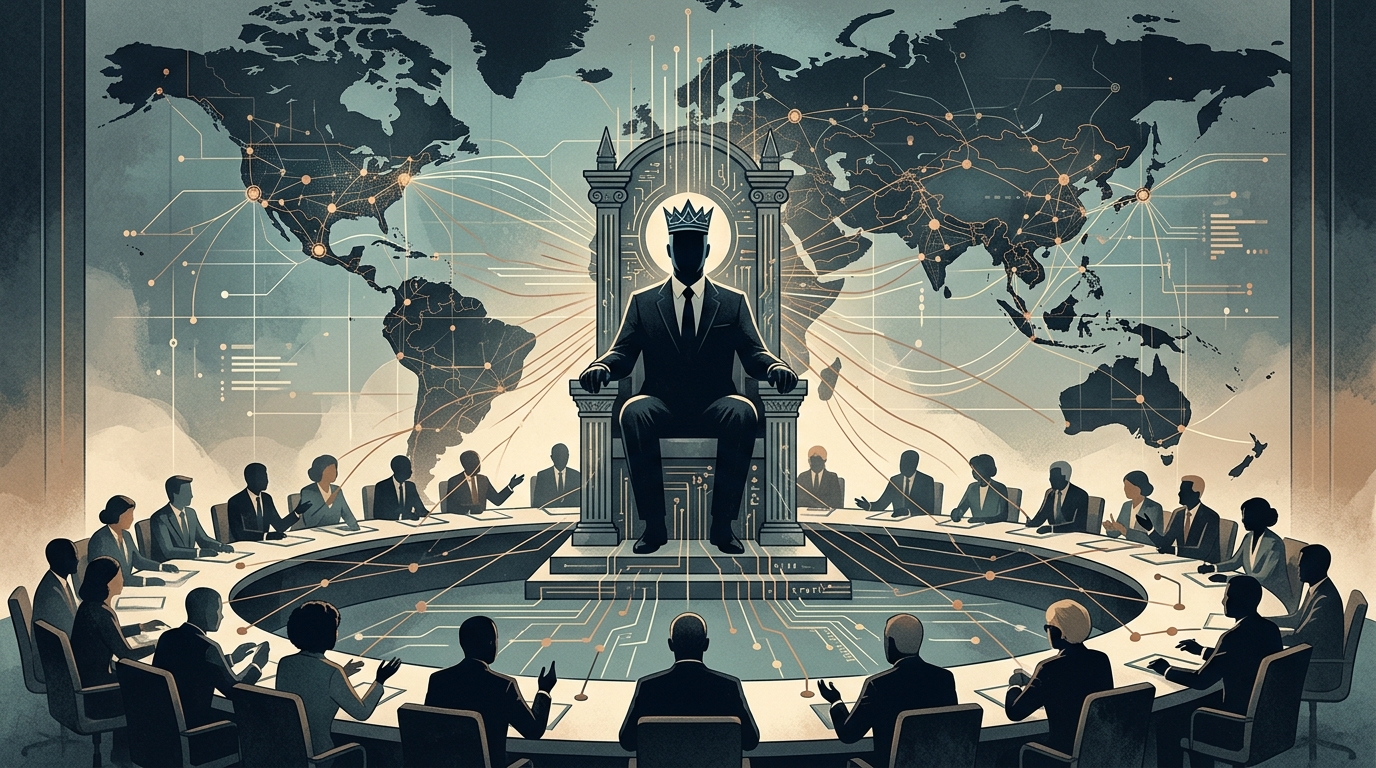
As we navigate the spring of 2026, the geopolitical landscape is increasingly defined by a "digital friction" that threatens to upend decades of global cooperation. Recent intelligence briefings shared by Washington with its closest allies—spanning the Five Eyes, the European Union, and key Asian partners like Japan and South Korea—paint a sobering picture: a systematic, state-sponsored effort by the People’s Republic of China to acquire sensitive Artificial Intelligence (AI) intellectual property through means that bypass traditional market competition.
The New Crown Jewels: Model Weights and Architectures
The core of the American warning centers on a specific shift in espionage tactics. While hardware designs for high-end GPUs remain a target, the focus has moved toward "model weights"—the numerical parameters that define a trained AI’s behavior. These weights represent the culmination of billions of dollars in R&D and massive computational investment. For an adversary, acquiring these weights is akin to obtaining the blueprints for a stealth fighter without having to conduct a single wind-tunnel test.
US officials highlight several vectors of concern:
- Advanced Persistent Threats (APTs): Sophisticated cyber campaigns targeting the private cloud environments of leading AI labs like OpenAI, Anthropic, and Google DeepMind.
- Human Intelligence and Talent Poaching: Strategic efforts to recruit key personnel or plant insiders within Western tech firms to facilitate data exfiltration.
- Dual-Use Academic Collaboration: Exploiting the open nature of Western universities to gain insights into frontier AI research that has immediate military applications.
The Allied Response: Between Security and Trade
For allies in Europe and Asia, the American pressure creates a profound strategic dilemma. The UK and Australia have largely aligned with the US stance, implementing stricter export controls and vetting processes. However, the European Union faces a more complex calculus. Nations like Germany and France are wary of a total "decoupling" from China, which remains a vital trade partner. The challenge lies in "de-risking"—protecting critical infrastructure and IP—without triggering a trade war that could derail the global economy.
"We are no longer just talking about trade disputes; we are talking about the foundational technology of the 21st century. If the democratic world loses its lead in AI safety and capability, the global order will be rewritten in ways we cannot control," a senior US State Department official remarked.
Beijing’s Counter-Narrative: Technological Hegemony
Beijing has consistently denied these allegations, labeling them as a manifestation of "Cold War mentality" and "technological hegemony." The Chinese government argues that the US is weaponizing national security to maintain its monopoly on high-tech industries and prevent the rise of the Global South. In response, China has doubled down on its "Self-Reliance" policy, pouring hundreds of billions into the China Integrated Circuit Industry Investment Fund and fostering a domestic AI ecosystem that operates independently of Western software stacks.
Implications for the AI Industry
The fallout of this warning is already visible in the corporate world. AI startups are now facing intense scrutiny regarding their funding sources and the nationality of their engineering teams. We are witnessing the emergence of "fortress labs"—research facilities with physical and digital security protocols that mirror those of nuclear weapons laboratories. While these measures may protect IP, they also threaten to stifle the very culture of open innovation that fueled the AI boom of the early 2020s. The fragmentation of the AI world into two distinct blocs seems not only possible but increasingly inevitable.