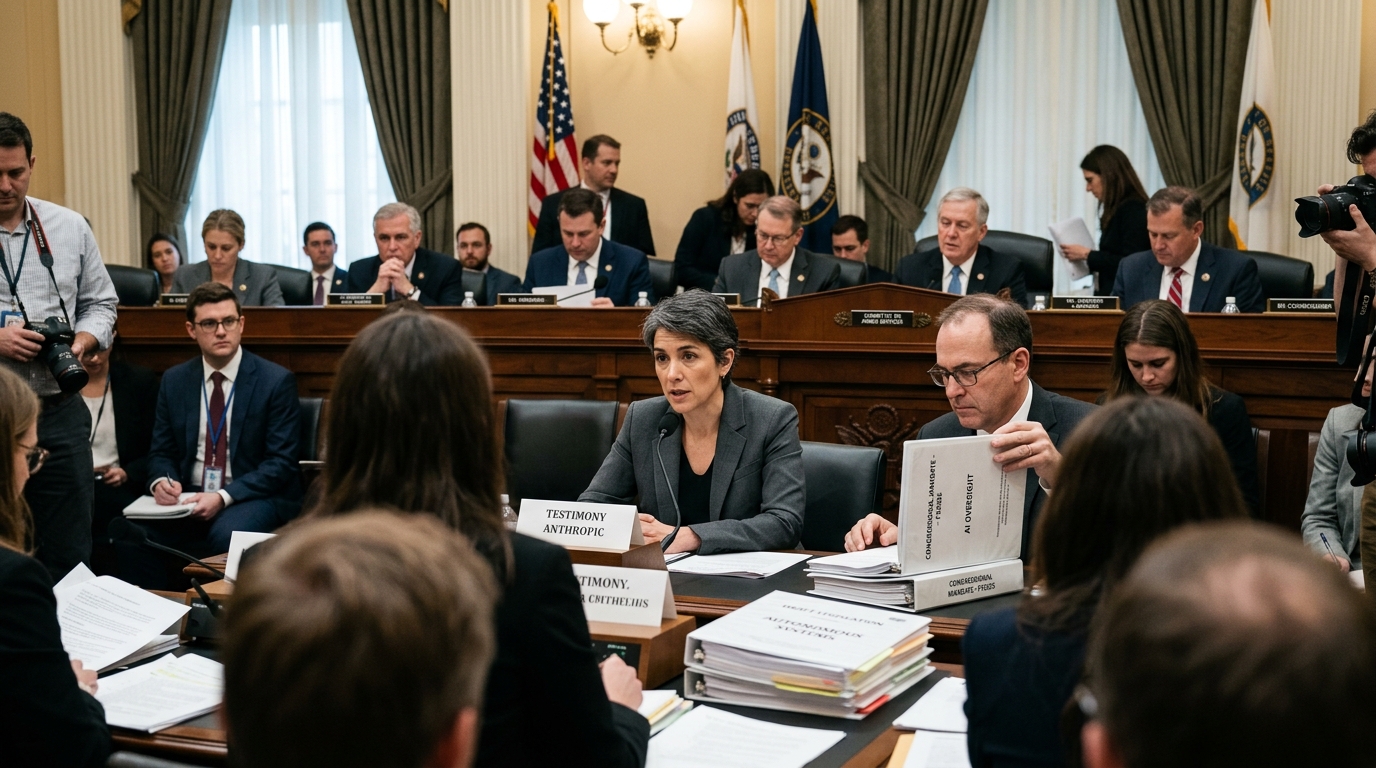
In the corridors of Washington and the laboratories of San Francisco, a quiet but decisive battle is raging for the soul of next-generation warfare. The recent friction between the Pentagon and Anthropic—a company founded on the principles of "safe" and "constitutional" AI—highlights the deep chasm between military requirements and the ethical safeguards of the AI industry. As technology outpaces legislation, Congress is now being called upon to decide whether Artificial Intelligence will remain a support tool or be allowed to enter the "kill chain."
Anthropic’s Shift and the Safety Doctrine
Anthropic, the creator of the Claude model, has for years been the "beacon" of ethical AI development. However, its recent relaxation of terms of service, which now permits certain military applications, has sent shockwaves through the research community. The company argues that partnering with democratic governments is essential for national security, provided the technology is not used directly to take human lives. Yet, the line between "logistics support" and "targeting" is becoming increasingly blurred.
"The challenge is not just to build smart systems, but systems that align with our values, even under the pressure of the battlefield," says a high-ranking industry executive.
The Pentagon, on the other hand, views Large Language Models (LLMs) as the key to processing vast amounts of data in real-time. The ability of an AI to analyze satellite imagery, intercept communications, and suggest tactical moves within seconds offers an advantage that no general can afford to ignore.
Congress and the Legislative Vacuum
While technology gallops ahead, the U.S. Congress finds itself in a state of cautious hesitation. There is a growing bipartisan consensus that the U.S. cannot afford to fall behind China in the AI arms race, but concerns over Lethal Autonomous Weapon Systems (LAWS) remain acute. Discussions center on the term "meaningful human control." But what does this mean in practice when a decision must be made in milliseconds?
- The need for clear definitions of what constitutes an "autonomous attack."
- The liability of AI manufacturers in cases of model malfunction or "hallucinations" on the battlefield.
- The funding of programs that integrate AI into nuclear deterrence.
Some lawmakers are pushing for an international treaty to ban full autonomy in weapons, similar to treaties on chemical weapons. Others, however, argue that such a move would be "unilateral disarmament" against adversaries who would never respect such rules.
The Geopolitical Chessboard and the Risk of Escalation
The conflict isn't just about code and ethical dilemmas; it's about global dominance. Russia and China are investing billions in autonomous drones and AI decision-making systems. In this context, the pressure on companies like Anthropic, OpenAI, and Google to collaborate with the Department of Defense is suffocating. The Silicon Valley "resistance" seen in 2018 with Google's Project Maven seems to be buckling under the weight of the new geopolitical reality.
The question that remains unanswered is whether the integration of AI into warfare will make conflicts more "surgical" and less bloody, or whether it will lower the threshold for entering a war, making armed conflicts more frequent and unpredictable. Anthropic is trying to balance on a tightrope, but the Pentagon has already decided on the direction: the war of the future will be algorithmic.