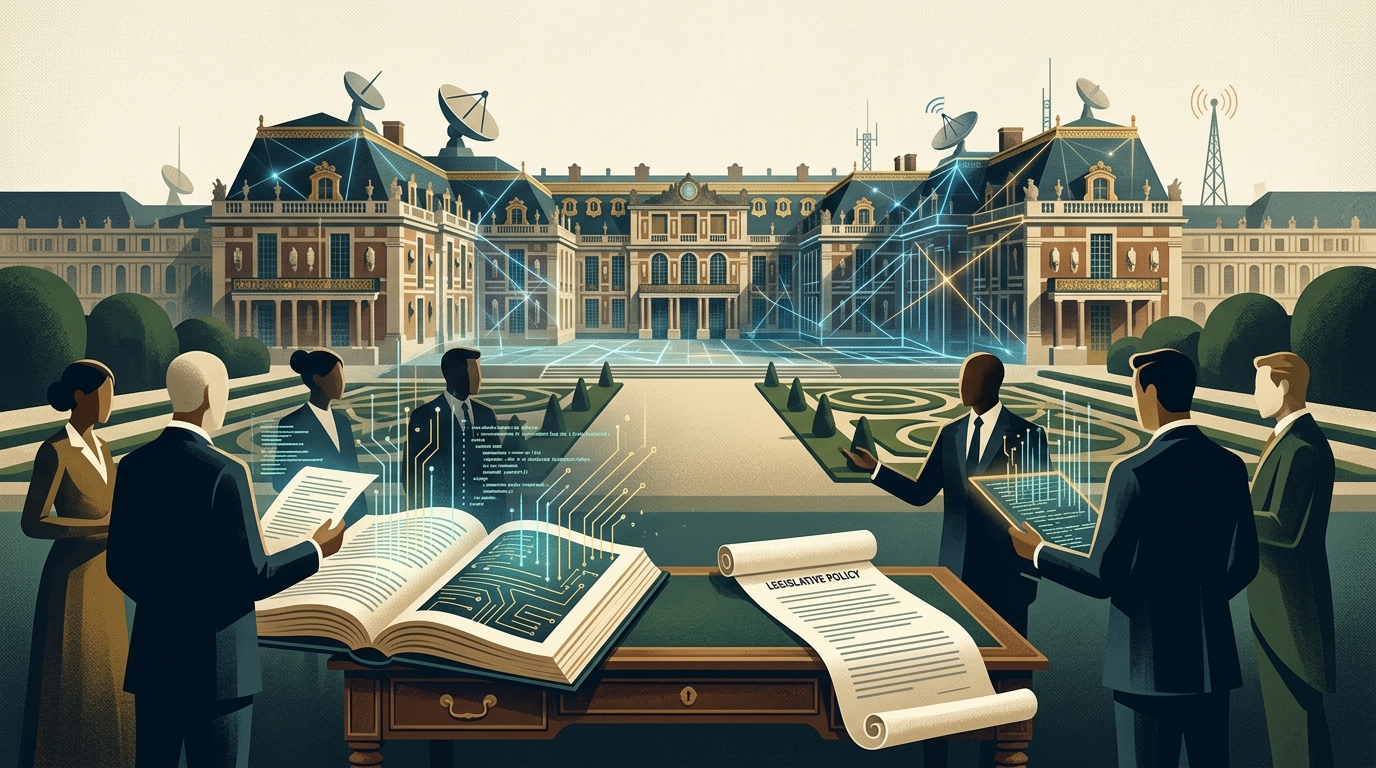
In the opulent setting of the Palace of Versailles, where the "Sun King" once showcased French grandeur to the world, Emmanuel Macron is orchestrating a modern display of power. This year's "Choose France" summit is not merely a gathering of investors; it is the zenith of a decade-long strategy to establish France as Europe's preeminent hub for Artificial Intelligence (AI).
A Siege of Billions
The figures announced are staggering. With investment pledges exceeding €15 billion from giants such as Microsoft, Amazon, and Google, France appears to be winning the battle for attractiveness over rivals like Germany and the post-Brexit United Kingdom. Microsoft alone has committed a mammoth €4 billion to expand its cloud and AI infrastructure in the country, while Amazon follows with €1.2 billion for new data centers.
But why France? The answer lies in a combination of factors that Macron has methodically cultivated. Firstly, access to relatively cheap, low-carbon energy via France's nuclear fleet provides a decisive competitive advantage for energy-hungry data centers. Secondly, the nation’s exceptional talent pool—mathematical minds from École Polytechnique and ENS who fuel companies like Mistral AI—presents a human capital advantage that is hard to replicate.
Strategic Autonomy vs. The Dependency Trap
Despite the euphoria, Macron's strategy is not without its detractors. France is walking a tightrope: on one hand, it champions Europe's "digital sovereignty," while on the other, it relies heavily on American capital and technology to achieve it. Mistral AI, the crown jewel of the French tech ecosystem, faced significant scrutiny when it announced a partnership with Microsoft, raising questions about whether European startups can ever truly remain independent from Silicon Valley.
- Microsoft commits €4 billion to French AI infrastructure.
- Amazon invests €1.2 billion in data center expansion.
- Nuclear energy serves as a primary draw for tech giants.
- Mistral AI continues to lead the charge for European LLMs.
Macron, however, argues that attracting these behemoths is a prerequisite for building a viable ecosystem. Without the infrastructure provided by Big Tech, French companies would lack the raw computing power needed to train their models. It is a cynical yet pragmatic admission: to eventually compete with the giants, one must first host them in their own backyard.
The Political Stakes
Domestically, "Choose France" serves as a rebuttal to critics who accuse Macron of overseeing industrial decline. The creation of thousands of high-skilled jobs is the "holy grail" of his economic policy. Yet, the left-wing opposition points out that these investments often come bundled with massive tax breaks and subsidies, potentially at the expense of the social safety net.
"France is no longer a country that just consumes technology; it is a country that produces it," Macron declared during the gala dinner at Versailles.
In conclusion, by mid-2026, France has arguably won the first phase of the European AI race. The lingering question is whether this success will translate into genuine European power or if the Old Continent will simply become a digital "vassal" of Silicon Valley, albeit one powered by French nuclear energy and dressed in Parisian chic.