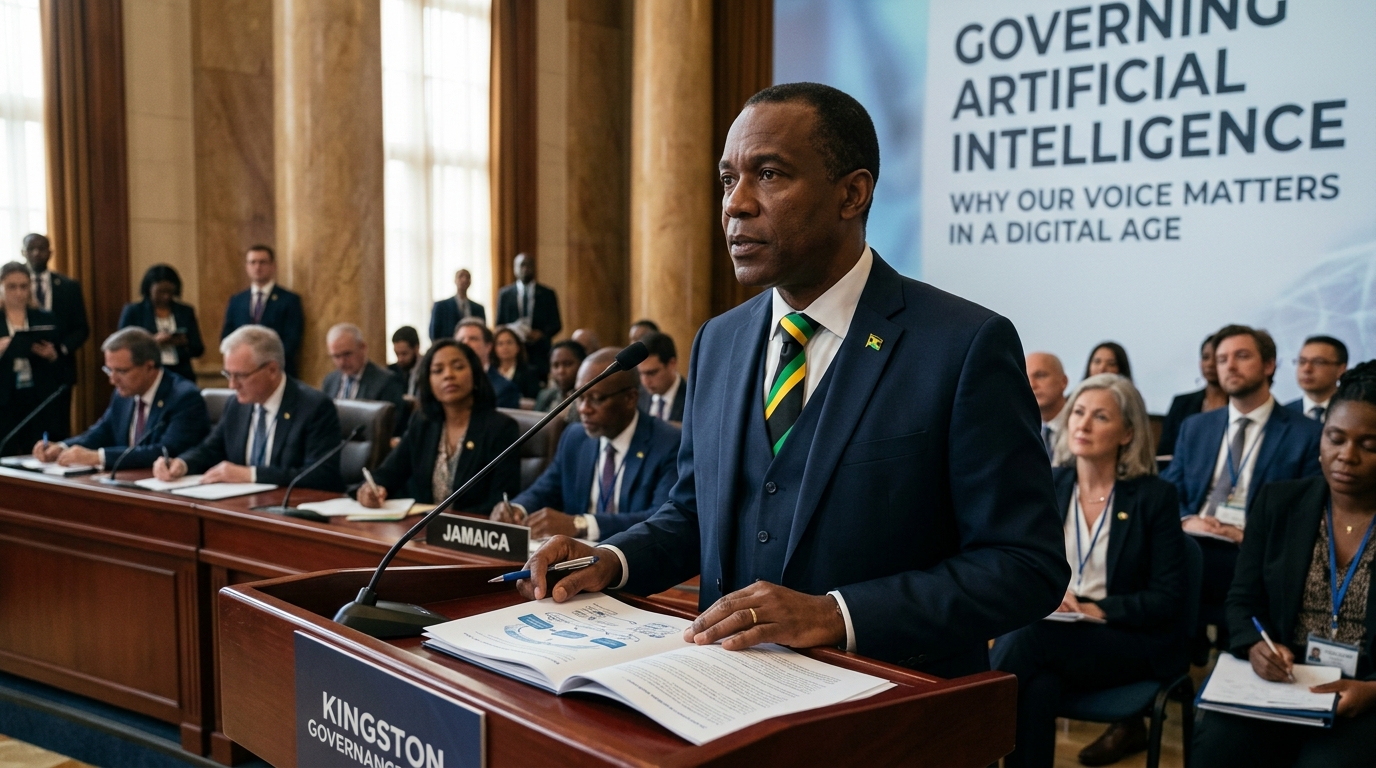
In the global chess game of technological supremacy, moves are usually made by the traditional powers: Silicon Valley, Beijing, and Brussels. However, a new, unexpected, yet resonant voice is rising from the Caribbean. Jamaica, a nation traditionally associated with culture and tourism, is now at the forefront of the debate on Artificial Intelligence (AI) governance within the United Nations framework. This development is no accident; it is a strategic necessity for the Global South, which refuses to remain a bystander in a revolution that will define the future of humanity.
The Geopolitics of Technological Inclusion
Jamaica's participation in UN processes regarding AI highlights a critical issue: the risk of a new kind of "digital apartheid." While major powers focus on system security and the AI arms race, developing nations are concerned about access, representation, and economic survival. Jamaica, representing Small Island Developing States (SIDS), brings a unique perspective to the table concerning resilience and the ethical use of technology.
The country's intervention in negotiations for the Global Digital Compact is not just about technical regulation. It is about ensuring that AI models are not trained exclusively on Western data, perpetuating biases that marginalize the rest of the world. As diplomatic circles in Kingston point out, AI must be a "power multiplier" for all, not a tool that widens the gap between rich and poor nations.
From Vulnerability to Leadership
But why Jamaica? The country has shown remarkable adaptability, investing in the digital economy as a means of overcoming its geographical limitations. The Jamaican government has recognized that AI can transform sectors such as precision agriculture, disaster management, and public health. However, it also knows that without an international protective framework, small economies risk becoming mere consumers of foreign technology, losing control over their data.
"Our voice is not just a demand for help, but an invitation for partnership based on equality," say UN officials working with the Jamaican mission.
Jamaica co-facilitated the landmark UN General Assembly resolution on Artificial Intelligence, which was adopted unanimously in 2024. This move signaled a shift: AI governance is no longer a closed club of the G7, but a global affair where sovereignty and human rights are central.
The Challenge of Digital Colonialism
One of the greatest fears expressed by Jamaica and other Global South countries is "digital colonialism." This refers to the phenomenon where large tech companies extract data from developing countries, process it in data centers in the North, and then "resell" the intelligence back to these countries at a high cost. Jamaica insists on creating local AI ecosystems, training the workforce, and facilitating technology transfer.
- Data and Sovereignty: The need for legal frameworks that protect national data from uncontrolled exploitation.
- Ethics and Culture: Ensuring that algorithms recognize and respect the cultural diversity of the Caribbean and Africa.
- Education: Preparing youth for the labor market of the future, where AI will be ubiquitous.
Conclusions for the Future
The path toward the Summit of the Future is expected to be decisive. Jamaica is not just asking for a seat at the table; it is demanding to help shape the menu. The success of AI governance will be judged by whether it manages to integrate the concerns of states like Jamaica. If AI ends up being a tool of exclusion, then the international community will have failed in its mission for sustainable development.
In a world digitizing at a breakneck pace, Jamaica's voice reminds us that technology without humanism and justice is an empty promise. The digital age requires a new diplomacy, where the size of the economy does not determine the value of the opinion.