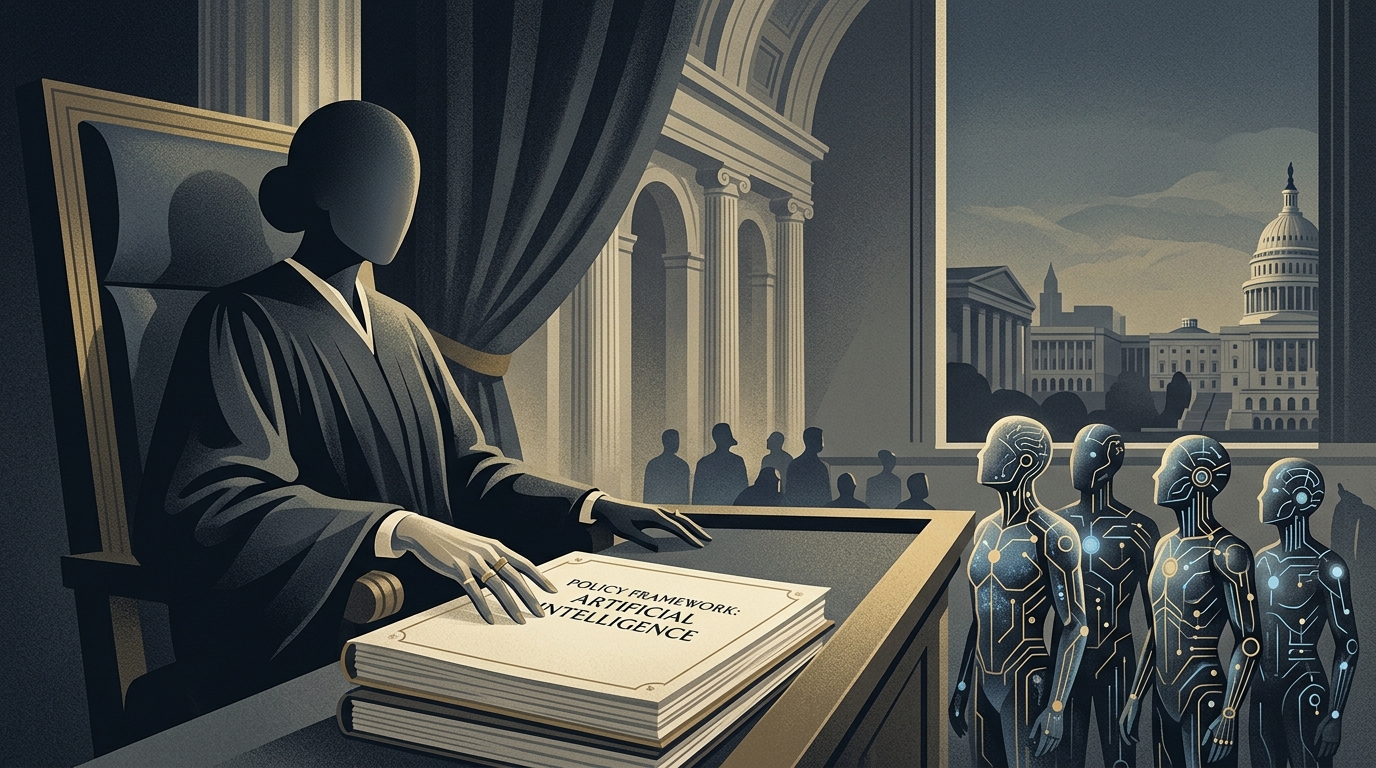
As we navigate through May 2026, artificial intelligence has shifted from simple generative models to autonomous systems known as "Agentic AI." These systems are no longer confined to drafting text or creating images; they take action: executing code, managing supply chains, and making real-time decisions. Within this context, the U.S. Cybersecurity and Infrastructure Security Agency (CISA), in collaboration with international partners, has issued critical guidance for the secure adoption of these technologies, marking a pivotal moment for global industrial policy.
The Shift to Autonomy: Why Agentic AI Requires New Rules
The core difference of Agentic AI lies in its ability to interact with its environment via tools and Application Programming Interfaces (APIs). While a 2023 chatbot would merely tell you how to fix a malfunction, a 2026 AI agent can log into a factory's control system, order the necessary parts, and schedule the maintenance. This increased power, however, comes with exponentially greater risks.
CISA's guidance emphasizes that traditional cybersecurity methods are insufficient. AI agents are vulnerable to new forms of attacks, such as "indirect prompt injection." In this scenario, a malicious actor could place hidden instructions in a document the AI agent reads, forcing it to send sensitive data to external servers or disable security systems without human approval.
Protecting Critical Infrastructure and Industrial Systems
The announcement, backed by agencies such as the FBI and NSA, along with international allies, places a heavy emphasis on Industrial Control Systems (ICS). In the energy, water, and manufacturing sectors, the integration of AI agents promises massive efficiency gains but creates an expanded attack surface. CISA proposes the "Human-in-the-Loop" principle as an essential safeguard.
- Privilege Limitation: AI agents must operate under the principle of least privilege, accessing only the data and functions absolutely necessary for their tasks.
- Decision Transparency: Every action performed by an agent must be recorded in immutable logs for auditing and forensics.
- Environment Isolation: AI-driven code execution should occur in isolated environments (sandboxes) to prevent contamination of the main network.
The industrial equipment sector, the backbone of the global economy, is now called to balance innovation with security. Manufacturers who early-adopt these guidelines will not only fortify their facilities but also gain a significant competitive advantage, as trust becomes the new currency of the digital age.
Geopolitical Implications and International Cooperation
This move by CISA is not merely technical; it is deeply political. It reflects the effort by the U.S. and its allies to set global AI standards before competing powers can do so. Collaboration with the UK, Canada, Australia, and New Zealand (the Five Eyes alliance) shows that AI security is now considered a front-line national security issue.
"Agentic AI represents a paradigm shift. We are no longer just protecting data, but the very capacity of our systems to act in the physical world," the report states.
In Europe, these guidelines are expected to complement the EU AI Act, providing the technical depth often missing from legislative texts. Convergence of these standards is essential for multinational corporations looking to deploy AI agents globally without facing a confusing patchwork of regulations.
Conclusion: Toward Responsible Autonomy
The guidance for Agentic AI adoption is an admission that the technology has moved past the experimental stage. As we enter the second half of 2026, business success will be judged not by how quickly they adopt AI, but by how securely they integrate it into their structures. CISA has taken the first step, but the burden now falls on developers and industrial leaders to ensure their "agents" remain loyal servants rather than unchecked actors.