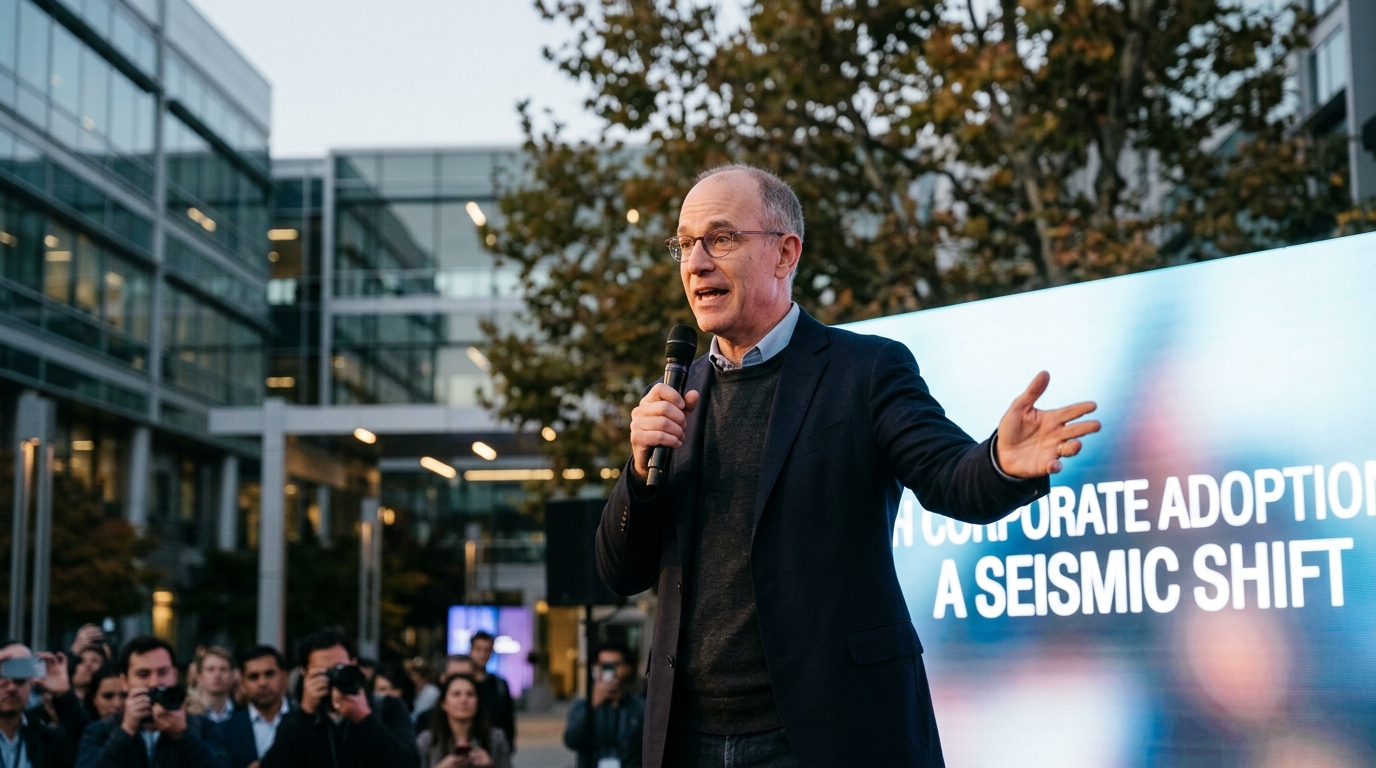
May 13, 2026, will likely be remembered as the date of a major tectonic shift in the Artificial Intelligence landscape. According to the latest data from the Ramp AI Index, Anthropic has achieved the unthinkable: ousting OpenAI from the top spot of preference among American businesses. With a 3.8% increase in April, Anthropic now holds 34.4% of the market, leaving OpenAI at 32.1% following a 2.9% decline. This news is not merely a statistical fluctuation but a profound change in the philosophy with which organizations approach generative AI.
The Rise of Claude: Safety and Specialization
Anthropic’s success did not happen by chance. Since its founding by former OpenAI executives, the company has invested in what it calls "Constitutional AI." In a business world that fears model hallucinations and data leaks, Anthropic’s approach offered a sense of stability. The Claude 4 model, released earlier this year, won over the legal and financial sectors thanks to its ability to process massive datasets with a precision that GPT-4o often struggled to match.
Businesses seem to prefer Claude for its less "chatty" and more analytical nature. While ChatGPT remains the favorite tool of the general public for creative tasks, CIOs of major corporations are turning to Anthropic for automating internal processes, analyzing contracts, and high-level customer service. Integration into the Amazon (AWS) ecosystem also played a decisive role, providing the necessary infrastructure and security required by multinational giants.
OpenAI Fatigue and the Loss of Primacy
What went wrong for OpenAI? Sam Altman’s company, despite its immense brand recognition, seems to be suffering from what analysts call "innovation fatigue." Continuous delays in releasing a true successor to GPT-4, combined with internal turmoil and the departure of top safety scientists, created a trust vacuum. Businesses are no longer looking for the most "impressive" model, but the most reliable one.
Furthermore, OpenAI’s close ties with Microsoft, while financially beneficial, began to act as a constraint. Many companies using Google Cloud or Oracle preferred the independence that Anthropic (seemingly) offers. OpenAI focused too heavily on the consumer market and multimodal features (voice, video), neglecting the specialized needs of the enterprise sector, which demands consistency and lower error rates.
The Three Threats Looming Large
However, Anthropic’s lead is fragile. Three major threats could erase this advantage in the coming months. First, the onslaught of Open Source. Meta, with Llama 4, and Mistral have made their models so powerful that many businesses are now choosing to "host" their own models locally, avoiding third-party subscriptions for reasons of cost and absolute privacy.
Second, the infrastructure war. Google, having now fully integrated Gemini into Workspace, offers a compelling proposition: free or extremely cheap AI for those already in its ecosystem. If Google can prove that Gemini is "good enough," Anthropic will struggle to justify its premium cost. Finally, the third threat is economic viability. The cost of training and inference for these models remains astronomical. If businesses do not see an immediate ROI (Return on Investment) within 2026, the AI "bubble" could burst, dragging down companies that rely exclusively on B2B subscription models first.
Conclusion: A Marathon, Not a Sprint
Anthropic’s dominance is a victory for the "safety first" strategy. But in a market moving at the speed of light, the winner's laurels are temporary. The company’s ability to maintain corporate trust while facing competition from free models and pressure for profitability will determine whether this change of guard is permanent or just a brief hiatus in OpenAI’s reign.