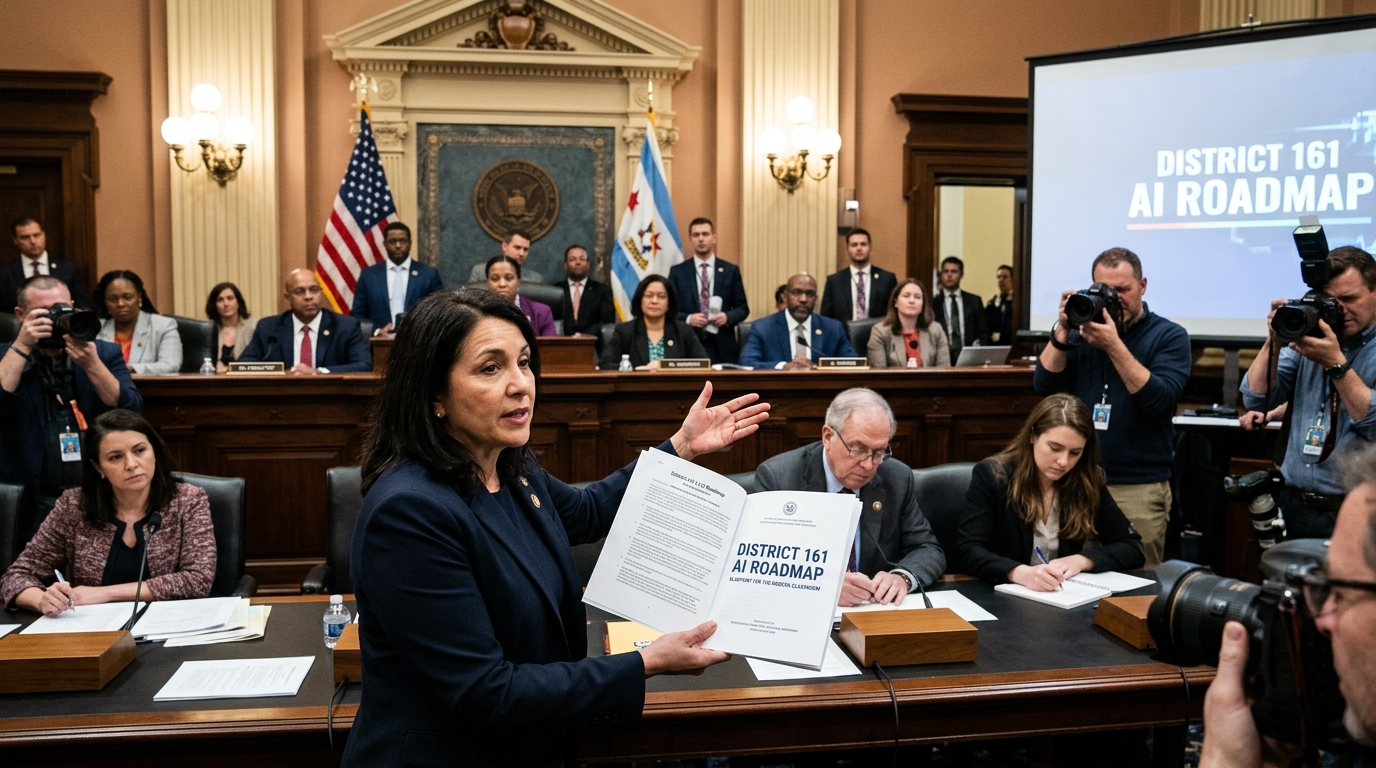
In an era where technological progress often outpaces bureaucratic adaptability, Flossmoor School District 161 has taken a decisive leap forward. The recent approval of a comprehensive plan for integrating Artificial Intelligence (AI) into local schools is not merely an administrative act; it is a profound statement of intent regarding the future of public education in the 21st century. As districts nationwide grapple with the implications of generative AI, Flossmoor is positioning itself as a leader in pedagogical innovation.
From Fear to Integration: A Shift in Paradigm
When ChatGPT burst onto the scene in late 2022, the immediate reaction of many educational institutions was one of defensive caution. Bans were the standard response, as schools scrambled to protect academic integrity from the perceived threat of automated plagiarism. However, District 161, guided by its board and administration, chose a different path: one of responsible adoption and literacy. They recognized that ignoring the elephant in the digital room would only serve to disadvantage their students in the long run.
The newly approved AI roadmap acknowledges that Artificial Intelligence is not a fleeting trend but a foundational tool that will define the professional and personal lives of students. The strategy is built upon three core pillars: pedagogical support, operational efficiency, and ethical data usage. Rather than hiding technology behind firewalls, educators are now tasked with teaching students how to engage with these tools critically, ethically, and creatively.
Empowering Educators and Personalizing the Student Experience
One of the most compelling aspects of the plan is its focus on alleviating the administrative burden on teachers. AI has the potential to handle time-consuming tasks such as lesson planning, the creation of diverse assessment materials, and data management. By automating the routine, the district aims to free up teachers to focus on what they do best: direct interaction, mentorship, and providing the human touch that no machine can replicate.
"AI will not replace the teacher, but the teacher who uses AI will replace the one who does not," reflects the underlying philosophy of this initiative.
Furthermore, the potential for differentiated instruction is significantly enhanced. With AI-driven analytics and adaptive learning tools, educational content can be tailored to the specific needs and learning pace of each individual child. This allows for a level of personalized support that was previously unattainable in a traditional classroom setting, offering extra help to those who struggle and advanced challenges to those who excel.
Addressing Ethics, Privacy, and the Digital Divide
Despite the enthusiasm, the Flossmoor Board is not blind to the inherent risks of AI. Student data privacy remains a paramount concern. The plan includes rigorous protocols regarding which data is shared with third-party tech providers and how to ensure that algorithms do not perpetuate biases or discrimination. Ethical AI usage will now become a part of the curriculum, encouraging students to question the provenance of information and the reliability of AI-generated sources.
Another critical issue is the digital divide. Access to sophisticated AI tools must not become a luxury reserved for the affluent. District 161 is committed to providing the necessary resources to all students, ensuring that a family's socioeconomic status does not hinder a child's ability to acquire future-ready skills. AI literacy is being treated as a fundamental right, akin to traditional literacy and numeracy, essential for navigating a modern workforce.
Conclusion: A Model for Public Education
The move by Flossmoor School District 161 serves as a potent signal to other school districts globally. Denial of reality is rarely a successful strategy in education. Instead, actively shaping how new technologies enter the classroom is the only way to ensure that technology serves humanity and not the other way around. As the plan moves from paper to practice, the educational community will undoubtedly look to Flossmoor for lessons on how to navigate this grand transition. It is a bold experiment in preparing the next generation for a world that is being rewritten in code.