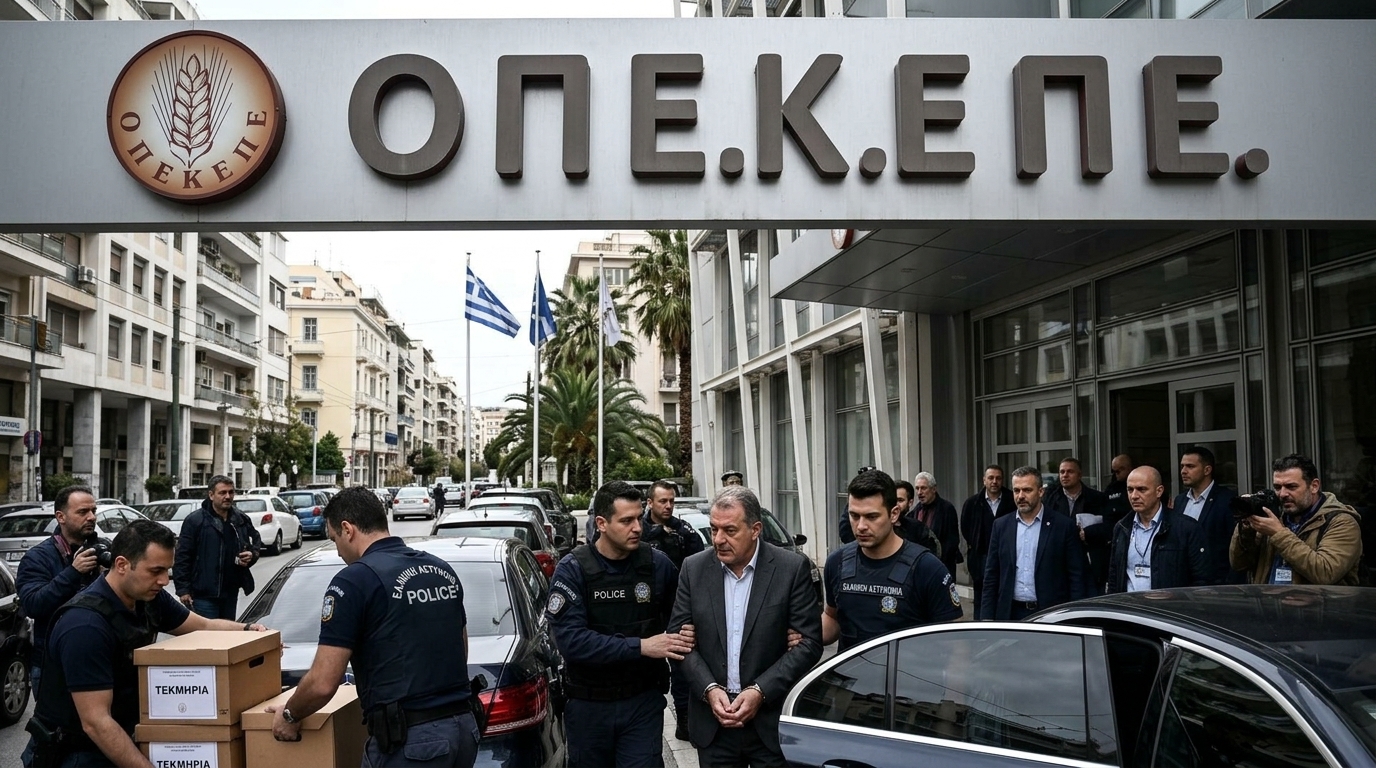
The exposure of a criminal network siphoning off agricultural subsidies through OPEKEPE (the Greek Payment Authority for CAP Aid) is not merely a legal case; it is an X-ray of a systemic pathology that has plagued the Greek countryside for decades. The intervention of the newly established Directorate for Combating Organized Crime (DAOE), dubbed the 'Greek FBI,' marks a new phase in the effort to sanitize an organization that has repeatedly found itself in the crosshairs of European authorities.
The Mechanism of Fraud: Digital 'Pastures' and Ghost Farmers
The modus operandi of the 'subsidy mafia' was highly sophisticated, blending traditional local corruption with high technology and the exploitation of loopholes in the Integrated Administration and Control System (IACS). According to investigations, criminal organizations used the tax identification numbers (AFMs) of unsuspecting citizens or 'straw men' to declare lands they did not own—often forest or public lands—as cultivable or as pastures.
The fraud did not stop there. The perpetrators appeared to have access to internal information, knowing which land parcels remained undeclared so they could 'claim' them digitally. In many instances, subsidies were granted for products that were never produced, while the 'beneficiaries' had never set foot on a farm. The use of forged lease agreements and cooperation with certain Application Reception Centers (KYD) formed the backbone of an operation that 'harvested' millions of euros annually, depriving legitimate producers who struggle to survive in the fields.
European Pressure and the Specter of Sanctions
The action of the 'Greek FBI' did not occur in a vacuum. Greece is under suffocating pressure from the European Commission, specifically the Directorate-General for Agriculture and Rural Development (DG AGRI). OPEKEPE has been placed under monitoring (a 'yellow card' status), as Brussels' audits identified serious weaknesses in the transparency and reliability of payments. The stakes are enormous: if Greece cannot prove its ability to protect Common Agricultural Policy (CAP) funds, it risks horizontal cuts or even a suspension of funding totaling billions of euros.
The involvement of the DAOE suggests that the problem has moved beyond simple bureaucratic dysfunction. This is organized crime using subsidies as a vehicle for money laundering and enrichment. The investigations are extending back in time, examining not only the final recipients of the funds but also the network of 'facilitators'—accountants, consultants, and potentially state officials—who made this plunder possible.
Social and Economic Implications
Beyond the legal aspect, the 'subsidy mafia' causes a deep moral and social wound. At a time when production costs have skyrocketed and the climate crisis threatens harvests, the leakage of resources to criminal elements is an affront to the farming community. Genuine farmers see their support reduced, while bureaucracy becomes increasingly labyrinthine in a (often failed) attempt to curb fraud.
Dismantling these networks is essential for restoring trust between the state and producers. However, experts warn that arrests alone are not enough. A radical restructuring of OPEKEPE is required, featuring full digitization of processes, real-time interconnection of databases, and independent auditing by international firms. Only then can it be ensured that the 'farmer's sweat' does not end up in the pockets of opportunists exploiting state indifference.