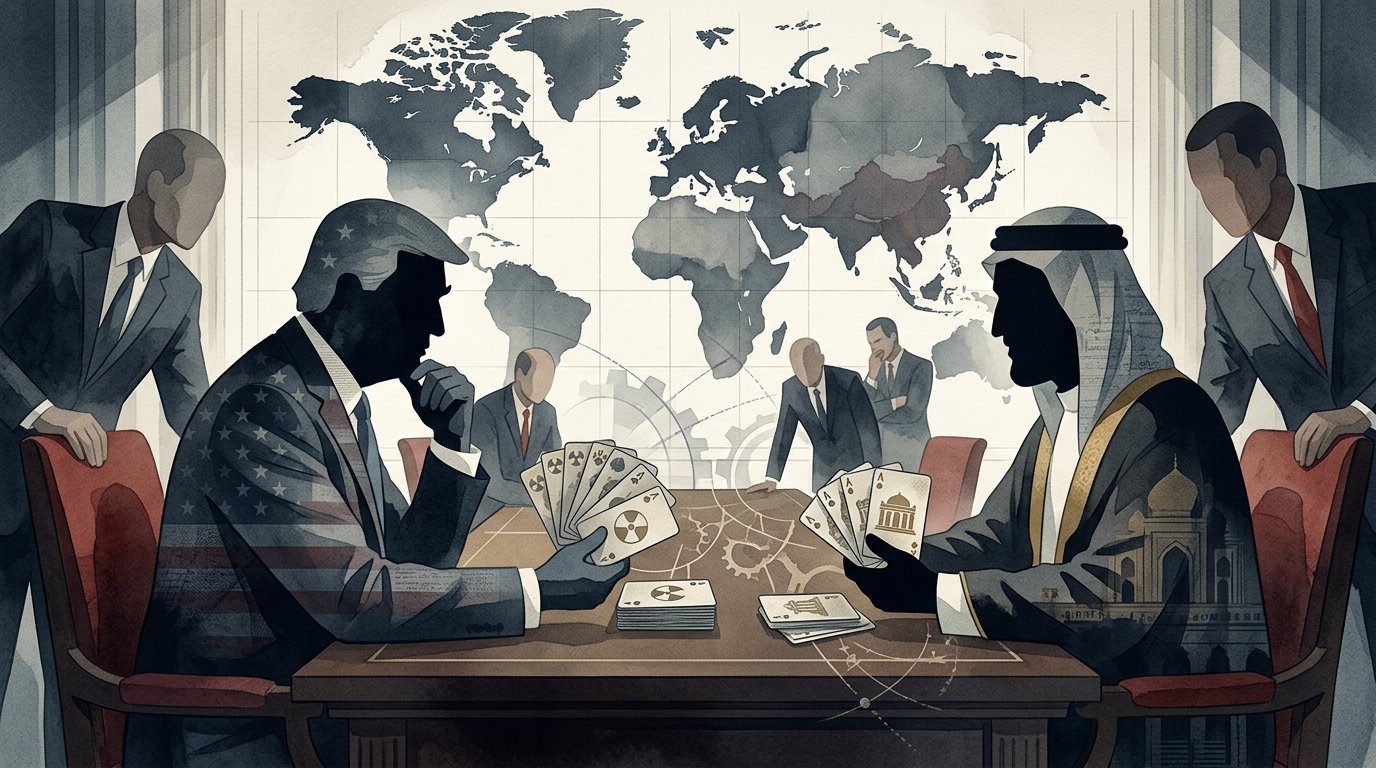
The international diplomatic stage is watching with bated breath as the standoff between Washington and Tehran intensifies. As we move through May 2026, the shadow of Donald Trump’s return to a decisive position of power in the U.S. has sent shockwaves through the geopolitical landscape of the Middle East. Iran, through official statements, has made it clear that it has no intention of returning to the negotiating table regarding its nuclear program, setting the stage for a head-on collision reminiscent of the darkest days of the previous decade.
The Revival of 'Maximum Pressure'
Donald Trump’s strategy remains consistent: the imposition of crippling sanctions aimed at the economic strangulation of the Iranian regime. The 'Maximum Pressure' doctrine is not merely an economic tool but an attempt to force Tehran into a comprehensive capitulation that would cover not only nuclear issues but also its ballistic missile program and its regional influence through proxies. However, 2026 is not 2018. Iran has significantly strengthened its ties with China and Russia, creating an economic survival network that makes U.S. sanctions less effective than in the past.
Tehran’s Hardline Stance
On its part, the leadership in Tehran appears more uncompromising than ever. The refusal to negotiate is not just a tactical move but an internal political necessity. Hardline circles within Iran argue that any concession to Trump would be perceived as weakness, encouraging further pressure. Furthermore, Iran has advanced its uranium enrichment to levels approaching the 'point of no return,' causing intense nervousness in Israel and the Gulf monarchies. Tehran’s rhetoric focuses on the country’s right to nuclear energy for peaceful purposes, though the West remains deeply suspicious.
Regional Implications and Europe’s Role
The escalation of tension directly affects security in the Eastern Mediterranean and the Persian Gulf. The possibility of an accident or a provocation leading to a generalized conflict is the greatest fear of analysts. The European Union, on the other hand, finds itself in an extremely difficult position. While it desires to maintain a diplomatic path, the pressure from Washington to align with sanctions is suffocating. Brussels is trying to keep communication channels open, but its influence seems to be waning as the polarization between the two sides grows.
- Oil prices remain high due to uncertainty in the Strait of Hormuz.
- Israel warns of unilateral action if Iran crosses the 90% enrichment threshold.
- China continues to be the primary buyer of Iranian crude, undermining the U.S. embargo.
The question looming over international capitals is whether Trump seeks a new, 'better' deal or if the ultimate goal is regime change in Tehran. With elections and political turbulence dominating the global agenda, the Iran thriller remains one of the most dangerous flashpoints of instability on the planet.
"We do not negotiate under threats. The era of unilateral impositions is over," stated a high-ranking Iranian official, signaling the stance for the days ahead.