History is often a puzzle with missing pieces. For centuries, thousands of documents have remained silent in the world's libraries and archives—not because they were lost, but because their language, script, or encryption was impossible for the human eye to decipher. However, the dawn of the Artificial Intelligence era is changing the game. A recent, historically significant discovery, where scientists used advanced algorithms to decode a 400-year-old document, marks the beginning of a new era for the humanities.
The Technology Behind the Revelation
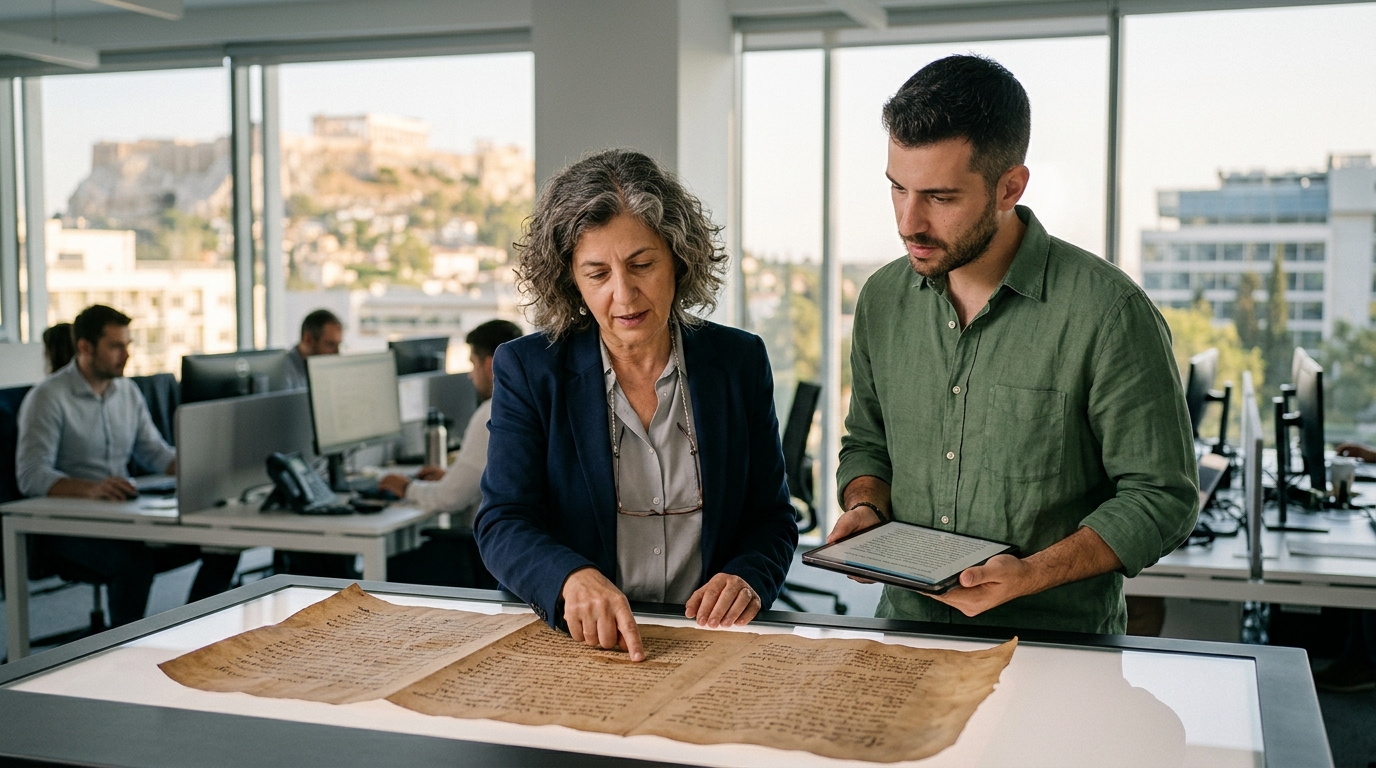
The decoding process was far from a simple case of Optical Character Recognition (OCR). 17th-century documents present immense challenges: ink has corroded, paper has degraded, and most importantly, scribes of that era often used personal shorthand systems or complex codes to protect sensitive information. Researchers employed Deep Learning Neural Networks, trained on thousands of samples of handwriting from that specific period.
The AI system managed to recognize patterns that were invisible to paleographers. Through a technique called 'Computer Vision,' the AI was able to distinguish ink from moisture stains and reconstruct letters that had nearly vanished. This digital 'resurrection' of the text allowed for the translation of a document considered indecipherable for centuries, revealing details about diplomatic intrigues and social structures we were previously unaware of.
Overturning History: What Was Revealed
This specific document, dating back to the heart of the 17th century, was not merely a commercial receipt or a standard letter. It proved to be an encrypted message concerning the political balances of power in Europe at the time. This revelation forces historians to re-examine certain events previously taken for granted. The ability of AI to process vast amounts of data means we can now analyze not just one document, but entire archives within days—a task that would have required decades from teams of experts.
In the context of global history, this development is monumental. Archives from the colonial era, diplomatic cables from the Napoleonic wars, or even ancient papyri can now be approached with a new set of eyes. The speed and precision of AI allow for a cross-referencing of historical data that was previously humanly impossible, leading to a more interconnected understanding of our global heritage.
Challenges and the Ethical Question
Despite the excitement, the use of AI in historical research is not without its concerns. There is always the risk of AI 'hallucinations,' where the model might fill in gaps in the text with words that seem plausible but do not exist in the original. Close collaboration between historians and developers is essential to ensure accuracy.
- AI as a tool for augmenting, not replacing, the historian.
- The necessity for Open Data in global archives.
- The preservation of cultural heritage through digitization.
Furthermore, the issue of access arises. Who controls these algorithms? If the technology belongs to a few large corporations, then the interpretation of our past could shift from the hands of academics into the hands of technocrats. Democratizing access to these tools is the next big challenge for the global scientific community.
Conclusion
The decoding of the 400-year-old document is just the tip of the iceberg. As Artificial Intelligence evolves, silent libraries will begin to 'speak,' giving a voice to people history has forgotten. Technology does not only show us the future; it helps us understand more deeply where we come from, proving that the past is a country still waiting to be explored.