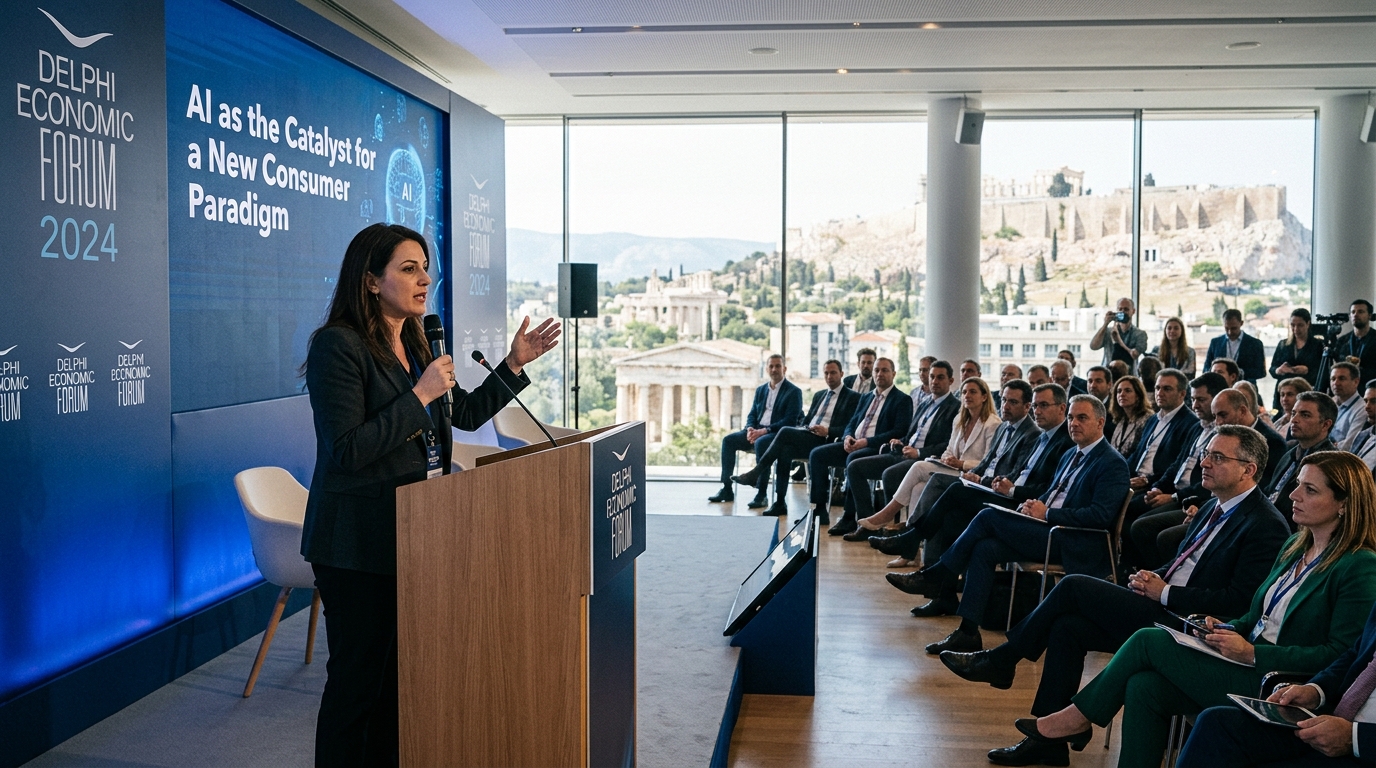
At the heart of the ancient world, where oracles once dictated the fate of city-states, this year's Delphi Economic Forum focused on a modern prophecy: Artificial Intelligence (AI). The discussion on the "redefined consumer journey" was not merely a technocratic analysis but a deep dive into the shifting sands of human behavior. As we navigate 2026, AI is no longer an exotic addition to digital marketing; it has become the backbone of every commercial interaction.
The Collapse of the Linear Model
For decades, businesses operated based on the traditional sales funnel: awareness, consideration, and purchase. In Delphi, speakers reached a consensus that this model is effectively dead. AI has transformed the consumer journey into a "liquid" experience. Thanks to Large Language Models (LLMs) and predictive analytics, companies can now anticipate a need before the customer even feels it.
As highlighted during the sessions, the shift from "search" to "answer" changes everything. Consumers are no longer browsing through pages of Google results; they are interacting with personal digital assistants that know their history, preferences, and disposable income. This presents a new challenge for businesses: how to remain visible in a world where algorithms act as the gatekeepers of our attention?
Hyper-personalization and the Ethics of Information
A central theme of the Forum was the balance between hyper-personalization and privacy protection. The ability of a company to offer a unique "storefront" for every user, tailored to their aesthetic and financial needs, is the holy grail of retail. However, the implementation of the European Union's AI Act sets strict boundaries.
Participants emphasized that trust is the new currency. In an era where deepfake content and algorithmic biases can shatter a brand's credibility, the businesses that survive will be those that use AI transparently. "Ethical AI" is no longer a theoretical concept but a business necessity that directly impacts customer loyalty.
The Human Factor in the Digital Age
Despite the dominance of algorithms, a common thread in the presentations was the irreplaceable value of human contact. AI can optimize supply chains or answer standardized queries, but it cannot replace empathy and creativity. In luxury retail and hospitality—critical sectors for the Greek economy—AI is being used to liberate staff from bureaucratic tasks, allowing them to focus on meaningful customer service.
- AI as a tool for "empowerment" rather than replacement of the workforce.
- The urgent need for upskilling the workforce in new technologies.
- The creation of hybrid experiences that blend the physical store with the digital environment (phygital).
In conclusion, the Forum's proceedings highlighted that Greece has the opportunity to lead in the adoption of these technologies, provided it invests in infrastructure and human capital. The consumer journey in the AI era has only just begun, and Delphi reminded us that the future is not something that simply happens, but something we design with the tools of our time.