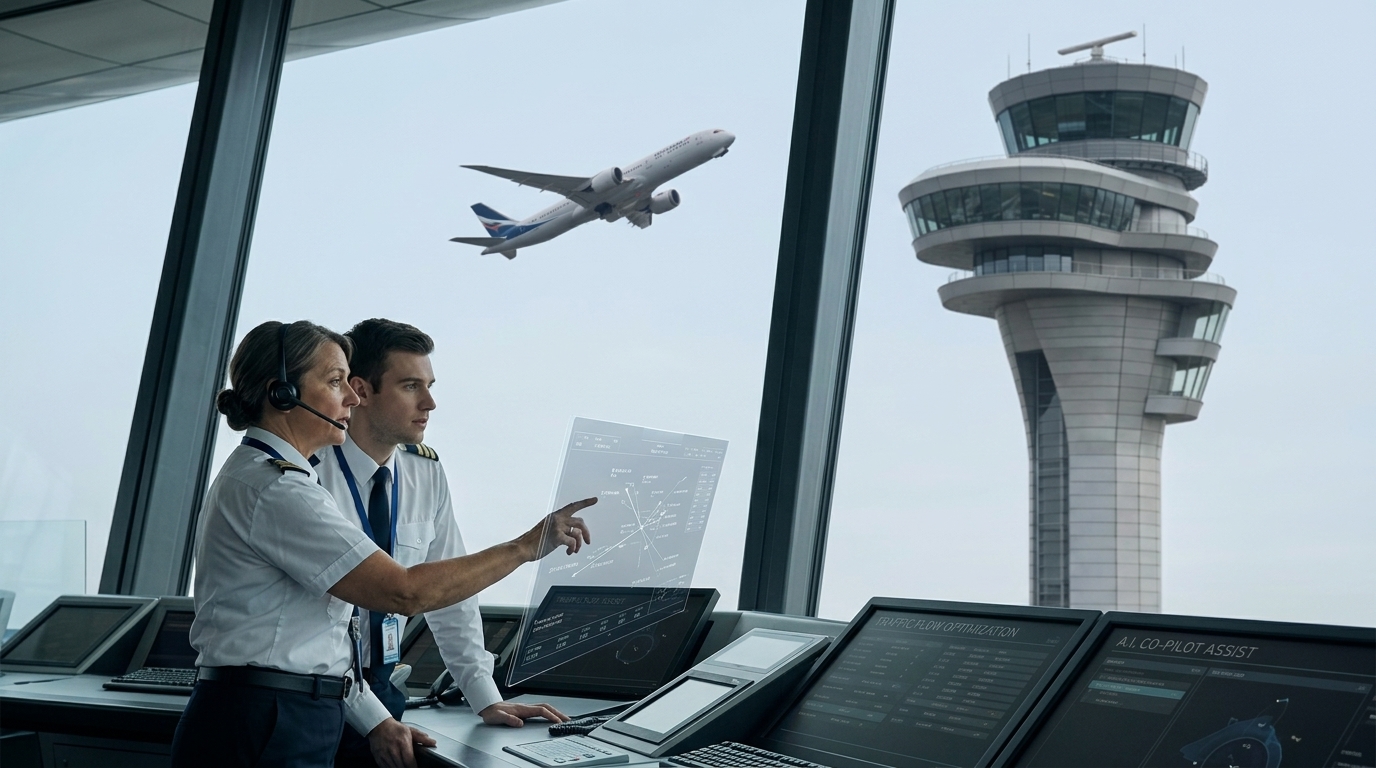
The traditional image of an air traffic control tower, filled with glowing radar screens and stressed controllers barking orders into headsets, may soon become a relic of the past. The recent move by the US Department of Transportation (DOT) to integrate Artificial Intelligence systems into airport control towers is not merely a technical upgrade; it represents a fundamental paradigm shift in transport safety. In an era where global air traffic is expanding exponentially, human data-processing capabilities are reaching their limits, and AI is emerging as the only "infallible" manager capable of handling the complexity.
The Crisis of Human Oversight and the AI Solution
For decades, Air Traffic Control (ATC) has relied on human intuition, spatial awareness, and composure. However, in recent years, the system has been pushed to a breaking point. Severe staffing shortages in the US and Europe have led to exhaustion, chronic fatigue, and a disturbing spike in runway near-misses. Unlike humans, AI does not suffer from fatigue, distraction, or emotional stress. It can analyze thousands of variables—from wind shear and turbulence to fuel consumption and gate availability—simultaneously and in real-time.
The proposed DOT initiative doesn't envision AI as a mere assistant. Preliminary frameworks suggest that AI will eventually manage landing and takeoff sequences, predict potential collisions minutes before they appear on conventional radar, and optimize flight paths to reduce carbon emissions. This is a "full takeover" of operational logic, where the human role shifts from active operator to high-level system supervisor.
Strategic Implications for Global Aviation
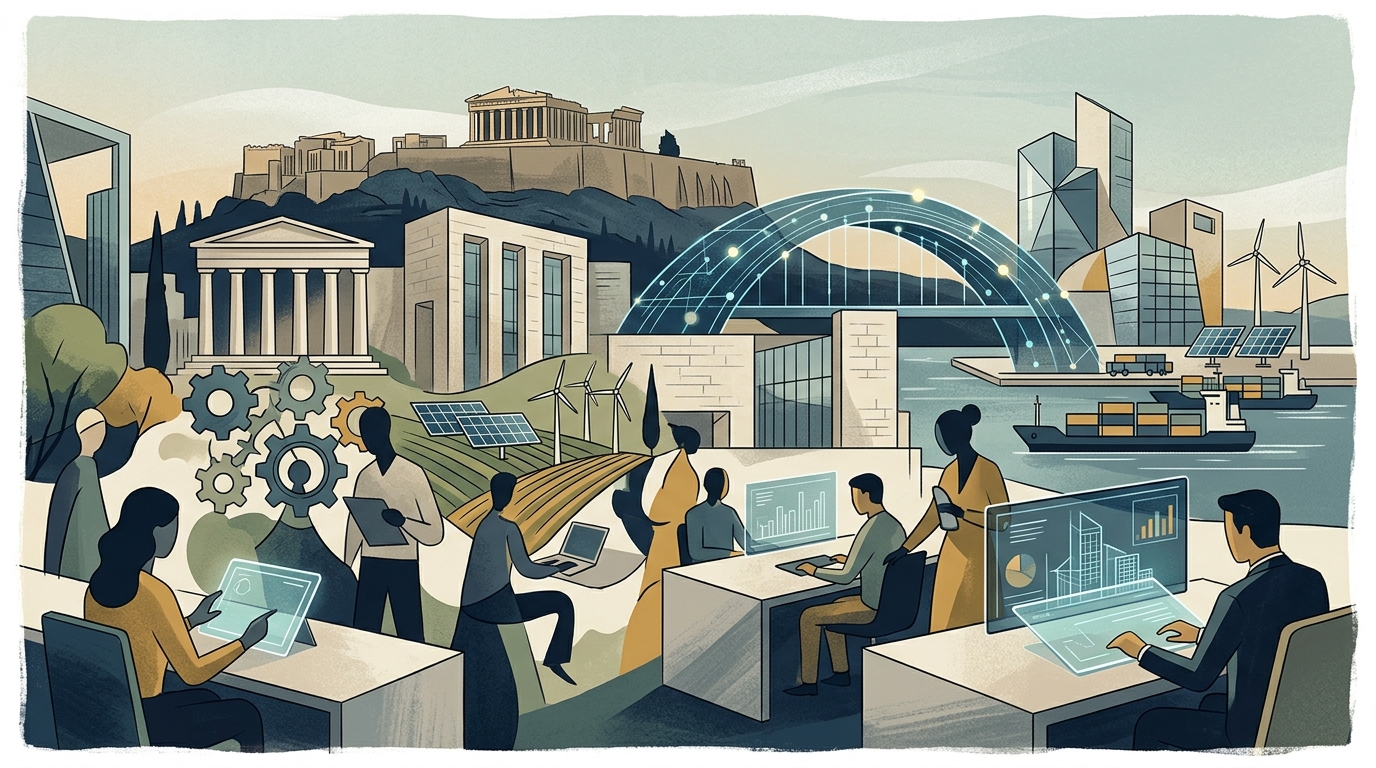
The move toward autonomous towers is particularly relevant for nations with complex airspace or remote infrastructure. Countries like Greece, with its vast network of island airports, stand to benefit significantly. Maintaining a physical presence of highly trained controllers at every small island airport is logistically difficult and prohibitively expensive. The implementation of "Digital Towers"—where a centralized hub uses AI and high-definition cameras to manage multiple remote strips—is the logical evolution of the industry.
However, this transition is not without its technical hurdles. Integrating AI with legacy systems that have been in place for decades requires a massive overhaul of communication protocols. Furthermore, the cybersecurity aspect cannot be overstated. An AI-driven ATC system is a high-value target for state actors and cyber-terrorists, necessitating a level of encryption and redundancy that is currently unprecedented in civil aviation.
Ethical Dilemmas and the Accountability Gap
Despite the clear efficiency gains, the move toward human-less towers raises profound ethical and legal questions. The primary concern is the "black box" problem: if an AI makes a decision that leads to an incident, how do we trace the logic behind it? The legal system is currently ill-equipped to handle "algorithmic liability." Who is responsible—the airline, the software developer, or the regulatory body that certified the AI?
"Artificial Intelligence in the skies is not a question of technological capability, but a question of public trust. We must convince the traveling public that a line of code can protect their lives better than a human pilot or controller," say industry analysts.
Moreover, labor unions present a significant hurdle. Air traffic controllers are among the most specialized and powerful labor groups globally. Their resistance to full automation is rooted in more than just job security; there is a legitimate concern that human judgment remains superior in "Black Swan" events—unforeseen emergencies that fall outside the parameters of an AI's training data.
Conclusion: Navigating the Hybrid Horizon
The US DOT's push is the starting gun for a global race toward autonomous aviation infrastructure. By the end of this decade, major international hubs will likely operate under a hybrid model: AI will handle 90% of routine operations, while human controllers act as a final fail-safe. This evolution promises to drastically reduce delays and fuel consumption, making air travel more sustainable. As we look toward 2030, the challenge for regulators and tech companies alike will be to ensure that the transition is seamless, transparent, and, above all, safe. The future of flight is no longer in the hands of pilots alone—it's in the algorithms that guide them.