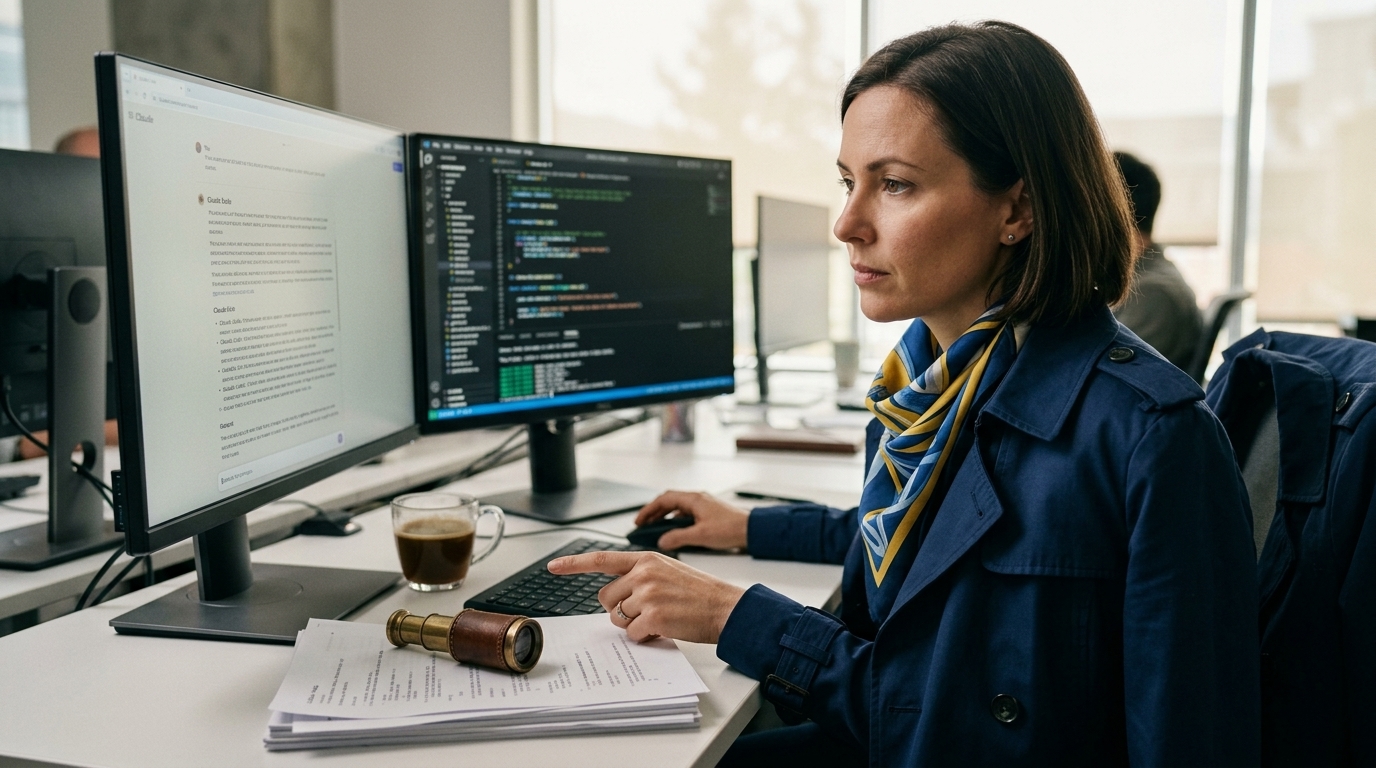
The image of a stern supervisor hovering over your shoulder, checking every mouse movement and every second of pause, was once the stereotype of bad management. Today, this stereotype is transforming into an invisible, digital reality. The advent of the AI Micromanager is no longer a science fiction scenario but a growing trend in modern enterprises that promises absolute efficiency but threatens to obliterate human autonomy.
From Management to Surveillance: The New Face of Leadership
Algorithmic management began in the platform economy—think Uber or Amazon—where algorithms assign tasks, track delivery speeds, and evaluate performance without human intervention. However, this approach is now migrating to corporate offices and remote work setups for white-collar professionals. According to recent analyses, employee monitoring software (bossware) has evolved into sophisticated AI systems that analyze not just whether you are logged in, but the content of your messages, the tone of your voice in video calls, and the speed at which you respond to emails.
These systems never rest. While a human manager might have a bad day or show empathy for a personal problem, AI operates based on cold data and predefined KPIs (Key Performance Indicators). This constant pressure creates a 'digital panopticon' environment, where employees feel that every move is recorded and scored in real-time.
The Psychology of Mechanical Oversight
The impact of AI micromanagement on employee mental health is profound. Studies show that excessive monitoring reduces creativity and job satisfaction while sharply increasing stress and burnout. When an algorithm decides your 'productivity' based on click rates, the essence of quality work is lost. Work turns into a constant effort to 'game' the algorithm rather than producing actual value.
- Loss of Trust: Using AI for monitoring implies a fundamental lack of trust from management.
- Isolation: Employees tend to avoid informal interactions, fearing this time will be logged as 'unproductive.'
- Automated Injustice: Algorithms often fail to understand the context of a delay, leading to unfair evaluations.
The question arises whether the efficiency promised by these systems is worth the price of human dignity. Many experts warn that turning people into data points leads to a new form of alienation, where the worker is no longer a team member but a cog in a machine that is constantly being optimized.
Regulatory Framework and the European Response
The European Union, through the AI Act, is attempting to set boundaries on these practices. AI systems used in employment and worker management are classified as 'high-risk.' This means companies must ensure transparency, human oversight, and data protection. However, technology often moves faster than legislation.
"Technology should enhance human capability, not enslave it to algorithmic biases," industry analysts suggest.
The challenge for the future is the creation of 'human-centric AI.' Instead of micromanagement, artificial intelligence could be used to detect signs of burnout and suggest breaks, or to remove the burden of repetitive tasks, allowing humans to focus on what they do best: creative thinking and strategic decision-making.
Conclusion: The Need for a New Social Contract
As we move toward 2026, the employer-employee relationship is being redefined. The AI boss is already here, but the form it takes depends on the decisions we make today. We need a new social contract for the digital age that guarantees technology will be used to improve working conditions, not to create an invisible, digital jailer. Productivity cannot be the sole metric in a society that wishes to remain human.