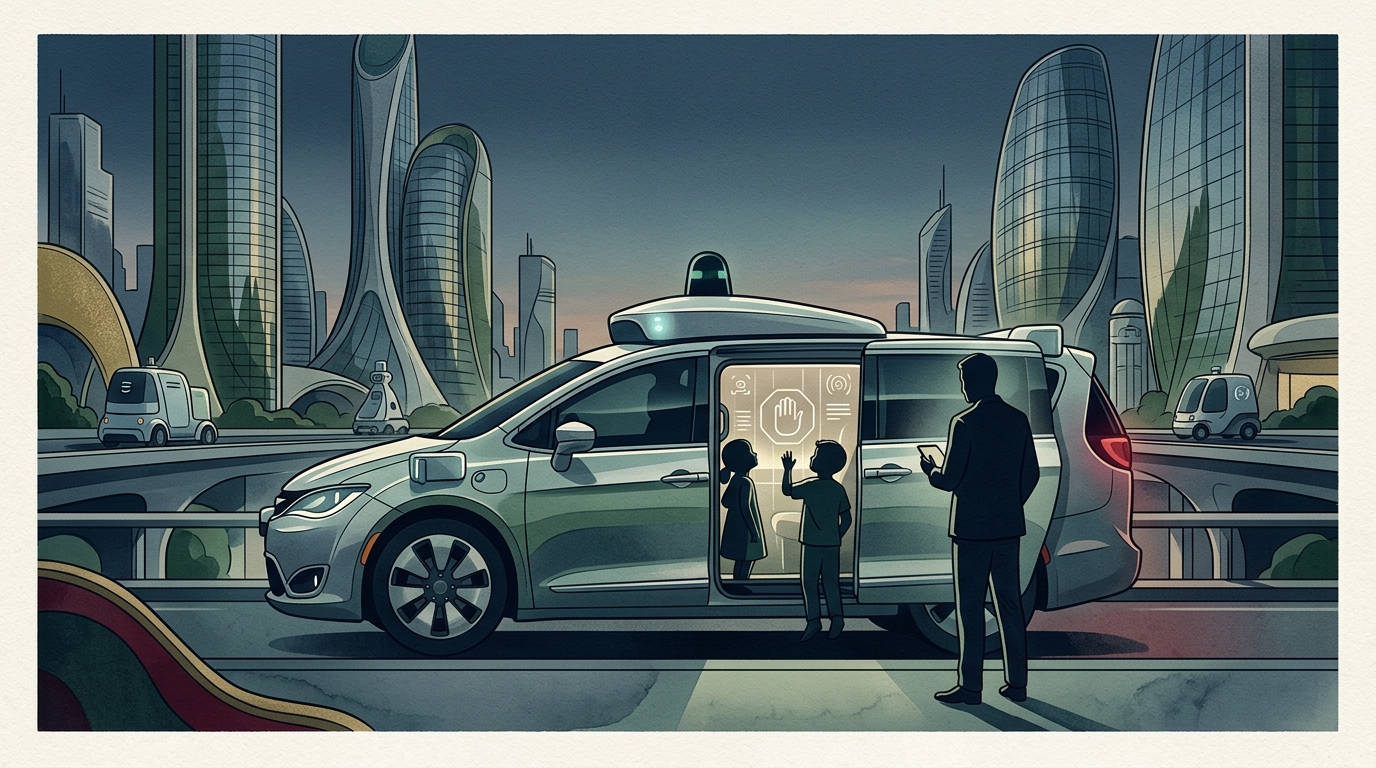
In the quiet, sun-drenched suburbs of Phoenix and the steep, foggy streets of San Francisco, a new social phenomenon has been quietly taking root over the past two years: the autonomous vehicle as the ultimate "digital nanny." Harried parents, juggling demanding careers and domestic logistics, have begun relying on Waymo’s fleet of white SUVs to ferry their children to school, soccer practice, and music lessons. However, Waymo, the Alphabet-owned frontrunner in the self-driving race, is now moving to put the brakes on this practice, implementing stricter age-verification protocols and cracking down on unaccompanied minors.
The Dilemma of the Unaccompanied Minor
The issue is far more than a simple violation of terms of service; it is a complex web of legal liability and safety concerns. According to Waymo’s current policy, riders must be at least 18 years old to hold an account and ride alone. Yet, the reality on the ground has told a different story. Many parents have been summoning vehicles through their own accounts and placing their children inside, reasoning that a car controlled by a sophisticated, tireless algorithm is inherently safer than a ride-hail vehicle driven by a human stranger. Recent reports from Wired indicate that Waymo has begun deploying real-time "age-verification checks," prompting riders to confirm their identity via the app or through the vehicle's internal camera systems.
Waymo maintains that it is constantly "refining its systems" to ensure compliance with its safety standards. This refinement involves a more aggressive use of AI to detect the physical presence of minors. If the system identifies a lone child, the ride may be canceled, or the vehicle may pull over to a safe location until customer support can intervene. For Waymo, the stakes are incredibly high: while the market for student transportation is multi-billion-dollar territory, a single high-profile incident involving an unsupervised child could trigger a regulatory backlash that might derail the entire industry's progress.
Safety, Liability, and the Regulatory Void
Discussions regarding autonomous vehicles (AVs) typically focus on the software’s ability to navigate traffic and avoid collisions. But when children are involved, safety takes on a broader meaning. What happens if a child experiences a medical emergency or a panic attack inside a driverless car? What if the vehicle suffers a mechanical failure and stalls in a high-traffic area? Without an adult present to provide guidance and reassurance, these scenarios escalate from inconveniences to potential tragedies.
“Technology may be able to drive better than a human, but it cannot exercise parental guardianship,” noted a prominent road safety analyst.
Furthermore, the legal landscape remains remarkably underdeveloped. In most U.S. states, there is no specific legislation prohibiting a child from being alone in an autonomous vehicle, simply because lawmakers never envisioned the technology reaching this stage so quickly. Companies like Waymo and Cruise are effectively forced to self-regulate to prevent more draconian laws from being passed. Waymo’s decision to curb minor ridership is a protective maneuver in an environment where public trust in full autonomy remains fragile.
The Social Dimension: A Market Gap Waiting to be Filled
Waymo’s crackdown also highlights a massive, underserved gap in the transportation market. Modern urban families are desperate for reliable logistics. If Waymo bans unaccompanied minors, who will fill the void? There are already discussions within the industry about specialized "family-tier" services, perhaps featuring enhanced remote monitoring by trained staff or biometric verification linked to parental devices. However, for the moment, risk mitigation is the priority.
- Waymo utilizes internal optical sensors to estimate the age of its passengers in real-time.
- Accounts found to be repeatedly used for transporting minors face permanent suspension.
- The National Highway Traffic Safety Administration (NHTSA) is closely monitoring reports of minors in AVs.
- Insurance premiums for AV fleets are heavily influenced by passenger demographics and risk profiles.
Ultimately, Waymo’s move to restrict solo kids is a reminder that technology does not operate in a vacuum. The transition to a driverless world requires more than just code and LIDAR; it requires a new social contract regarding responsibility when the steering wheel is absent. For now, the "digital nanny" is being sidelined as the industry attempts to mature before allowing its youngest passengers to take the back seat alone. The road to fully autonomous childhood remains long and fraught with caution.