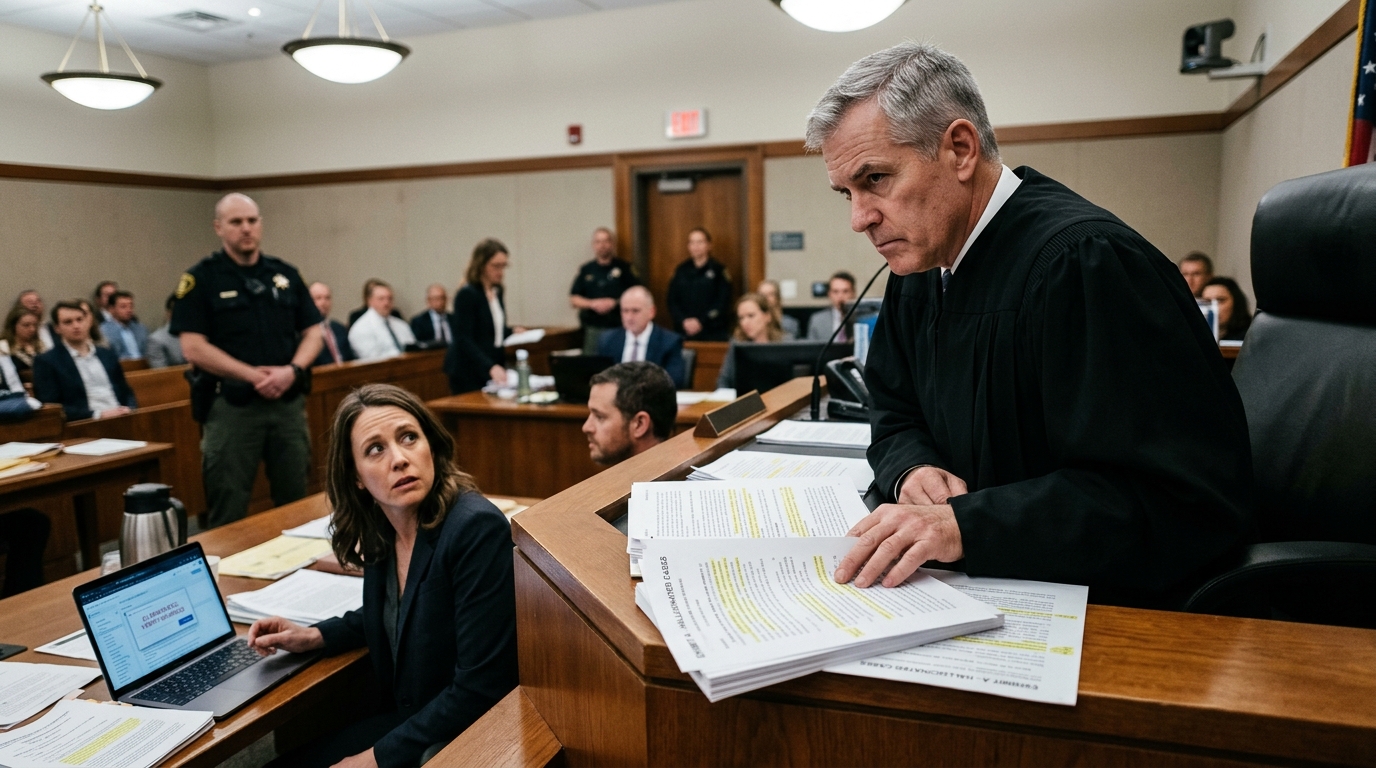
Legal practice, a discipline traditionally anchored in precision, historical precedent, and the meticulous analysis of texts, is currently facing an unprecedented crisis of credibility. In Oregon, a high-ranking judge has issued a stern warning that is reverberating across the global legal landscape: the use of Artificial Intelligence (AI) tools to draft court filings without adequate human oversight is leading to dangerous deceptions and "hallucinations" that threaten the very integrity of the judicial system.
The Phenomenon of Legal Hallucinations
The issue came to a head when attorneys, seeking to streamline the arduous process of research and drafting, began utilizing Large Language Models (LLMs) to identify past judicial decisions that supported their arguments. However, the generative nature of AI is such that it often "invents" facts to satisfy a user's prompt. In the Oregon case, the judge identified filings containing citations to cases that were never heard and statutes that do not exist.
This phenomenon, known as a "hallucination," is not merely a technical glitch. It is a structural weakness of current AI models, which operate on probabilistic patterns rather than a database of absolute truths. When a lawyer presents such a document to the court, they violate fundamental ethical rules and the duty of candor toward the tribunal. The Oregon judge emphasized that the responsibility for the accuracy of filings rests solely with the signing attorney, regardless of the tools employed in their creation.
Ethical Responsibility and the Duty of Competence
This case brings the "duty of competence" into sharp focus. In 2026, legal competence is no longer just about knowing the law; it is about understanding the technological tools used to practice it. Judges are no longer willing to accept ignorance as an excuse. Using AI to generate legal content without human verification is now increasingly viewed as a form of professional malpractice.
- Ethical Commitment: Lawyers must explicitly disclose if AI was used in the drafting of their filings.
- Verification of Sources: Every citation must be manually cross-referenced against official legal databases.
- Sanctions: Courts are considering the imposition of fines and disciplinary actions for those who submit AI-generated falsehoods.
Justice relies on trust. If judges cannot trust the documents filed before them, the entire mechanism of the administration of justice begins to crumble. The warning from Oregon serves as a harbinger of a stricter era, where technology must prove its worth under the watchful eye of the law.
Toward a New Regulatory Framework in the Courtroom
As we move through 2026, we are seeing a trend toward the adoption of specific AI rules in courts worldwide. Many jurisdictions now require litigants to file an "AI Certification," swearing that either no AI was used or that every word and citation was verified by a human being. This creates a new layer of bureaucracy, yet one deemed essential for the preservation of truth.
"Technology can be an excellent assistant, but it is a dangerous master. In the courtroom, final judgment and accountability must remain human," the judge remarked during the proceedings.
In conclusion, the Oregon incident is not an isolated reprimand; it is a wake-up call. The legal community must be urgently educated on the capabilities and limitations of AI. Speed cannot override correctness, and innovation cannot be a pretext for undermining institutions. The future of justice will undoubtedly be digital, but its heart must remain strictly and responsibly human.