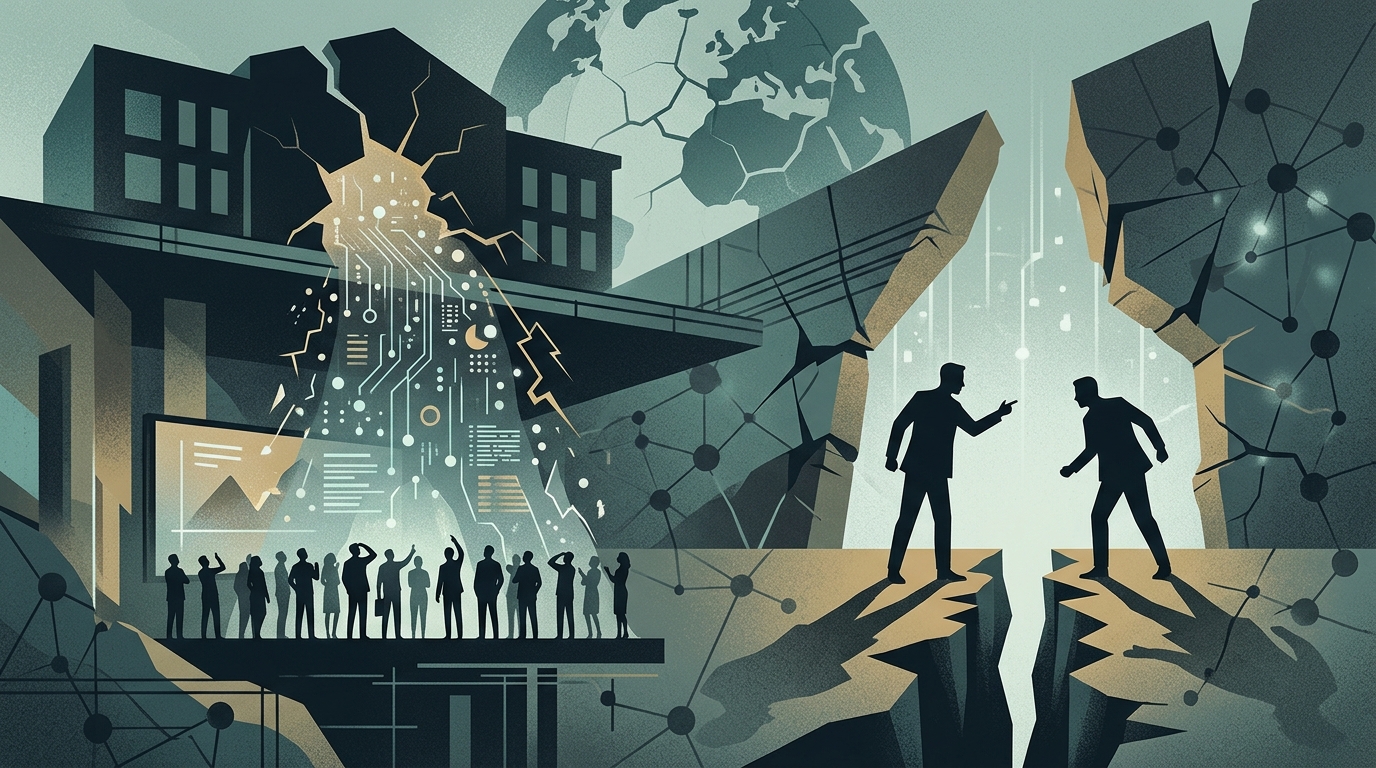
The atmosphere in the courtroom during the first week of Musk v. OpenAI was electric, feeling more like a Greek tragedy than a corporate dispute. Elon Musk, clad in a sharp black suit, took the stand to launch a blistering attack on his former allies, Sam Altman and Greg Brockman. His central claim? That he was "duped" into bankrolling a non-profit endeavor with hundreds of millions of dollars, only to see it mutate into a "de facto subsidiary of Microsoft" focused solely on profit.
Musk’s testimony was not confined to legal technicalities. With his trademark flair for the dramatic, he warned the court and the world that OpenAI’s current trajectory poses a risk to the very survival of the human species. "If we create a digital superintelligence controlled by a closed, for-profit entity, we are signing our own death warrant," he stated, linking the existential threat of Artificial Intelligence (AI) to the lack of transparency that now defines the organization he helped found in 2015.
Anatomy of a "Betrayal"
Musk argued that Altman and Brockman used his name and financial clout to lure top talent from Google and other giants, promising an organization that would operate for the benefit of humanity. According to documents presented in court, Musk claims that the "Open" in OpenAI was not just a brand name but a binding promise of open source and democratic access to technology. The pivot to a closed-source model following the release of GPT-4 represents, in Musk's view, the ultimate breach of contract.
On the other side, OpenAI’s legal team sought to deconstruct Musk's narrative by presenting old emails in which Musk himself appeared to agree that OpenAI would eventually need to find ways to generate revenue to cover the staggering costs of compute resources. The defense argues that Musk is motivated not by altruism, but by "sour grapes" because his own attempt to take over the company in 2018 failed, leading to his departure. They paint a picture of a man who only cared about the "non-profit" mission once he was no longer the one in charge.
The Bombshell Admission: xAI’s Distillation
The most shocking moment of the week was not an accusation, but a sudden admission from Musk himself. During cross-examination, Musk admitted that his own AI company, xAI, utilized "distillation" techniques from OpenAI’s models to train its own model, Grok. Distillation involves using the outputs of a powerful model (like GPT-4) to improve a smaller, more efficient model.
This admission creates a massive moral and legal paradox. While Musk accuses OpenAI of stealing his vision and closing off access to technology, his own company appears to be "parasitizing" that very technology to close the competitive gap. OpenAI’s lawyers seized the opportunity to highlight the perceived hypocrisy: Musk is suing the company for a lack of openness while simultaneously exploiting its products to build a rival commercial entity. This revelation could significantly weaken Musk's standing as a victim of corporate greed.
The Political and Social Stakes
Beyond the personal feuds, this trial serves as a landmark for how AI will be regulated in the future. If the court finds in favor of Musk, it could set a precedent forcing AI companies to disclose more data about their model training processes, potentially reviving the open-source movement in large-scale AI. If OpenAI wins, it will solidify the model of "controlled development," where corporations hold the keys to the most powerful technology for reasons of both security and shareholder value.
Musk’s focus on "existential risk" is a calculated move. It frames OpenAI as an irresponsible force playing with fire. However, critics point out that Musk simultaneously lobbies for fewer regulations on his own ventures, such as Neuralink and Tesla’s Full Self-Driving. The first week ended with a sense of profound disillusionment; the public is left to choose between an eccentric billionaire who may be right about lost ideals, and a corporation that, despite its lofty promises, seems to have fully surrendered to the laws of the market. As the trial moves into its second week, the focus will shift to the specific financial structures of the Microsoft-OpenAI partnership, potentially exposing even more uncomfortable truths about the birth of AGI.