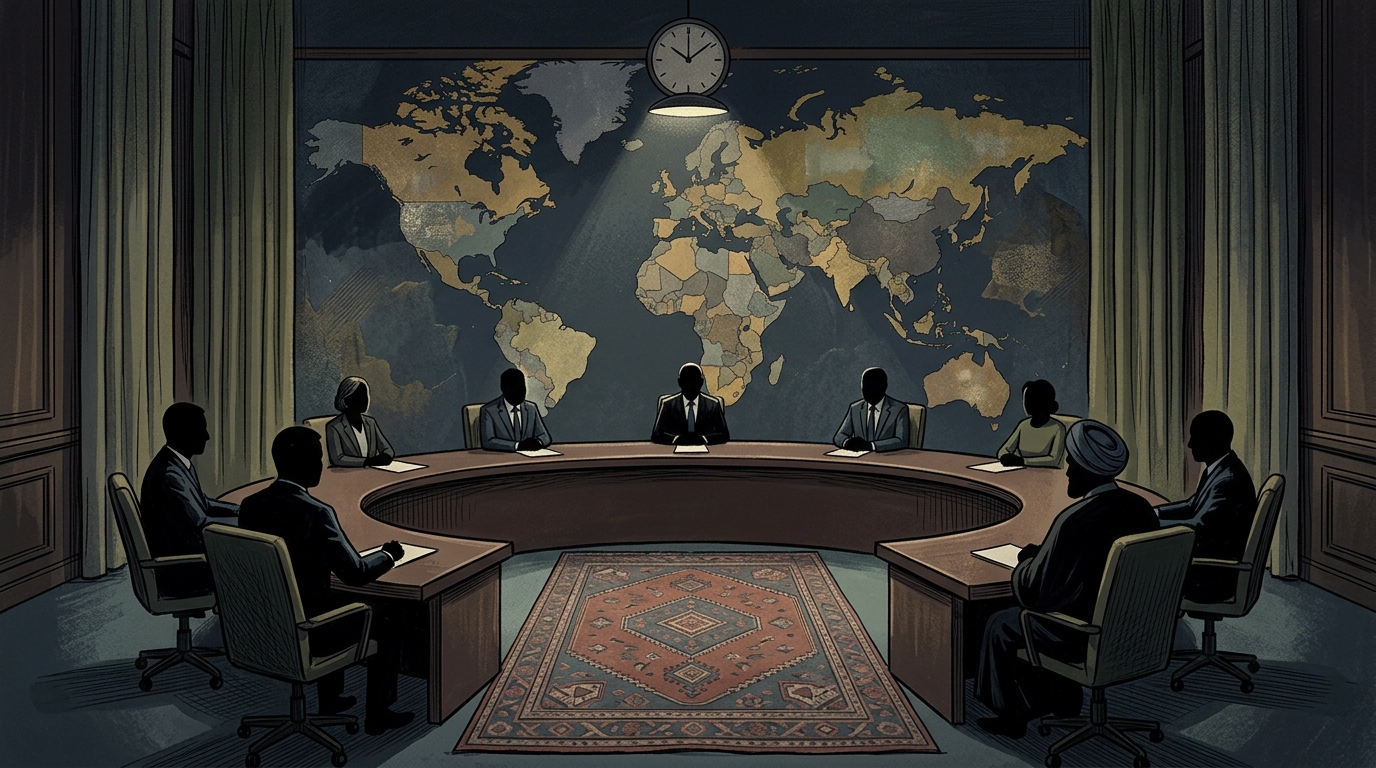
Tehran is currently at the center of a global diplomatic and intelligence thriller. According to a report by the New York Times, Iran's Supreme Leader, Ayatollah Ali Khamenei, is allegedly seriously injured or in an extremely critical condition, an event that has put intelligence agencies and governments worldwide on high alert. In a country where the leader's health is the most closely guarded state secret, the leak of such information is not just news—it is a geopolitical earthquake threatening to upend the balance of power in the Middle East.
The Power Vacuum and the Succession Mechanism
Ali Khamenei, who has been at the helm of the country since 1989, is not merely a political leader; he is the embodiment of the theocratic regime. His potential departure from the scene creates a massive power vacuum at a time when Iran is in open confrontation with Israel and the West. The succession mechanism in Iran is theoretically clear but practically labyrinthine. The Assembly of Experts, a body of 88 clerics, is tasked with choosing the next Supreme Leader. However, the real decisions are often made behind closed doors, heavily influenced by the Islamic Revolutionary Guard Corps (IRGC).
All eyes are on Mojtaba Khamenei, the Ayatollah's son, who, despite holding no official office, is considered the "shadow" manager of his father's affairs. The possibility of a dynastic succession, however, violates the principles of the 1979 Islamic Revolution, which overthrew the Pahlavi monarchy. This contradiction could ignite internal conflicts within the clerical establishment and on the streets of Tehran, where youth discontent has been simmering for years.
The Role of the Revolutionary Guards (IRGC)
Should Khamenei's health deteriorate further, the true arbiter of developments will not be the clerics, but the Revolutionary Guards. The IRGC has evolved from a paramilitary organization into a state within a state, controlling vast portions of the Iranian economy and foreign policy. For the Guards, succession is a matter of survival. They will seek a leader who will secure their privileges and continue the aggressive regional policy through proxies in Lebanon, Yemen, and Syria.
- The IRGC's influence in choosing the successor is decisive.
- The need for stability may lead to a more militarized form of governance.
- Any sign of weakness at the top could be seen as an opportunity by Iran's external enemies.
Geopolitical Implications and the "Axis of Resistance"
Instability in Tehran is not confined to Iran's borders. The entire "Axis of Resistance"—from Hezbollah to the Houthis—depends on the financial and military support of the Supreme Leader. A period of introversion and power struggles in Tehran could weaken these organizations or make them more unpredictable. Israel and the United States are watching with bated breath, as a wounded and uncertain regime might react either with extreme aggression to rally its internal base or collapse under the weight of its own contradictions.
"The history of Iran has taught us that transitions in Tehran are never smooth. They are moments where the past violently collides with the future," says an international relations analyst.
In conclusion, the news regarding Khamenei's condition marks the end of an era. Whether he survives or not, the discussion about the "post-Khamenei" era has now been opened publicly and cannot be closed. The international community must prepare for an Iran that may be more unstable, more militarized, and potentially more dangerous during this transition.