In an era where technological progress is often met with either awe or skepticism, the recent discourse surrounding the role of Artificial Intelligence (AI) in education is shifting from mere utility to profound empowerment. The case of Rocky Mount serves as a microcosm of a broader global trend: the success of local economies no longer depends solely on natural resources or geographical advantages, but on the ability of the younger generation to synthesize their innate creativity with the capabilities of AI.
The Creative Thinking Revolution
For decades, educational systems were structured around rote memorization and standardized knowledge. However, the advent of Large Language Models and Generative AI tools is rendering these skills secondary. Today, real value is shifting toward the ability to ask the right questions—the essence of 'prompt engineering' at its most philosophical level. Students encouraged to experiment with AI are not just learning to use software; they are learning to expand the horizons of their imagination, using the algorithm as a tireless partner in problem-solving.
Creativity, in the age of AI, is not confined to the arts. It involves designing sustainable cities, optimizing agricultural yields through data, and inventing new forms of entrepreneurship that can flourish far from traditional tech hubs like Silicon Valley. As analysts point out, AI democratizes access to high technology, allowing a student in a rural town to wield the same tools as a researcher at MIT.
Regional Development and Digital Equity
The great challenge for regions that have historically felt marginalized by the digital revolution is the integration of these technologies into local culture. AI can act as a catalyst to stem 'brain drain.' When students realize they can generate world-class innovation from their hometowns, the compulsion to migrate to major urban centers diminishes.
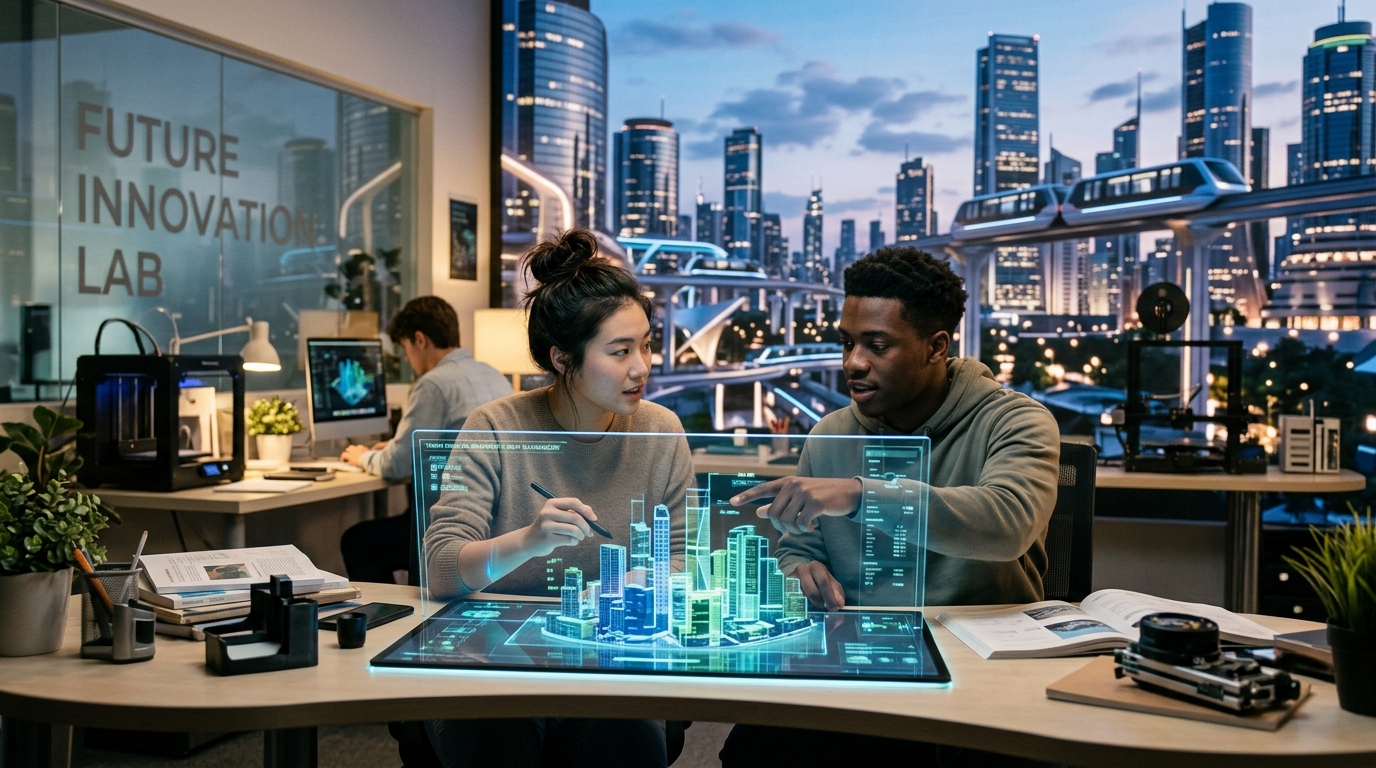
- Equipping local schools with AI-focused innovation labs.
- Linking student-led innovation with local business ecosystems.
- Training educators not just in technical usage, but in AI ethics.
However, this transition requires robust infrastructure. High-speed internet access and modern hardware are prerequisites that local authorities must guarantee. An AI-driven 'creative economy' cannot be built upon digital divides. Equity in access is the only way to ensure that the future belongs to the many, not just the few.
The Educator as a Mentor
In this new landscape, the teacher's role is undergoing a radical transformation. Moving away from being the sole source of information, the educator is becoming a mentor and a navigator. It is the teacher who will instruct the student on how to critically evaluate AI outputs, how to identify algorithmic bias, and how to maintain human authenticity within digitally generated content. Student creativity requires a framework of values to flourish, and that framework can only be provided by human connection.
"AI will not replace creative people, but creative people who use AI will replace those who do not."
In conclusion, the future of regional communities depends on a delicate balance: adopting cutting-edge technology without losing local identity. Today's students are the architects of a world where creativity is the primary currency and AI is the primary tool. Investing in these two pillars is no longer an elective strategy—it is a mandatory requirement for survival and prosperity in the 21st century.