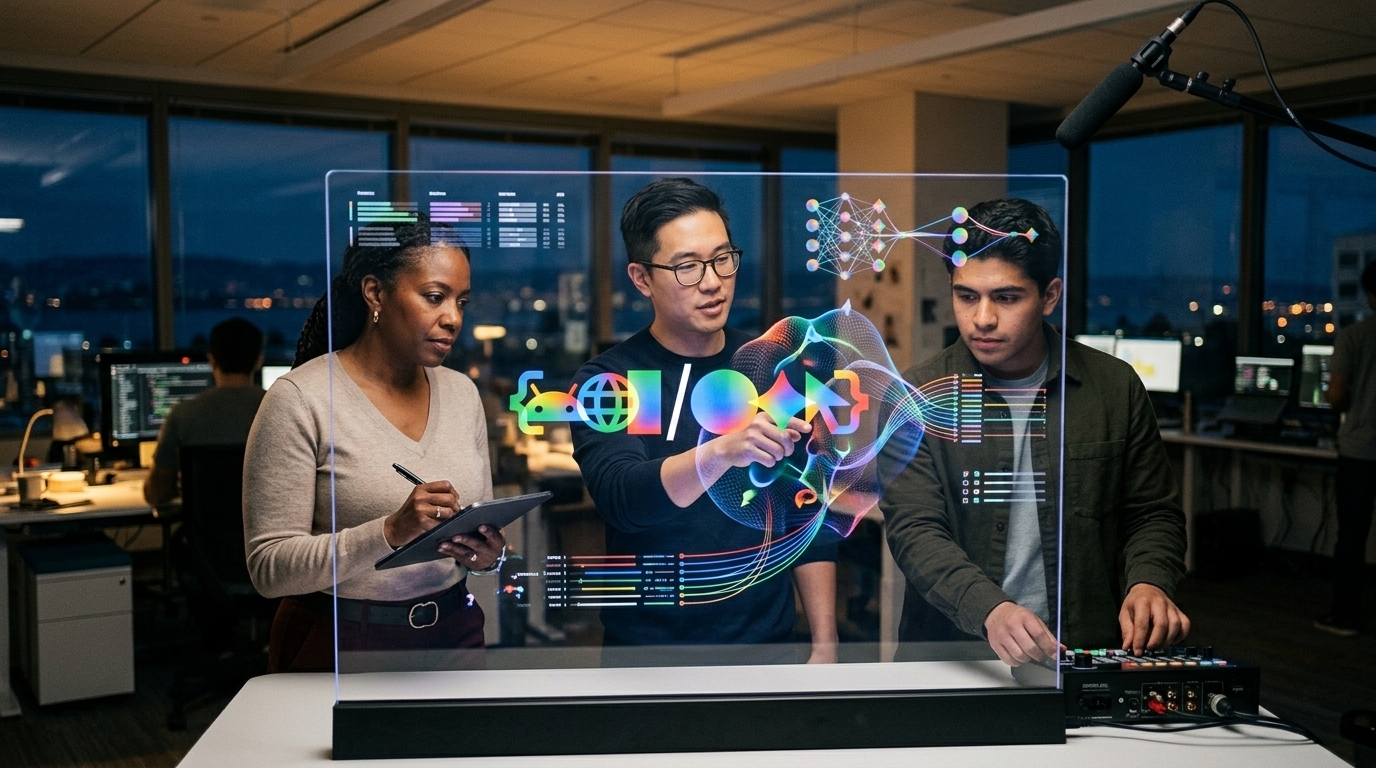
Humanity stands on the precipice of a technological shift unlike anything experienced since the Industrial Revolution. While Artificial Intelligence (AI) has already begun reshaping our daily lives, its limitations—dictated by the classical architecture of semiconductors—remain the final major hurdle. The solution appears to be emerging from the enigmatic world of quantum mechanics. The "quantum explosion" in AI is no longer a science fiction scenario; it is an imminent reality promising to unlock capabilities that currently seem impossible.
From Bits to Qubits: Transcending Classical Limits
Traditional computers, regardless of their processing power, operate on the binary logic of 0s and 1s. This inherent restriction means that solving extremely complex problems—such as simulating molecular interactions for new drugs or optimizing global logistics networks—would require centuries of computational time. Quantum computers, however, utilize qubits, which, through the properties of superposition and entanglement, can process vast amounts of data simultaneously.
When this raw power is merged with machine learning, the result is Quantum Artificial Intelligence (Quantum AI). This new form of intelligence will not merely execute existing processes faster; it will be capable of identifying patterns in data that are too noisy or complex for today's neural networks. The ability of quantum systems to explore multiple solutions at once allows for the training of models with an accuracy that approaches perfection.
Revolutionizing Medicine and Material Science
One of the sectors most immediately impacted will be pharmaceuticals. Currently, discovering a new drug costs billions and requires over a decade of testing and trials. Quantum AI can simulate the behavior of atoms and molecules with absolute fidelity, allowing scientists to "design" drugs on a computer before ever stepping into a lab. This could lead to breakthroughs for diseases like Alzheimer’s or cancer in a fraction of the time currently required.
Simultaneously, material science is poised for a new golden age. From creating next-generation batteries with ten times the capacity to developing room-temperature superconductors, quantum analysis will allow us to engineer materials that could solve the energy crisis and accelerate the green transition. Artificial intelligence will serve as the "brain" guiding these quantum simulations toward the most promising avenues of research.
Geopolitics and the Cryptography Threat
However, the quantum explosion brings with it severe challenges, particularly in the realm of security. Most encryption methods protecting our banking transactions and state secrets today rely on the difficulty of factoring large numbers—a task a quantum computer could complete in seconds. This has ignited a global race for "post-quantum cryptography" to secure the digital world before the first large-scale quantum processors arrive.
The United States, China, and the European Union are investing billions to ensure quantum sovereignty. Whoever succeeds in developing the first stable, scalable quantum computer with AI capabilities will hold the "key" to global information control. This technological Cold War poses risks to global stability, as the digital divide between nations could widen dangerously, leaving those without quantum access in a state of permanent technological subjugation.
The Ethical Dilemma and the Road Ahead
As we approach "Quantum Supremacy," ethical questions become increasingly urgent. Who will control these systems? How can we ensure that Quantum AI is not weaponized or used for total surveillance of citizens? Transparency and international cooperation are essential, yet in the current political climate, they seem elusive. The power to simulate reality at the subatomic level is, in essence, the power to rewrite the rules of the physical world.
In conclusion, the quantum explosion in AI is not merely a hardware upgrade. It is a paradigm shift that will redefine the meaning of the word "solvable." If we manage to harness this power with wisdom, the possibilities for humanity are literally limitless. However, if we allow unbridled competition to override ethics, the consequences for global security and privacy could be irreversible. We are moving toward a future where the impossible becomes routine, and we must be prepared for the responsibility that comes with it.