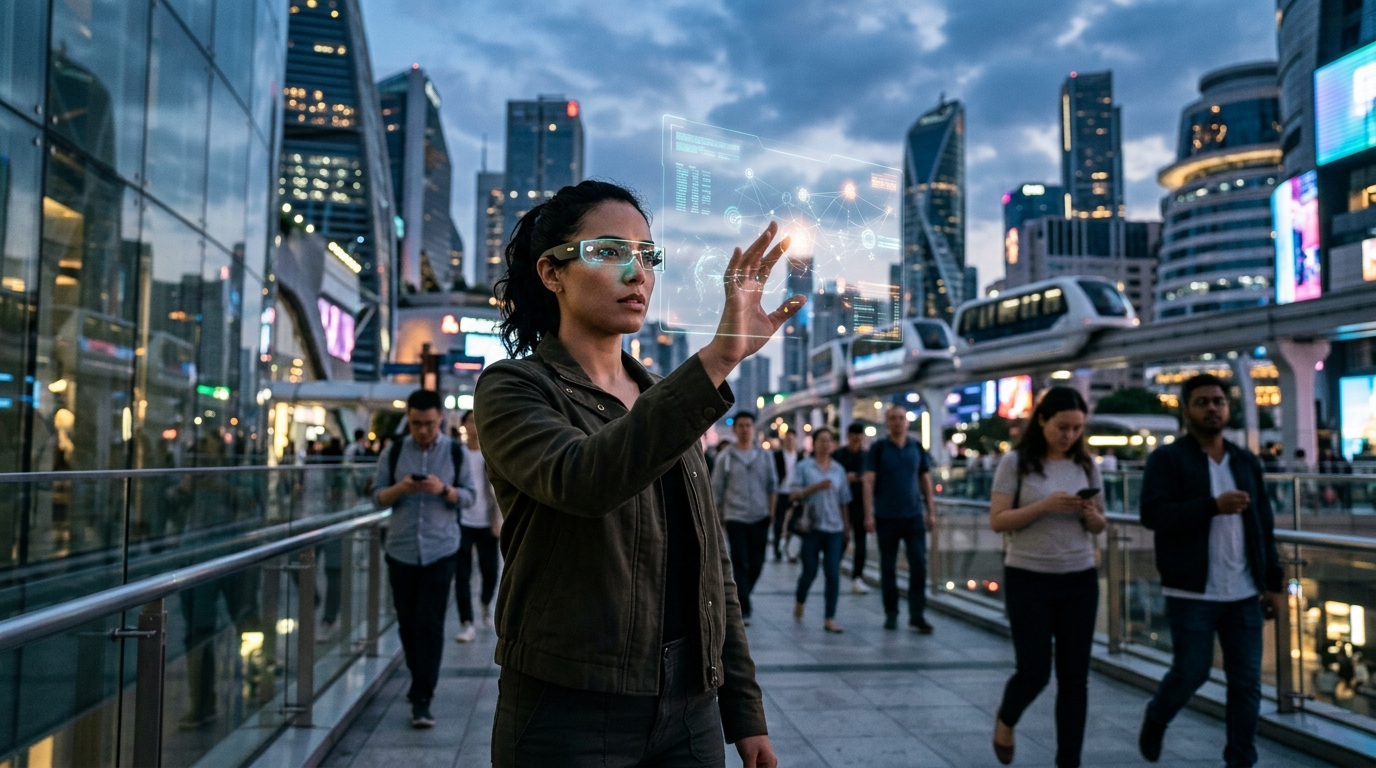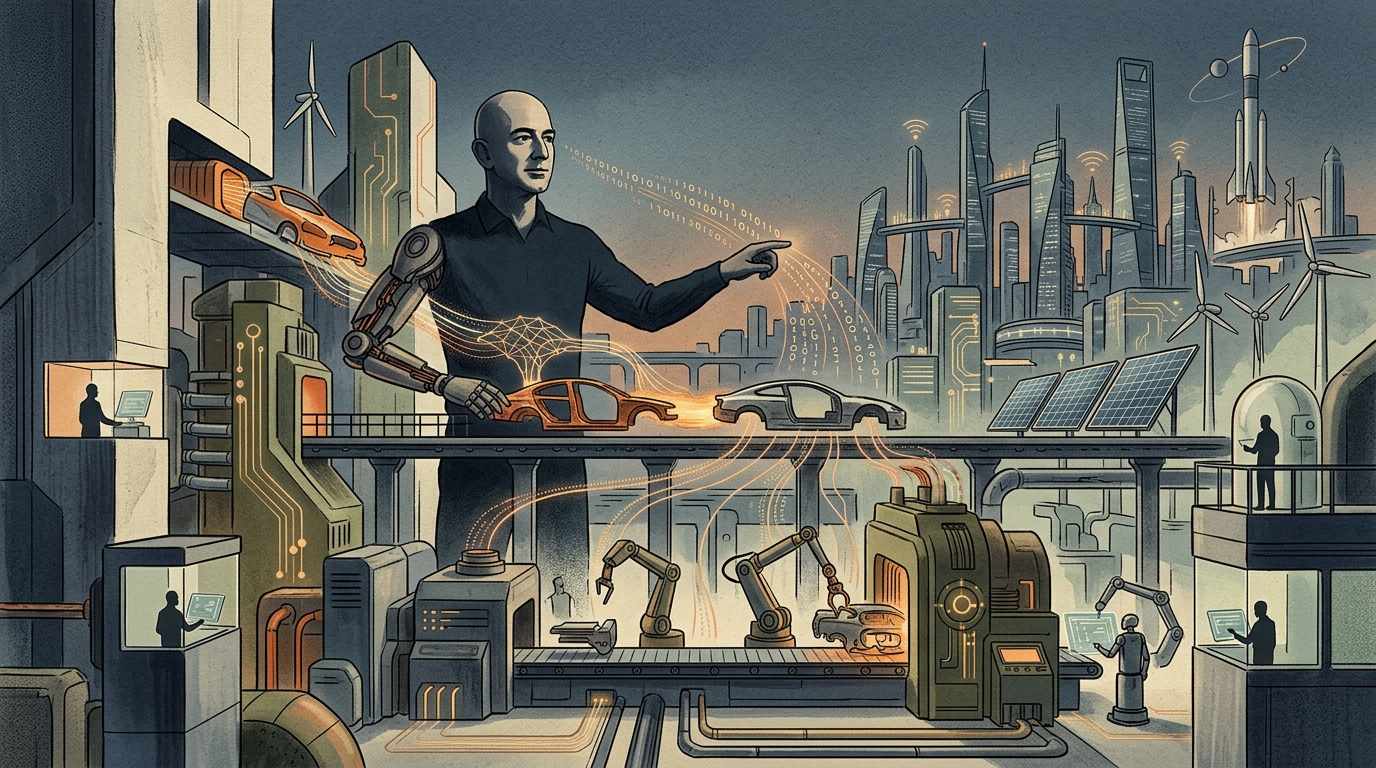
The history of technological progress often oscillates between software and hardware. After two years dominated by the meteoric rise of Large Language Models (LLMs), 2026 is emerging as the year of "Physical AI." At the heart of this revolution stands Jeff Bezos, who, through a series of strategic billion-dollar investments, is attempting to give a "body" to the intelligence that has hitherto resided exclusively in servers and screens.
The Transition from Bits to Atoms
For decades, robotics in manufacturing was bound by task-specific programming. Robots on automotive assembly lines could execute the same motion millions of times with millimeter precision, but they would fail if an object moved even a few centimeters. Bezos’s vision, realized through companies like Physical Intelligence (Pi) and Figure AI, is the creation of "foundation models for the physical world."
These models are not just trained on text, but on vast amounts of motion data and sensory inputs. The goal is to solve "Moravec’s Paradox": the fact that complex reasoning requires very little computation, while basic sensorimotor skills of a toddler require enormous resources. Bezos’s investment targets exactly that: creating robots that can "understand" the physics of the world, handle objects with different textures, and adapt to unpredictable environments.
The Billion-Dollar Strategy
The recent $400 million funding round for Physical Intelligence, with participation from Bezos, OpenAI, and Thrive Capital, is just the tip of the iceberg. The Amazon founder understands that control over the supply chain and manufacturing no longer depends on the size of warehouses, but on the autonomy of the systems within them. Figure AI, another company in his portfolio, is developing humanoid robots already being tested in BMW factories, proving that theory is turning into practice.
This move is not merely a business expansion; it is a geopolitical statement. The West's ability to bring manufacturing back (reshoring) relies on neutralizing the low labor cost advantage offered by Asian nations. If AI can handle the physical complexity of production with lower costs and higher precision, the map of global industry will be completely reshaped.
Challenges and Social Implications
Despite investor optimism, the challenges remain formidable. Hardware remains expensive and prone to wear and tear. Training models that guarantee 100% safety in environments where humans and machines coexist is a stubborn problem. Furthermore, there is the burning issue of labor. While Physical AI proponents speak of filling jobs that humans no longer want to do (the so-called 3Ds: Dirty, Dangerous, Dull), the scale of automation envisioned by Bezos could displace millions of low- and middle-skilled workers.
- Autonomy: Robots that learn from observation rather than hard-coded instructions.
- Generalization: A single model that can be used across different robot types (from arms to humanoids).
- Economic Scale: Reducing production costs by eliminating errors and enabling 24/7 operation.
In conclusion, Jeff Bezos’s quest to dominate Physical AI represents the next great frontier of technology. If the bet pays off, Amazon and its affiliated companies will not only control how we buy products but also how everything in our physical world is manufactured. The era where AI gains hands and feet is here, and the consequences will be profound for the economy, politics, and the very concept of human labor.