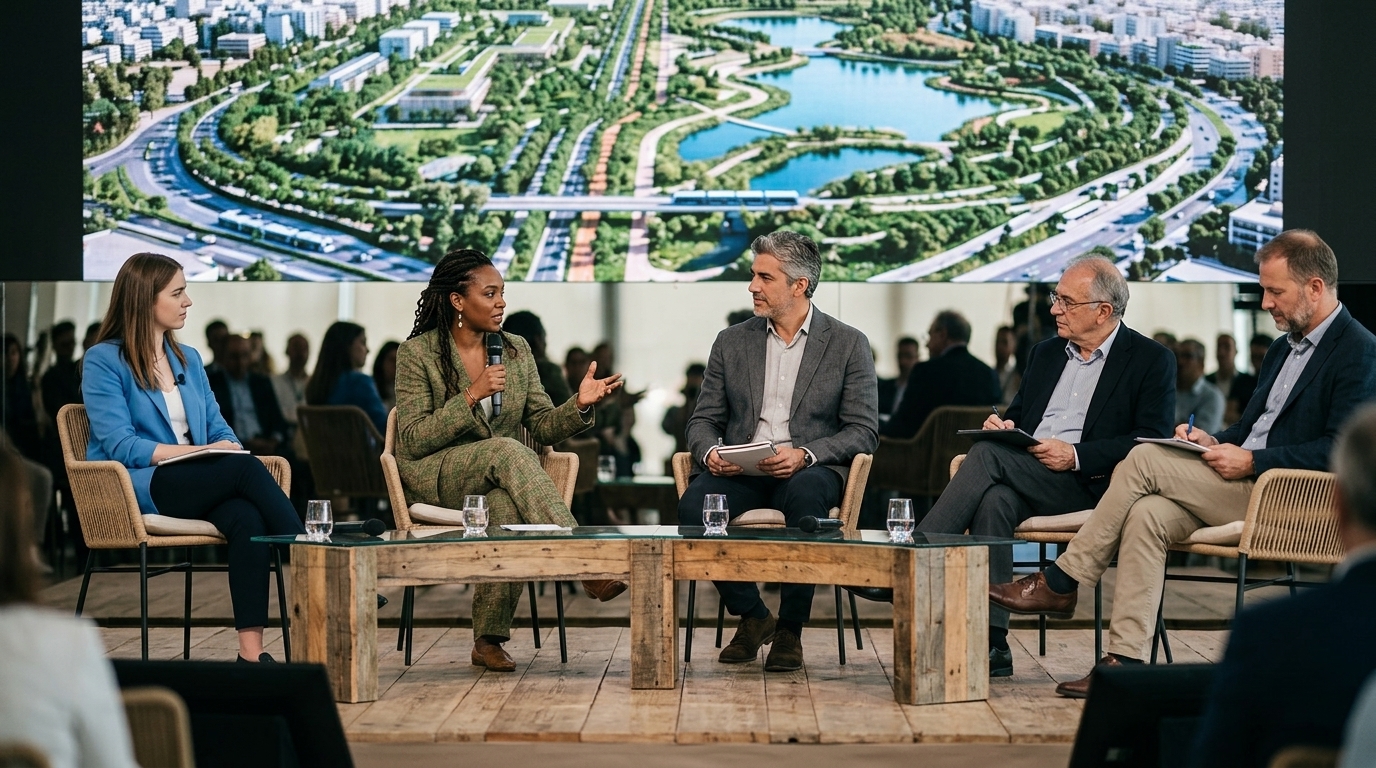
Athens, a city historically identified with dense urbanization and a chronic lack of public spaces, is currently at the center of a global conversation regarding urban regeneration. The Ellinikon Metropolitan Park is more than just an infrastructure project; it is a profound statement of intent on how modern metropolises can heal the scars of the past and prepare for an uncertain climatic future. Spanning over two million square meters, this park aspires to become the lungs of a capital city desperate for greenery and quality of life.
The Philosophy of Regenerative Design
Unlike traditional 20th-century parks, which often required vast amounts of water and constant maintenance to sustain landscapes foreign to their environment, The Ellinikon is built on the principles of regenerative design. The landscape architecture team at Sasaki, in collaboration with Greek experts, chose to work with the Mediterranean ecosystem rather than against it. This translates to the use of drought-resistant native flora and the adoption of practices that enhance biodiversity.
The park is divided into distinct zones, each serving a specific purpose. From the 'Sculpture Park' to the 'Urban Farm,' the approach is holistic. This is not a sterile expanse of green, but a living laboratory where nature and humanity coexist. The selection of 31,000 trees and millions of shrubs that thrive in the Attic climate ensures that the park will remain sustainable in the long term, drastically reducing irrigation needs.
Climate Resilience and the 'Sponge City' Concept
One of the most critical aspects of the design is water management and mitigating the urban heat island effect. Athens is among the most vulnerable European cities regarding rising temperatures. The Metropolitan Park is designed to act as a natural air conditioner for the surrounding areas, with estimates suggesting a temperature drop of several degrees Celsius during the summer months.
Furthermore, the project adopts the 'sponge city' strategy. Instead of funneling rainwater into sewers and out to sea, the park features advanced collection and filtration systems. Rainwater is stored in underground reservoirs and used for irrigation, while surfaces are designed to allow natural water absorption into the ground, preventing the flash floods that frequently plague the southern suburbs.
Circular Economy: From Concrete to Landscape
Perhaps the most impressive element of construction is the application of circular economy principles on a scale rarely seen worldwide. The demolition of the old runways and buildings of the former airport did not result in waste. Instead, over 90% of the materials are being recycled and reused within the project.
- Concrete from the runways is crushed and used as a base for new paths and plazas.
- Old metal components are transformed into urban furniture or art installations.
- Soil excavated during construction is enriched and redistributed to create the park's topography.
This approach significantly reduces the project's carbon footprint by avoiding the transport of hundreds of thousands of tons of materials to and from the site. It serves as a masterclass in how industrial heritage can be transformed into ecological capital.
Social Cohesion and Access
Finally, the park aims to restore Athens' lost connection with its coastal front. For decades, access to the sea was restricted by fences and abandoned infrastructure. The new park creates a free passage, a 'green bridge' connecting Mount Hymettus to the Saronic Gulf. Inclusivity is a central pillar: the park is designed to be accessible to everyone, regardless of age or mobility challenges, offering spaces for sports, culture, and recreation that are currently lacking in the urban fabric.
"The Ellinikon is not just a park for Athens; it is a model for how we can rebuild our cities in harmony with the planet," its designers state.
In an era where the climate crisis is no longer a future threat but a daily reality, the Ellinikon Metropolitan Park stands as a beacon of hope. It proves that with vision, political will, and scientific excellence, cities can be transformed from sources of problems into sources of solutions.