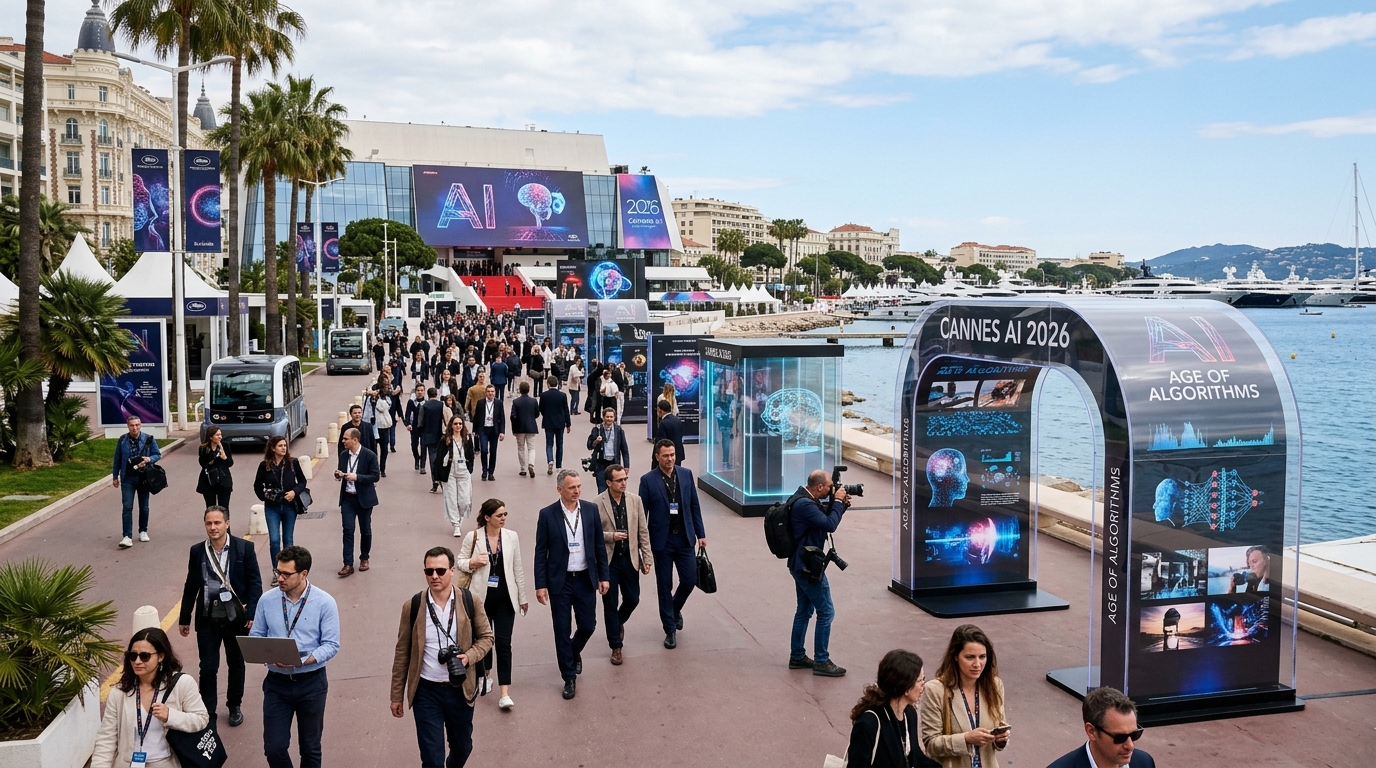
May 2026. The Croisette, Cannes' iconic waterfront, pulses with the familiar glamour of stars, but this year, something is fundamentally different. Alongside traditional posters celebrating the "Seventh Art," digital displays showcase the future: the first official competitive section for films created using advanced Artificial Intelligence (AI). The Cannes Film Festival, an institution historically known for its conservatism and devotion to the "auteur," has made the monumental decision to let AI "land" on the red carpet, signaling a new era for the global entertainment industry.
From Taboo to Mainstream Recognition
Just two years ago, the use of AI in cinema sparked Hollywood strikes and fierce backlash from directors like Christopher Nolan. Today, in 2026, the conversation has shifted from denial to integration. Cannes has launched the "Cannes AI: Digital Horizons" program, which is not limited to short films but includes feature-length productions where AI was used for screenwriting, creating photorealistic digital actors, or even full visual generation via models like Sora 3 and Runway Gen-5.
The festival's artistic leadership argued that this move is not a betrayal of tradition, but a recognition of a new tool that expands the boundaries of human imagination. "Cinema has always been a marriage of technology and vision," the artistic director stated during the opening ceremony. "From sound to color and from CGI to AI, the essence remains the story we want to tell."
"Synthetic Stars" and the Ethical Dilemma
One of the most discussed topics at Cannes this year is the emergence of films featuring "synthetic actors." These are digital entities not based on real humans, created entirely by algorithms, yet possessing an emotional range that is startlingly precise. The debate over intellectual property and the "soul" of a performance has ignited in the cafes of the Croisette.
- Who is entitled to the acting award if the actor doesn't exist?
- How can we ensure AI doesn't replicate past stereotypes?
- What is the director's role when the machine suggests 1,000 different shots in seconds?
Despite the pushback, critics admit that some AI entries offer a visual experience that would be impossible to achieve through traditional means. The use of AI for restoring old films and creating "impossible" settings has breathed new life into genres like science fiction and surrealism.
The French Resistance and European Regulation
While Hollywood seems to embrace AI for cost and speed, Europe remains an ethical gatekeeper. On the sidelines of the festival, high-level meetings took place between EU representatives and creators regarding the application of the AI Act in culture. French creators, traditionally protective of their cultural heritage, insist on mandatory labeling for any content produced by an algorithm.
"Artificial intelligence can paint like Picasso, but it cannot feel the pain of Guernica," a prominent French director remarked during a panel discussion.
This tension between technological convenience and human experience is the central theme of 2026. The Cannes Film Festival serves as the ultimate testing ground for this new balance, proving that technology is not going away but must find its place within the artistic pantheon.
The Future of Storytelling
As the festival draws to a close, the question is not whether AI will replace cinema, but how it will transform it. This year's Cannes showed that AI is already a powerful partner in editing, musical scoring, and distribution. The possibility of a film "adapting" in real-time based on audience reactions is now a reality being seriously considered.
In a world where digital and physical realities merge, Cannes 2026 will go down in history as the tipping point. The "landing" of AI on the Croisette was not a crash landing, but a carefully choreographed entry into a new dimension of creativity, where the human remains the conductor, even if the instruments of the orchestra are now made of code.