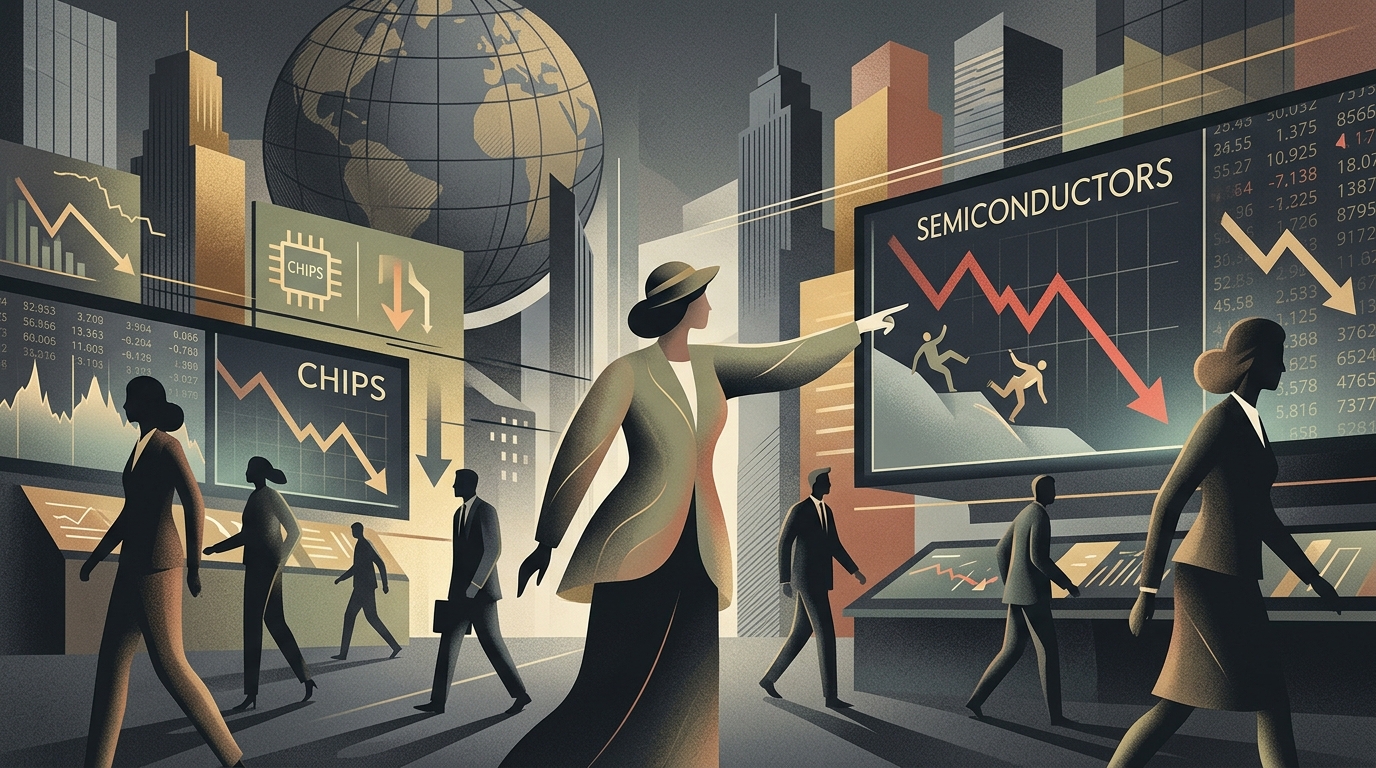
When John Maynard Keynes predicted in 1930 that his grandchildren would work a mere 15 hours a week thanks to technological progress, he could not have envisioned the advent of Large Language Models. Today, in May 2026, we stand at the threshold of a revolution that promised to liberate us from "drudgery." However, the reality experienced by millions of workers worldwide, and specifically within the European landscape, is far more complex. Instead of a reduction in working hours, we are witnessing an intensification often described as the "AI productivity trap."
The Jevons Paradox Applied to Labor
In economics, the Jevons Paradox posits that an increase in the efficiency of a resource tends to increase, rather than decrease, its rate of consumption. Applying this to labor, we see that Artificial Intelligence allows for the faster completion of tasks—such as report writing or coding—but this rarely translates into leisure time. Instead, employers and clients scale up their expectations. If a task that once took eight hours now takes two, the market expectation isn't for the worker to leave early, but to produce four times the output within the same eight-hour window.
Digital Fatigue and 'Shadow Work'
Another critical dimension is the increase in cognitive load. Utilizing AI tools requires a new form of labor: overseeing, refining, and managing machine output. This "shadow work" is frequently undervalued. Workers find themselves in a state of constant alertness, as the speed at which AI "produces" dictates a tempo that the human brain struggles to maintain. In regions like Greece, where labor relations are already strained and working hours are among the highest in the EU, AI risks becoming the tool that finally obliterates the boundaries between professional and personal life.
- Automation reduces routine task time but increases coordination time.
- The expectation for an "instant response" has intensified due to AI assistants.
- The constant need for upskilling adds extra hours of "informal" work to the weekly schedule.
The Social Dimension: Who Captures the Time?
The question is not just whether we are working less, but who captures the dividends of increased efficiency. If AI boosts corporate profitability without reducing work hours or increasing wages, then the technology serves as a mechanism for transferring wealth from labor to capital. There are, of course, bright spots. Some tech and finance firms in Europe are using AI as a "copilot" to implement four-day work weeks without pay cuts. However, this requires strong political will and a robust institutional framework—elements that remain elusive in many markets.
"Artificial Intelligence will not grant us free time on its own; how the abundance it generates is shared remains a political decision."
In conclusion, the AI era finds us running faster than ever, trying to keep pace with the machines we created. Unless we redefine "productivity" beyond cold KPIs, we risk becoming the most efficient yet most exhausted workforce in history. The promise of the 15-hour work week remains a distant dream, not because of technological limitations, but because of our societal inability to say 'enough'.