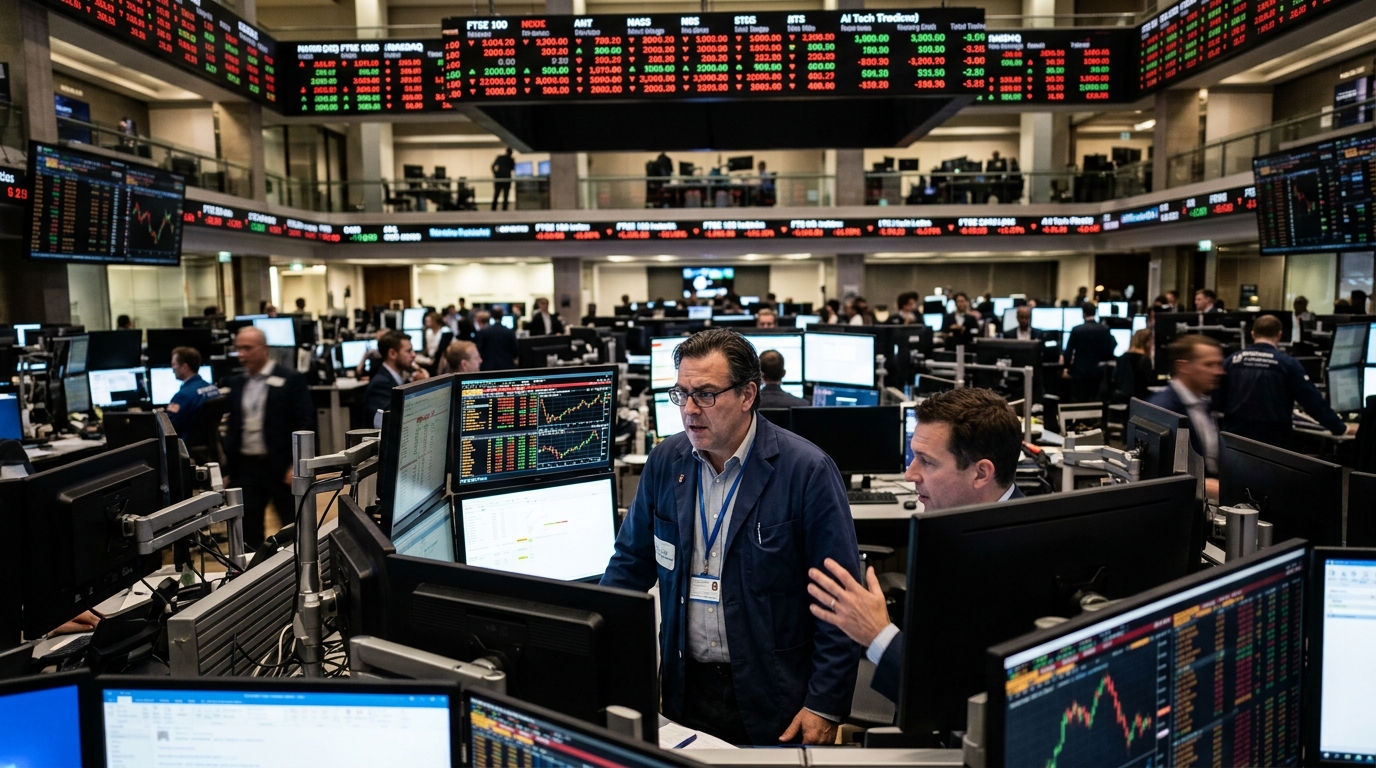
The dominance of American tech giants, the so-called "Magnificent Seven," in the Artificial Intelligence (AI) race is indisputable. However, beneath the surface of mainstream headlines, Europe has cultivated its own ecosystem of champions. According to recent market data, a select group of European stocks has recorded gains exceeding 100% over the past year, fueled by the insatiable demand for the infrastructure that makes the AI revolution possible.
These companies are not necessarily household names like OpenAI or Google. Instead, they are the "industrialists" of the digital age. From Dutch lithography to French power management, Europe is proving to be an indispensable link in the global AI supply chain. The surge in these stocks is not merely the result of speculation; it reflects a fundamental shift in how investors value technological sovereignty and industrial capability.
The Dutch Masters of Semiconductors
At the heart of this rally lies the Netherlands. ASML, Europe's most valuable tech company, remains the absolute monopolist in EUV (Extreme Ultraviolet) lithography systems, which are essential for manufacturing the world's most advanced chips. Without ASML, Nvidia would be unable to produce the H100 and Blackwell processors that power today's large language models.
However, the real surprise comes from mid-cap players like BE Semiconductor Industries (Besi) and ASM International. Besi, specializing in high-precision semiconductor assembly equipment, has seen its stock skyrocket as "hybrid bonding" became the new standard for high-performance AI chip packaging. ASM International, on the other hand, dominates Atomic Layer Deposition (ALD), a process critical for transistor miniaturization. These companies represent the "bottleneck" through which every global chipmaker must pass.
Power and Infrastructure: The French Connection
AI is energy-hungry. The data centers hosting AI workloads require massive amounts of power and, crucially, advanced management and cooling systems. This is where Europe excels through companies like France's Schneider Electric. Schneider has transformed itself from a traditional electrical equipment manufacturer into a giant of digital control and automation. Its stock has benefited immensely from the need for "smart grids" that can support AI infrastructure.
"AI isn't just code; it's copper, electricity, and cooling. Europe controls the physical layer of the digital revolution," notes a senior analyst at Societe Generale.
Similarly, Legrand, another French industrial group, is seeing its profits climb as data centers worldwide upgrade their physical infrastructure. The shift toward green energy, combined with the need for extreme efficiency in data centers, creates a "perfect storm" for these European industrials that blend traditional engineering with cutting-edge software.
Software Transformation: The SAP Engine
On the software front, Germany's SAP stands as the most prominent example of successful adaptation. After years of transitioning its client base to the cloud, SAP integrated AI (via its Joule assistant) directly into the business processes of the world's largest corporations. The market rewarded this strategy with an impressive stock rally, as SAP demonstrated that AI can generate immediate revenue through supply chain optimization and human resources management.
The 100%+ rise of these stocks is not without risks. Valuations have reached historical highs, sparking fears of a potential bubble. Furthermore, Europe faces the risk of geopolitical friction, particularly regarding export restrictions on technology to China, which directly impact companies like ASML. Nevertheless, the fundamental necessity for the technology these companies provide seems to outweigh short-term political pressures.
Investment Outlook: The "Pick and Shovel" Play
The European AI market offers a different value proposition than the US. While investing in the US often means betting on consumer applications and foundational models, investing in Europe means betting on the infrastructure and production tools. This "pick and shovel" model has historically proven to be more resilient over time. Investors looking for AI exposure beyond the obvious Wall Street names are increasingly finding Europe to be a source of high returns and strategic depth.