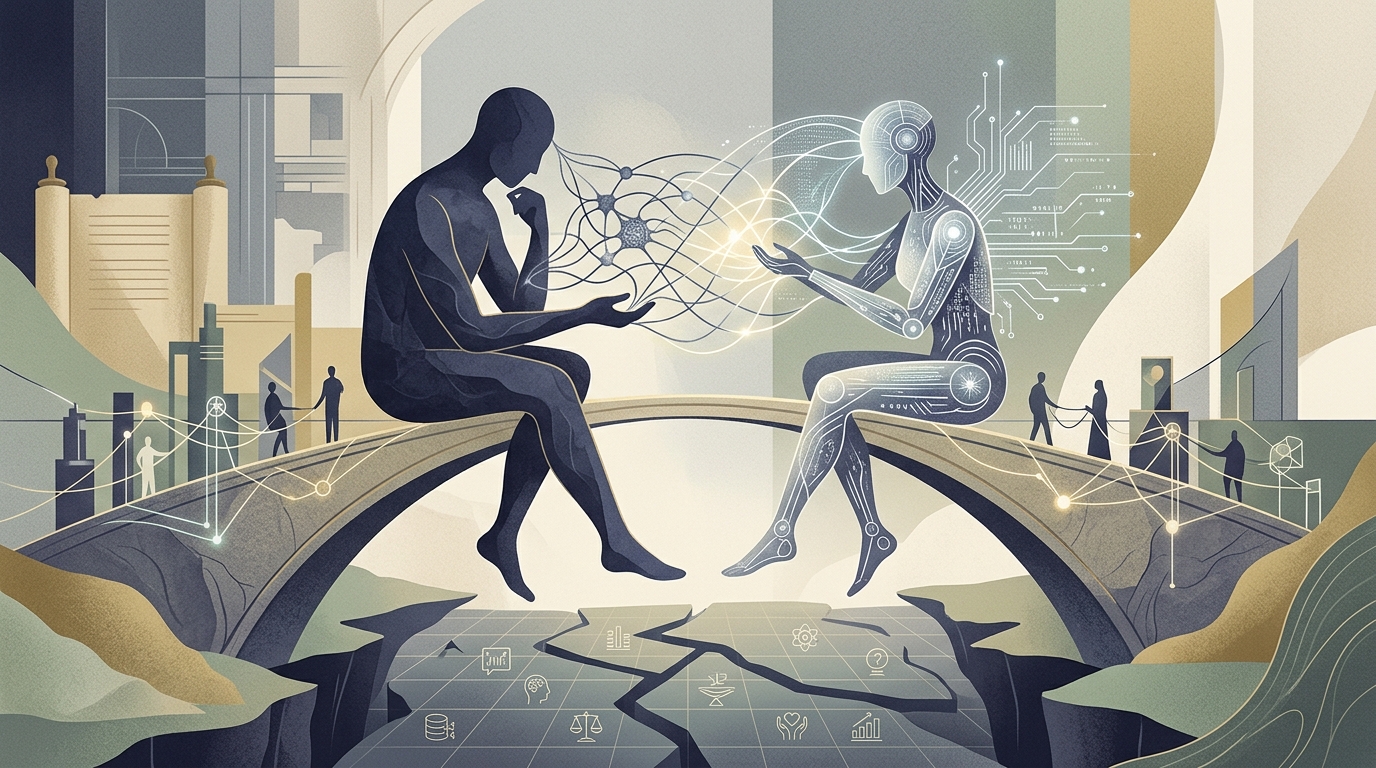
The digital era, in the spring of 2026, stands at a critical crossroads. While Artificial Intelligence (AI) promises to solve some of humanity's most pressing problems, from medical diagnostics to climate change, a darker reality is emerging in the shadows of the internet. Leading security officials and international organizations, such as Europol and the FBI, are sounding the alarm: AI is no longer just a productivity tool, but a powerful 'force multiplier' for organized cybercrime.
The warning recently brought to light highlights a fundamental shift in the threat landscape. Generative AI has dramatically lowered the 'entry barrier' for aspiring criminals. Where specialized programming knowledge and a deep understanding of networks were once required, today, the correct phrasing of prompts in modified or unchecked AI models is sufficient to create malicious code or orchestrate complex attacks.
The Democratization of Fraud and Phishing 2.0
One of the most immediate impacts of AI on cybercrime is the refinement of social engineering attacks. Traditional 'phishing,' often betrayed by poor grammar or syntax errors, is a thing of the past. Large Language Models (LLMs) now allow criminals from any part of the world to compose messages in flawless, persuasive language, tailored to the style of the specific organization or individual they are targeting.
The use of deepfakes—AI-generated images, videos, and audio—adds a new level of danger. We have already seen cases where corporate executives received voice calls that sounded exactly like their superiors, requesting urgent fund transfers. This 'industrialization' of deception makes human judgment increasingly vulnerable, as distinguishing between reality and fabricated content becomes nearly impossible without the use of specialized detection tools.
Automated Vulnerability Discovery and Malware
Beyond deception, AI is accelerating the technical aspects of attacks. Cybercriminals are now using algorithms to scan vast amounts of code in search of security 'holes' (vulnerabilities) that have not yet been discovered by defenders. This automated search allows for the execution of 'Zero-Day' attacks with much greater frequency than in the past.
Furthermore, the creation of polymorphic malware has become easier. This is code that automatically changes its structure every time it replicates, making it invisible to traditional antivirus programs that rely on fixed virus signatures. The battle between AI defense systems and AI offensive tools is evolving into an arms race, where processing speed is everything.
The Ethical Responsibility of Tech Giants
The discussion on cybercrime brings to the fore the responsibility of the tech giants developing these models. Although companies like OpenAI, Google, and Meta have implemented 'guardrails' to prevent the malicious use of their tools, criminals find ways to bypass them through 'jailbreaking' techniques. At the same time, the rise of open-source models, while beneficial for innovation, provides malicious actors with the ability to train their own models without any restrictions.
Officials emphasize that legislation, such as the EU AI Act, is an important first step, but it is not enough. International cooperation and a new approach to cybersecurity that integrates AI as a core pillar of defense are required. Educating citizens and fostering a culture of 'healthy skepticism' toward digital content is now a matter of national security.
Conclusion: Defense in the Age of Intelligence
As we move through 2026, the threat is clear but not invincible. The same technology used for the attack can also be used for its prediction and containment. However, the balance of power has shifted. Cybersecurity is no longer a static wall but a living, evolving organism. The warning from officials is not a cry of pessimism, but a call for vigilance in a world where code is the new battlefield.