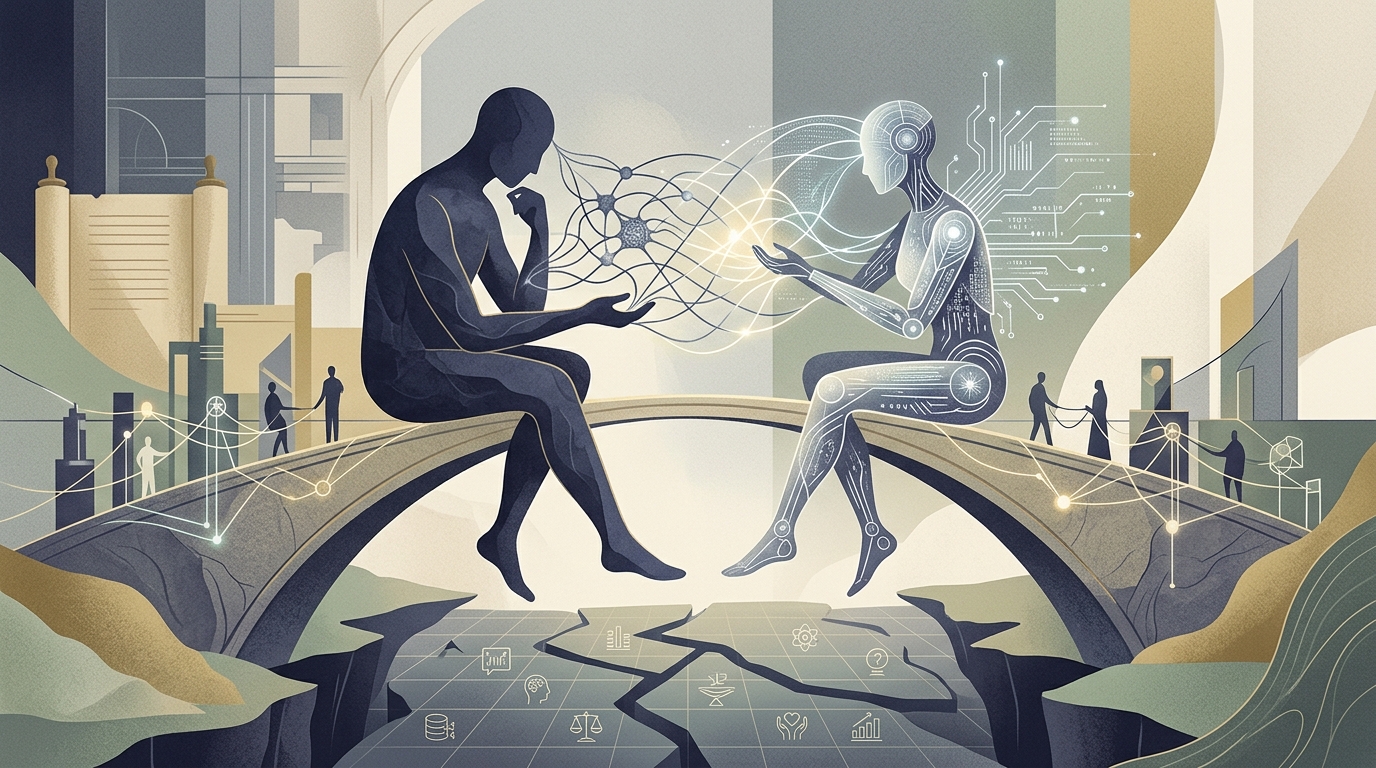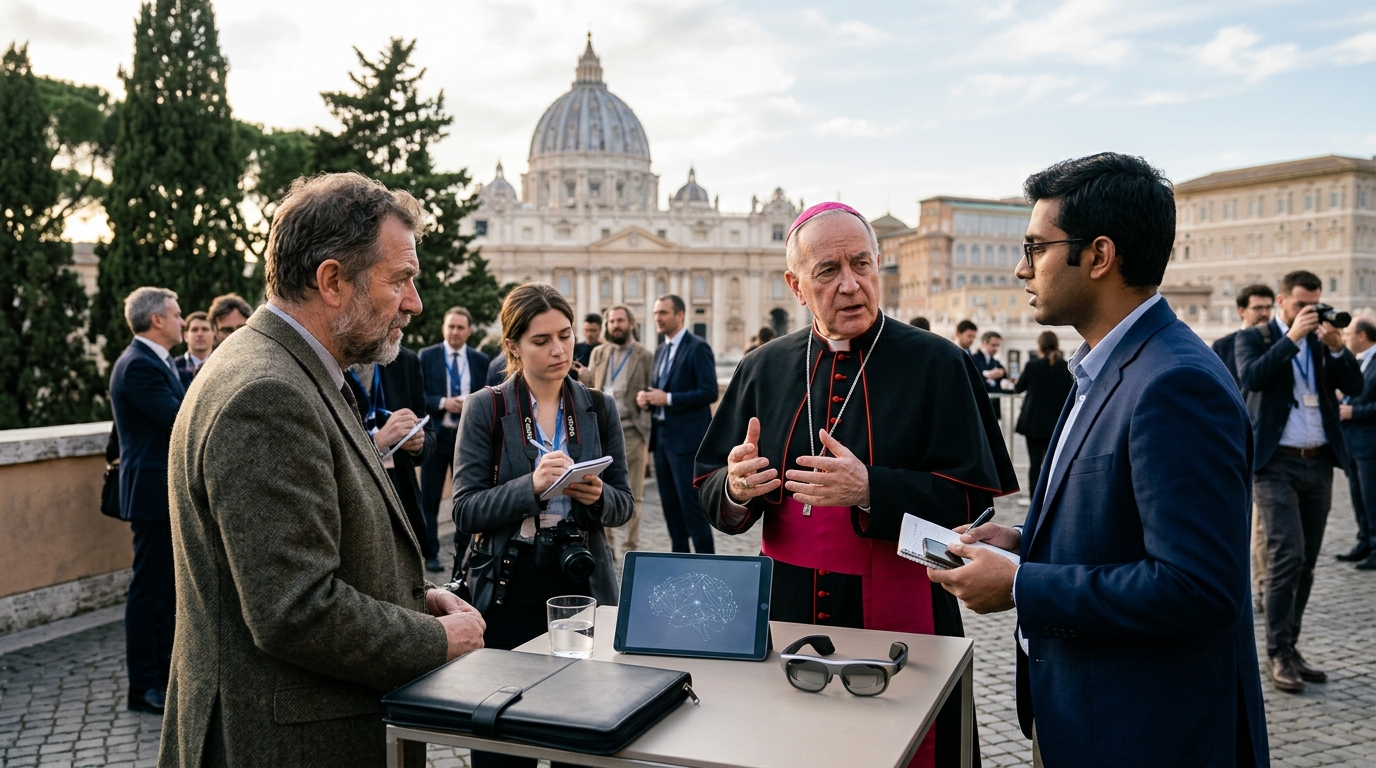
In the glass-walled sanctums of Palo Alto and Mountain View, Artificial Intelligence is no longer viewed merely as a suite of software tools; it has become an eschatological promise. The current "A.I. fever" has reached the proportions of religious fervor, with tech visionaries prophesying an era where Artificial General Intelligence (AGI) will solve every human malady, from biological mortality to climate collapse. Yet, amidst this digital messianism, an ancient voice from Rome is rising to pose the questions Silicon Valley would rather ignore. The invocation of Pope Leo XIII’s legacy—the pontiff who once navigated the turbulent waters of the Industrial Revolution—resonates today with a renewed, urgent significance.
The New Religion of the Algorithm
The contemporary obsession with AI in Silicon Valley is not purely economic; it is profoundly philosophical. Investors and developers speak of "alignment"—the process of ensuring machines share human values—yet they rarely pause to define what those values are. For many in the technocratic elite, progress is a self-fulfilling prophecy that requires no moral brakes. In this landscape, the Vatican, drawing upon centuries of social doctrine, has introduced the concept of "Algorethics." This framework seeks to embed ethical principles into the very architecture of algorithms, ensuring that technology serves human dignity rather than subjugating it to the dictates of efficiency.
The Leonine Legacy and Digital Labor
The reference to Pope Leo XIII is deliberate and poignant. In 1891, his encyclical Rerum Novarum championed the rights of workers against the crushing gears of unregulated industrialization. Today, AI threatens to disrupt the global labor market on a scale that makes the Industrial Revolution look like a mere preamble. The Vatican warns that if AI is deployed solely to maximize profit and replace human creativity, the result will be a profound social unraveling. The Church’s ethical intervention emphasizes that work is not just a means of subsistence but a fundamental source of human meaning. When algorithms determine who is hired, who is fired, or who is worthy of credit, the "blind" efficiency of the machine clashes with the human necessity for justice and mercy.
The Governance Challenge and Human Accountability
A central pillar of the Vatican’s critique concerns the abdication of responsibility. In Silicon Valley, the phrase "the algorithm decided" is often invoked as if AI were a natural force beyond human agency. Rome’s moral stance is unequivocal: accountability must remain human. There can be no "machine ethics" without the ethics of its creator.
- Transparency in training data is essential to mitigate systemic bias.
- Maintaining a "human-in-the-loop" for critical life-altering decisions is non-negotiable.
- Access to advanced AI must be equitable to prevent a widening chasm between wealthy and developing nations.
"Technology is never neutral. It is a form of power, and any power devoid of a moral compass tends toward tyranny."
In conclusion, the Vatican’s intervention in the AI fever serves as a necessary corrective. While Silicon Valley races at the speed of light toward an automated future, ethics demands that we slow down and count the cost. Technology must be a mirror of our highest aspirations, not an amplifier of our darkest biases. The dialogue that began over a century ago regarding the rights of the laborer continues today as a defense of the human spirit in the digital age. The challenge is no longer just about what machines can do, but what we should allow them to do.